Follow Me on Twitter!

Find me on twitter @TroyComets
Showing posts with label psychology. Show all posts

Friday, April 15, 2016

500 Word Friday: On the Liberty Counsel, Homophobic Parents, and the Boy Scouts

On April 13, 2016 the Liberty Counsel, which famously swooped in to defend Kim Davis when she was imprisoned for contempt of court when she failed to do her job by issuing marriage licenses to LGBT couples, issued a propaganda announcement through media outlets like Christian News Wire.  At the heart of their announcement was the reassurance that religious organizations, specifically churches, did not need to accept gay volunteers to head their Boy Scout troops. 

Matthew Staver of the Liberty Counsel, who actually served as Kim Davis’ attorney, stated:

"The once great Boy Scouts of America has taken a great fall when it changes the longstanding policy to allow homosexual scout leaders and members. This change in policy is fraught with danger. While there are ways for churches to protect their integrity and the safety of their young boys, the best alternative is to abandon the scouts because the scouts abandoned them. Trail Life USA is the best alternative to the failed BSA program…Liberty Counsel will continue to defend the right of churches to make employment and volunteer decisions based on church religious beliefs and the teachings of the Bible,"


(Serial Bride and God-fearing Holy Warrior Kim Davis w/ Matt Staver of Liberty Counsel)

Two things about this.  First, obviously if you’re not comfortable crossing the man-made boundary to live in community with LGBT people, you’re clearly not embodying the teachings of the Christ.  I wrote about this just this past week when I drew attention to the fact that anti-LGBT politics and policies are antithetical to the teachings of Jesus, whom Christian people of faith identify as our leader, savior, and ultimate example of how we should relate with people—particularly those with whom we disagree or don’t understand. 

Second, if homophobic parents want to keep their children away from LGBT adults, they should know a couple of things.

·        52% of young people between the ages of 13-20 identify as LGBT, this includes YOUR children, homophobic parents.  If you want to ignore that fact and deny your children the opportunity to have LGBT role models, it’s your children you’re going to end up harming.  Here are some statistics about LGBT kids who aren’t supported and are forced to struggle in a homophobic environment.
·        Speaking of statistics, the National Research Council, cited in this study, observes that "The distinction between homosexual and heterosexual child molesters relies on the premise that male molesters of male victims are homosexual in orientation. Most molesters of boys do not report sexual interest in adult men, however"  In other words, adults who molest male children?  Not gay.  Get yourselves educated before your ignorance damages your children still further.

But, by all means, if you want to ignore reality and tuck yourselves away in an alternate universe where LGBT people don’t exist, more power to you.  Hide in your fear mongering churches and establish your private clubs. 

Just stop insisting that the rest of the world needs to adopt your altered view of reality.  Stop pushing your ignorance and legalism and un-Christian views on others.  We’re not interested.  That much hate and intentional disregard for the rights and value of other human beings is too exhausting to sustain.

It’s poison.  Keep it to yourselves.


LGBTQ Nation (@lgbtqnation) covered the story here.  

Post Script

By the way, experience and research indicates that the most vocal opponents to LGBT rights and equality are, themselves, LGBT and suffering significant psychological distress.  Just this last week, for example, we learned about former House Speaker Dennis Hastert.  I'm not saying this is the case with Matt Staver and his partners at Liberty Counsel.  I'm just saying that this is what actual research tells us.  As opposed to what their fake research tells them.  

Tuesday, April 12, 2016

No Counseling for You!

I’ve written quite a bit about Minnesota nutcase and member of the State House of Representatives Glenn Gruenhagen.  Mr. Gruenhagen, who has opposed LGBT rights and equality since being elected in 2010, has recently introduced a bill which misuses and misinterprets the American Psychiatric Association’s (APA’s) Diagnostic and Statistical Manual (DSM-V) to draft a law referring to LGBT people as “mentally ill” and “in need of treatment.”

Today I read an article originally run in the Associated Press and picked up by LGBTQNation about a Tennessee bill giving counselors and therapeutic care givers the right to refuse service to LGBT individuals based on the provider’s religious beliefs.  The bill is on its way to the governor’s desk as we speak. 

You would think that the Republicans could be on the same page with their regressive tactics.  Are LGBT people “sick” and in need of “healing?”  Or should we just deny their humanity and hope they all succumb to depression and anxiety by refusing them treatment?

But, then again, logic isn’t really a character trait most people associate with fear mongering and Republican political tactics.

This is what I can tell you about this Tennessee bill that should encourage you.

First off, if you are a licensed professional counselor in the United States, you must abide by the American Counseling Association’s  (ACA’s) Code of Ethics.  This ethical code adopts that old medical mantra to do no harm.  This paper from 2012 summarizes this ethical mandate:

The ACA Code of Ethics clearly states that counselors encourage client growth and development in ways that foster the interest and welfare of clients, and that the primary responsibility of counselors is to respect the dignity and to promote the welfare of clients (ACA, 2005, p. 4). In fact, it is a fundamental assumption of the ACA Code of
Ethics, as well as other ethical codes within the mental health profession, to “avoid harm to clients . . .and to minimize or to remedy unavoidable or unanticipated harm” (p. 4). In other words, the needs of clients, not counselors, are the priority. Ethical codes and practice regulations exist to assure the welfare of clients, not accommodate the personal beliefs of providers. “Convictions of conscience” clauses imply that self-interest rather than devotion to client welfare can be the counselor’s priority.

The idea behind this, of course, is that simply refusing a client or patient based on an “ookiness” factor (the client is gay, the client is homeless and smells, the client drools when he talks, etc.) completely undermines the client’s dignity and more often than not compounds the very reason the client is seeking therapeutic services (addressing anxiety, identity, self-worth and self-concept, etc.). 

That being said, in order to appropriately treat a client or patient while understanding that a single individual cannot be all things to all people, the ACA Code of Ethics does provide a way out for providers who aren’t comfortable treating a client or patient for whatever reason.  Usually it’s invoked when the provider understands that the client’s needs lie outside of the provider’s capabilities.  In the scope of the current conversation it would amount to the provider doing the referral not because they find the LGBT client morally or religiously repugnant but rather because the provider does not feel competent to provide treatment.  The referral is always done respectfully, pointing to the fact that the current provider is not equipped to meet the client’s needs.  The responsibility, though, is for the current provider to facilitate the connection to the next, more qualified provider, so that the client is not left without care.

Leaving a client or patient without care, whether it’s a medical issue or a psychological issue, is not ethical no matter what your governing body is or what your professional organization’s code of ethics are.  “Do no harm” undergirds nearly all care giving vocations.

And, really, if you were an LGBT person, wouldn’t you want to be referred on to someone who’s more equipped to help you than to sit in an office with a closet homophobe who sees you as condemned because their interpretation of religious text declares you as “abomination?”  The point I’m driving at, however, is that the care provider has a professional responsibility to refer a client without any form of evaluative judgment on the client’s needs or condition that might affect the client’s well-being.

This Tennessee law defies this professional responsibility and gives homophobic individuals the power to do just that.  Imagine being the teenage child of a parent who has dragged you into counseling because you’re gay or lesbian.  You’ve (rightfully) dug in your heals and declared that this is who you are and there is no “cure” for it.  However your parent has brought you to the one therapist in town and, upon the initial consultation, the therapist pulls your parent into the room and says, “I can’t treat your child.  My religious convictions do not accept your child’s choice.” 

How many things can you count as wrong in that statement?  And yet you know it will happen because it does happen and has probably happened to you. 

We need to do better.

But here’s the thing.

For a party of “smaller government,” the Republicans have a habit of shoving their noses in where they don’t belong and then creating a bureaucracy to enforce their opinions.  As I’ve reminded you for the past few weeks it’s common for the Republicans to do this in an election year, to make something out of nothing in order to motivate their base.  There is no actual need for a law like this but what it does is gives the Republicans a talking point that can easily sidestep reason and abandon logic.  And, remember, this isn’t about the truth.  This is about creating truth by repeating a story often enough that people believe it’s truth. 

Though there isn’t an actual need for a law like this we can clearly see why the Republicans would endorse a law like this.  Or a law like the heinous bathroom laws.  Or any law that legalizes discrimination.  Such laws dehumanize people and, when it comes down to it, the Republicans work best when they have a group of people whose rights have been denied but continue to struggle for equality.  The Republicans have always and will always point to that struggle for equality and play on people’s fears with it.

The ACA’s Code of Ethics underscores the dignity and welfare of the individual.  This law and others like it, like one passed in Mississippi not too long ago, completely ignores and even reverses what years of professional research and observation have accomplished.  It’s another case of law makers, who don’t have a clue about what it is they’re actually talking about, pretending that they are doctors or teachers or scientists and know more than the entire profession they are trying to micromanage through the implementation of laws.  Laws, by the way, that are underwritten by special interest groups and financed by lobbyists.  It would be interesting to see what groups are backing this Tennessee law because, I guarantee, it’s not the ACA or any other credible professional organization. 

One last thing.  If you’re an LGBT teen in Tennessee or Mississippi or any of these other states in which politicians are literally playing games with people’s lives, including yours, and you’re not getting the help you need, please talk to someone safe.  I’ll leave contact info for The Trevor Project below.  I worry about all LGBT people facing such hateful resistance to common sense and decency, but I think LGBT teens are at a much higher risk and the world needs you.  Without you, how are we going to change the world?


866-488-7386

TrevorText -  Available on Thursdays and Fridays (4:00 p.m. - 8:00 p.m. ET / 1:00 p.m. - 5:00 p.m. PT). Text the word “Trevor” to 1-202-304-1200. Standard text messaging rates apply.


Tuesday, March 22, 2016

Suicide and the Gay Agenda

While visiting with more and more LGBTQ people, particularly over social media where I can get a variety of insights from a wider range of geographic and cultural contexts, I’ve noticed a new trend.  This new trend creates a sense of relief in me while at the same time chilling me to the bone. 

When people talk and connect and engage in a deeper, story-sharing dialogue, it doesn’t take long for common themes between people to emerge.  For LGBTQ people, who often grow up isolated and desperate for this kind of connection, obvious themes quickly emerge.  Themes surrounding “When did you know you were gay/bi/trans?” and “What was coming out like?” and “How did/do you handle crushes on straight friends?” are top on the sharing list.  But the theme I’ve been tracking more and more?  “I thought about/came close to/attempted suicide when…”

On the one hand I am so incredibly relieved we’ve arrived at a place, if only internally within the LGBTQ community, in which we can more openly talk about mental health issues like self-concept and self-harm.  It’s ironically no secret that in the culture of the United States actually talking about mental health is still a difficult thing.  Traditional stigma are still attached to people who struggle with depression, anxiety, identity, and so on.  People are reluctant to share their mental health challenges for fear of judgment and, face it, when you already live with the judgment of huge sectors of society or fear of judgment because of being who you are, you’re not going to rush out and add fuel to the fire by saying, “Oh, by the way, I’m not just gay but I’m also depressed and I’ve seriously thought about suicide.” 

But among “our own” we can have these conversations. 

And that’s what I find so frightening about this theme.  It seems like suicidal ideation and suicide attempts are becoming a part of the “coming of age narrative” for LGBTQ people.  It’s almost a given that this theme will surface in conversations within the LGBTQ community.  “Yeah, I knew I was gay when I was twelve but I was terrified to say anything because my parents were super religious.  It was so bad, I felt so alone, that I tried to kill myself when I was fifteen.”

I’ve written before about the isolation LGBTQ people experience (Oubliette, Discussions of Equality in High School) and the human need for community and the results of not feeling connected with community (complete with research and statistics) (Community).  Today I’m going to bring these topics together and talk about the real threat the LGBTQ community faces.


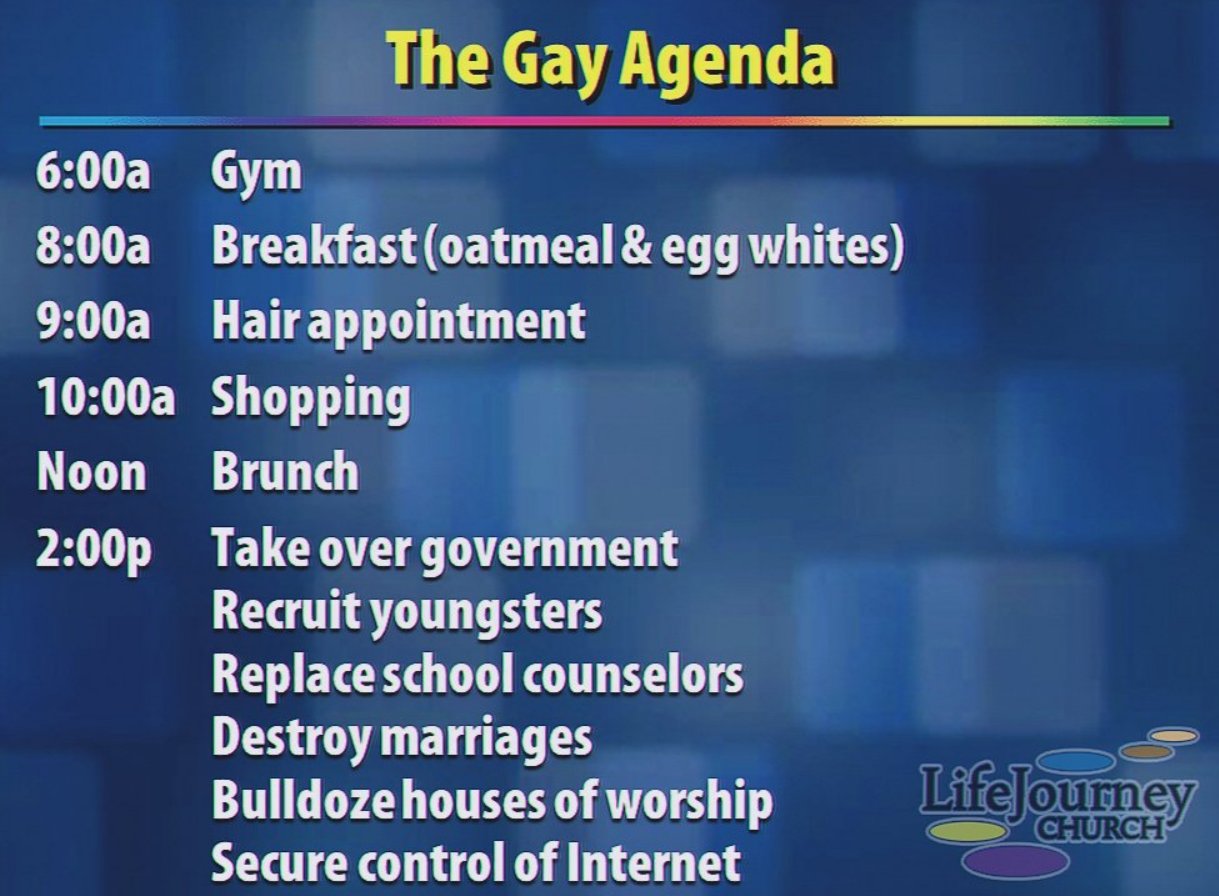
Everyone’s heard the phrase “gay agenda.”  Most of us make a joke about it anymore, mocking the religious and political leaders who obviously have no idea of what it means to be gay or how a person “becomes” LGBTQ.  That being said, maybe we need to do, as a community, what we have always done since the beginning.  Maybe we need to grab a hold of these catch phrases and insults and turn them to our advantage.  I would like to suggest that we actually create a “Gay Agenda” and as item number one on that agenda we list in bold, all caps, complete with hashtag:  #STAYALIVE.

Here are some frightening facts that I found.  Keep in mind two things. 

1.     When dealing with studies and statistics we always have to admit that there is an under-reporting that takes place with regard to self-report.  People who want to keep things on the down-low are never going to be honest when asked questions about certain topics.  An individual who attempts suicide may simply say he’s dealt with depression “all his life” but he will choose not to disclose that he has also struggled with his identity for just as long.  Because the individual fails to self-report the identity piece, the idea that he struggles with sexuality, his attempt won’t be documented within the body of research reflecting suicide and suicide attempts in the LGBTQ community.  Statistics, though accurate as far as the study and research are concerned, really don’t capture the reality of the situation because people fear being honest about things that will bring judgment and may even out them.  And, by the way, this isn’t just the reality for LGBTQ research.  This happens in any kind of study that relies on any kind of self-reporting.
2.     Similarly, the statistics I’m about to share are older statistics.  Recently I’ve been citing a survey in which 48% of respondents between the ages of 13 and 20 identified themselves as exclusively heterosexual.  This means that 52% of young people in this study identified themselves somewhere in the LGBTQ spectrum.  This is a revolutionary piece of information and I suspect that findings like this survey are going to be seen more and more among the younger population and we will eventually see statistics like the ones I’m going to talk about altered significantly in light of this new information and the willingness to share it.   

I want to make one thing clear.  LGBTQ people are not depressed because they are LGBTQ.  They do not consider suicide because they are LGBTQ and they do not commit suicide because they are LGBTQ.  There are no mental deficiencies caused by “being gay” any more than “being gay” is caused be a mental deficiency.  If you still subscribe to this nonsense you are literally stuck in the 1960’s because legitimate science abandoned your nonsense in the early 1970’s.

So if we’re going to talk about mental health challenges faced by LGBTQ people, particularly youth, let’s look at real causes rather than politically motivated causes or religiously imagined causes.

In 2013 the National School Climate Survey reported that “schools nationwide are hostile environments for a distressing number of LGBT students.”  The survey, which was completed by nearly 8,000 students between the ages of 13 and 21 and of whom nearly 60% identified as gay or lesbian, found:
·        55.5% of LGBT students felt unsafe at school because of their sexual orientation and 37.8% because of their gender identification. 
·        Roughly 1/3 of LGBT students had missed at least one day of school in the last month because they didn’t feel safe
·        More than 1/3 avoided gender-segregated spaces in their schools (i.e., bathrooms, locker rooms) because they felt unsafe
·        Most avoided school functions [Which, of course, adds to that sense of isolation.]
·        71.4% of LGBT students heard “gay” used in negative ways and 90.8% felt distressed because of that language
·        64.5% heard other homophobic remarks often
·        56.4% heard negative remarks about “not acting masculine enough” or “feminine enough” often.
·        1/3 heard negative remarks about transgendered people
·        51.4% of students reported hearing homophobic remarks from their teachers or school staff.  55.5% of students reported hearing negative remarks about gender expression from teachers or other school staff.  (Again, you wonder why I had to write about teachers being completely inept at facilitating conversations about equality and allowing students to talk about “fag marriage” and “shooting their mentally deficient and gay children?”)
·        74.1% of LGBT students were verbally harassed (called names, threatened) in the past year because of their orientation.  55.2% because of their gender expression
·        36.2% were physically harassed (pushed, shoved, etc.) because of their orientation.  22.7% because of their gender expression.
·        16.5% were physically assaulted because of their orientation.  11.4 because of their gender expression.
·        Almost half of LGBT students experienced electronic harassment/cyber bullying (i.e., text messages, facebook messages)
·        Nearly 2/3 of LGBT students who were harassed or assaulted in school did not report the incident to school staff usually because they doubted the effectiveness of any intervention.  [Which you can understand why when teachers/staff are contributing to the hostility of the environment.]
·        Over 2/3 of the students who did report an incident indicated the school staff did nothing.
·        Nearly 1/3 of LGBT students reported being disciplined for the same public displays of affection non-LGBT students engaged in freely.
·        18.1% of LGBT students were prevented from attending school dances/functions with a same gender date/partner.
·        17.8% of students were not allowed to form or promote support groups.
·        17.5% of students were prohibited from discussing or writing about LGBT topics in school assignments.
·        15.5% were prevented from wearing clothing or items supporting LGBT issues.
·        9.2% of students reported being disciplined for simply identifying as LGBT.
·        Policies which were reported that directly affected transgender youth:
o   42.2% of transgender students were prevented from even using their preferred name. [Which makes you wonder considering how many non-trans students are allowed to use stupid nicknames born from athletic participation, right?]
o   59.2% of transgender students had been required to use a bathroom or locker room based on their so-called “legal sex.”
o   31.6% of transgender students had been prevented from wearing clothes considered inappropriate for their “legal sex.”

Now this is where we get into the actual effects of all of this hostility, inequality, intolerance, and blatant ignorance and hate.

Students who experienced higher levels of victimization because of their sexual orientation were three times as likely to have missed school in the past month, had lower grade point averages compared to students who were “less often harassed” (2.8 vs. 3.3), were twice as likely to report a lack of plan/desire to pursue college or trade school, and had higher levels of depression and lower levels of self-esteem.

Students who experienced higher levels of victimization because of their gender expression were three times as likely to miss school in the past month, had lower GPAs, were twice as likely to report they didn’t plan to pursue higher education, and had higher levels of depression and lower levels of self-esteem.

These same statistics translate from victimization to discrimination. 

A .pdf of the entire study can be found here. 

How does all of this play out?  How does all of this well-documented violence and hostility toward a specific and vulnerable sector of America’s youth translate into tragedy and the loss of life? 

A 2012 Stonewall Survey gives us some insight.  Young gay men are 30 times more likely to attempt suicide than their heterosexual counterparts.  Lesbian young people are six times more likely to attempt suicide.  Some have made up to nine unsuccessful attempts to kill themselves.  The highest rates of suicide are among those who are isolated from support.

This same article reports “US News reported that teenage gay people who have been rejecred by their parents are far more likely to self-harm, take hard drugs and commit suicide than teenagers who are…loved and supported by their parents.”

25% to 60% of gay people seek counseling at some stage in their life as reported by the Counseling Directory. 

But where does all of this come back to?  Where do people receive tacit and/or overt approval for their intolerance and ignorance?  This is a hard question for me to actually answer not because the answer is elusive but because admitting it ultimately leads to an admission of a certain amount of complacency.  The answer?  The Church.  Or more specifically:  Religious and faith communities and institutions.

It doesn’t take a lot of research to convince people that traditional religious understanding bolsters contemporary intolerance of LGBTQ people.  It’s common knowledge.  It’s as well and basically understood as knowing the KKK is not a supporter for the African-American community.  More and more research is published in which people, victimized by narrow and superstitious understandings of religious texts, share their stories and bring awareness to the damage the Church, for example, has done for generations. 

And it’s not just the Christian Church struggling with these issues and attempting to push back against hundreds of years of intolerance and ignorance.  A 2012 study of Suicide and Suicidal Behavior in Tel Aviv discovered “a staggering 20% of the homosexuals and lesbians surveyed reported suicide attempts—112 times the rate among the general population.”  The study goes on to note that “this sector…does not get enough notice, and it is a hotbed for suicides that you later hear about after the fact.  The suicide rate among the religious homosexuals is the highest because they experience more distress when confronting their families.”

I cannot tell you how angry reading studies and reports like this makes me.  I cannot tell you how my heart aches when I hear people share their stories of rejection by faith communities who claim to embody the love of God and the ministry of Jesus Christ.  I grew up in the Church.  I still consider myself a part of the Church.  But the Church makes me so angry when their hypocrisy reaches this breaking point, when they claim to be the Body of Christ, to embody the Spirit of Jesus of Nazareth who led people beyond their self-imposed boundaries to people who were different, though differently, behaved differently, loved differently—not to preach at them or tell them how they need to change but to simply love them—and then these same Churches preach a doctrine of intolerance that creates fear and self-loathing in LGBTQ people who fear not only losing the love and connection of their family but, through hateful and ignorant words, feel themselves cast far away from the love of God.


We have SO MUCH work to do—in our religious communities, in our schools, and in our society at large.  No subset of our population should have to share stories of their suicide attempts any more than they should have to share stories of police violence and institutional racism.  We have to do better.  We have to educate ourselves better. 

We have to #STAYALIVE because it is getting better.  We need you to help make that happen.  


Saturday, March 19, 2016

Not Your Role Models

I know that my readers vary in age and life experience and, though I hate to divide you, I want to talk to you separately for a moment.

First, I want to talk to the parents, grandparents, and older folks who might be caregivers of younger folks.

Every generation has a habit of looking at the next generation with an overly critical eye.  I want to make clear that we have, as older generations, an obligation to help guide and impart values and culture on the younger generation and the younger generation has a responsibility to engage in this transmission process.  That does not mean that we, the current older generation, have the right to trivialize the developing morals and values of this younger generation.  We understand more and more that to attack a person’s ideas and values and demean what is important to them actually causes considerable damage to the individual’s self-concept over a period of time.

Don’t forget, too, that the teenage years are marked by a process called “differentiation” in which teenagers seeks to define themselves as something different from their parents.  It’s part of identity development.  It’s often the case that the harder parents and other formative adults push an idea or value or theory, the harder the teenager will fight to reject that idea, value, or theory.  If you think that’s just new age psychobabble, think about your own childhood and how you fought against ideas like women being relegated to either the secretary pool or the family home or how men couldn’t be nurturing, stay-at-home parents. 

I bring this up because, given both the nature of time and human nature, we find ourselves as an older generation being the caretakers of the most progressive generation—a generation which some call “lost” or “amoral” or even “disastrous.”  Some people who feel called to comment on the status of society lament that we aren’t the “country we used to be” because we’ve lost so many of our “traditional values” as we continue to cave to the “pressure” of being our children’s friends and not their authority figures.  There’s obviously a number of things wrong with this mentality. 

1.     Our country has never been what we think it was.  That’s the trap of nostalgia; we can remember things as fondly as our imaginations will permit but the reality is that when we were living through “the good old days” they actually weren’t that good.
2.     There has never been such a thing as monolithic “traditional values.”  I wish there was a way we could strike this pairing of words from our common consciousness.  Often times we see this phrase thrown around within the context of marriage equality conversations.  “Gay marriage goes against traditional Christian values” is a statement we hear over and over again by people who have obviously never opened their Bibles to see that so-called “Christian marriage” was a contractual ceremony in which a man took possession of his new property.  What’s more, in the accepting of that new property he would actually be paid to take her.  For me, as a Christian person of faith, “traditional Christian values” means attending to the teachings of Christ and not some pastor/preacher/priest.  You know, doing the things Jesus of Nazareth commanded like feeding the hungry, housing the homeless, caring for the sick, working for justice….those sorts of things that people who complain about an absence of “traditional values” mock and intentionally disrupt through their political maneuvering.
3.     Using the knowledge that we are given through science and psychology is not caving to the pressure our kids supposedly put on us.  We are not their friends.  We simply acknowledge that the world has changed and the same authoritarian approach to coerce compliance to some abstract standard that may no longer be relevant in today’s world is a waste of time. 

Again, if you doubt what I’m saying, think about your own childhood.  But as you do remember what I said about “the good old days” and don’t let your mind play the nostalgia trick on you.

When we, as an older generation, look at what the younger generation recognizes as leadership, as their heroes, as their role models, we all too often find ourselves shaking our heads and dismissing any possible good that might come from that movie, video, song, or message.  We can’t see past the clothes they wear, the language they use, the “intentional affront to morality and decency” we perceive.  We reject them as purveyors of pornography and their message as devoid of value. 

But here’s the thing.  The younger generation or the segments of the younger generation that that actor or artist or activist is addressing sees that message sender because of how they’re dressed.  The clothes, the hair, the makeup—the whole package—establishes an instant bond and a certain amount of credibility.  Why do you think Christian clergy wear dog collars?  The language they use, including that “profanity” we might think is so completely unnecessary, communicates an authenticity to the intended audience.  It says that the speaker respects them enough not to filter their words or pretend to be something they aren’t. 

If you want to see a really good example of what I’m talking about, look at this YouTube video created by Jack Merridew (on Twitter @OfficalJackM).  A lot of Jack’s followers were upset by the content and the language.  They thought it was crude and the subject material even disturbing.  But here’s the thing:  I would be surprised if Jack Merridew ever did a video that wasn’t provocative in some way but what Jack does in videos like this is actually POWERFUL.  He’s being authentic.  He’s sharing necessary information to an audience that may not have anyone to ask and because Jack doesn’t treat them as inferior and presents himself as a real person, they trust Jack to be honest with him.  Is it the way I would have a conversation like the one Jack does?  Hell no.  But I also recognize that we can’t be all things to all people.  We just need be what people in need need us to be.  (See, that’s “traditional” Christian values talking there.)  Jack’s approach is needed because he has a credibility people like me don’t have and uses a language people like me find uncomfortable and even sometimes embarrassing.  We need to be grateful for the multitude of voices that speak to these important topics because each one, whether we agree with their approach or not, has and audience and is important.

These are not your heroes or your role models.  They are not going to use a language that you decided was appropriate; the same language the generation before yours said was too far over the line.  They are not going to abide by the rules you adhered to after breaking the rules that were set on you.  This is the natural progression of the generations, to step out and define themselves as they poke and prod and explore the world around them to determine what is right and wrong, what works and what doesn’t, and what to keep from the previous generations and what to lay to rest.

Now, for the rest of you who happen to be my younger readers.  I’m not going to spend as much time with you.  (I actually wanted to spend time with the older folks today and I think you know why.)  I hope you don’t feel cheated.  I’m not going to repeat things I’ve said with regard to becoming who you associate with and so on because I’ve already blogged about all that.  What I want to say is this:  As difficult as it sometimes is, please be patient with the adults in your life.  It’s not easy raising parents today because over the past 20 years our world has changed so dramatically it’s left a lot of older folks who were raised in the dark ages before cell phones and Instagram lost and confused.  The rapidity of information exchange and the ideas that are so easily circulated confuse and worry many of the adults in your life because their brains haven’t been trained to keep up with it all like yours have been. 

We used to focus on obvious culture gaps in our society.  They were “obvious” because they were visible.  The civil rights movement, for example, demonstrated an enormous culture gap.  But I think, with the ever evolving digital landscape, there’s an even larger culture gap between young people and older people.  I mean, there’s a whole set of cultural rules and norms for Twitter that adults don’t get and think is a waste of time.  Like the whole “liking” of things.  How many of you feel guilty for missing the opportunity to “like” something on Twitter?  How many of you feel slighted if someone doesn’t like something you tweet?  These are things adults, as a rule, don’t get.  But you get it and it’s important to you.  You can try to explain it to but be patient.  If they still don’t get it, make them listen to this piece from “This American Life” that features three teenagers trying to explain the politics of Instagram.  

By the way, adults reading this?  If you need your fix of “Hey you kids, get off my lawn!” check out this blog post I did a week or so ago.

We can get caught up in the moment.  We can make nearly any moment a make-it-or-break-it moment.  We can fight so hard to try to force “the other side” to understand and even accept “our side” (and this is true for older folks AND younger folks alike).  My suggestion?  For everyone involved?  Step back and take a breath.  I guarantee that the vast majority of adults and the vast majority of teens aren’t out there trying to intentionally upset you just because you sit on one side of the divide.  People like Jack Merridew aren’t putting content out there to “undo the fabric of civilization” or to undermine “traditional values” (whatever they may be).  We’ve become so focused on winning and winning people to “our way” of thinking that we’ve forgotten one of the most important things we should be doing:  Talking with each other. 


Wednesday, March 16, 2016

Discussions of Equality in High School

It’s easy to forget but sometimes the words we use and how we use them can be incredibly painful and even deadly. 

Imagine for a moment that you have a secret.  Absolutely nobody knows about your secret.  You have tried very hard to keep this secret hidden from everyone, including your family.  It’s not that this secret makes you ashamed or that you don’t want to share this secret.  The reverse is actually true:  You are aching to share this secret, to be honest with the people around you, especially the people you love.  You keep this secret because you have learned by watching the world around you that honesty isn’t always met with reason.  People who have shared this same secret have been met with judgment and ignorance and intolerance.  Some have had their lives taken from them.  Some have taken their own lives because of how they were treated after confessing their secret, after revealing their truth. 

This secret doesn’t make you feel alone.  It makes you alone.  You are isolated.  No one to confide in.  No one to support you.  No one to comfort you when hateful words are thrown around without a care as to who could hear them and how they will be heard.

This is what it’s like for many LGBTQ people. 

Today a friend of mine casually dropped a comment on social media about a conversation that took place in his history class.  The assignment had been given:  Prepare a one page discussion on your opinion as to the state of equality in American society and provide an example of how society could be made more equal.  During the course of the review discussion of the assignment, the teacher asked if there was anything else the class wanted to discuss.  One student blurted out, “Yeah.  Fag marriage.”

And apparently it all went downhill from there.

My immediate question was:  What did the teacher do in response to the offensive language?  The answer:  Apparently nothing.  Students referred to LGBTQ people as “diseased.”  One student said that if he had a child “who had a mental disorder or was gay or trans” he would lock “it” up.  It.  He called his theoretically child an “it” because he needed to distance himself from the humanity of a theoretical child that failed to suit his inherited, preconceived notions of what was acceptable.

And the teacher said nothing.

Another student took this a step further and said that he “would probably shoot it.”   

And the teacher said nothing.

And my friend, the student, was trapped, listening to this ignorance that science abandoned over forty years ago and even contemporary religion has begun walking away from.  Yet, here was my friend, stricken by the lack of compassion, lack of human recognition, his fellow students were parroting.  I stress parroting because kids don’t develop this kind of hate on their own; it’s nurtured into them by parents who were spoon-fed the same nonsense when they were children.

And the teacher said nothing.

I want to stress again that my friend was trapped.  He wasn’t able to leave the class lest it bring more attention to him and his situation.  He couldn’t speak to the point without tipping his hand.  He was forced to sit in his high school history class and listen to people liken sexuality to mental disorders that are deserving of death while the teacher, who was either woefully unprepared to address the topic or woefully uneducated to address the topic sensibly, finally managed to say, “"I don't have a huge problem with it....but do two people really have to get married to proclaim their love?”  Never mind the fact that apparently this teacher did get married to his wife to proclaim his love. 

In case people have missed it, we are in the year 2016.  Applied to this situation, this means a few things:
1.      If you are a teacher who invites discussion about controversial topics over an assignment about equality you had better have the education and the wherewithal to ensure that the participants in that discussion are respectful of the equal standing of all human beings regardless of age, gender, sexual identity, religion, ethnicity, and so on.  If you can’t maintain a modicum of decorum in your class when it comes to these conversations then you had better not invite these conversations.  Today this teacher failed his students.  He failed to model the spirit of a lesson on society’s call to provide equality by allowing students to cross a very serious line in their rhetoric and demeanor.
2.     Absolutely everyone in this country (and even the world) is free to develop and speak their own opinions.  You are not, however, free to treat that opinion as fact.  What makes you, a high school student, more intelligent and more informed than an entire scientific community who rejected your theories decades before you were even born?  What makes you, a high school student, more versed in law and legal issues than the nine men and women who sit on the highest court in the United States and declared that opinions like yours are not valid opinions in a court of law and are therefore out of step with the spirit of the constitution of the United States? 
3.     Parents, if this is the kind of thing that you are teaching your children at home or are subjecting your children to in the life of your religious or faith communities, you better think again about the damage you are potentially doing to your children.  It used to be said that three of every ten people were LGBTQ.  A recent survey reported that nearly half of today’s teenagers identify as something other than straight.  And, yes, that includes young people in the Bible belt and conservative pockets of the United States.  Pushing your uninformed, medieval notions of homosexuality is not only perpetuating ignorance; you are also probably causing stress and anxiety in, statistically, half of the children in your home. 

I’m not going to name names.  I’m not going to identify the school.  I don’t want this to come back and cause problems for my friend.  That being said I have absolutely no doubt that a copy of this essay is going to find its way into the hands of the school’s administration and I hope to God that this issue is addressed.  I’m not suggesting suspensions or detentions.  I’m suggesting that students and teachers would benefit from a little education with regard to the history of the LGBTQ movement and how stupid, ignorant, throw away comments can undo a person’s sense of self-worth. 


Lessons Learned from Harry Potter

(This is part three of a blogging series.  Part One is here.  Part Two is here.  You don’t need to read the other two to make sense of this one but you’ll probably want to read them for your own benefit.)

I’m a huge fan of J.K. Rowling’s “Harry Potter” novels.  I know that they appeal to my inner child, who has always been fascinated with fantasy stories.  I also know that the adult in me enjoys the complexity and word plays that Rowling uses to craft her tale.  And, like everyone, there are characters in the world of Harry Potter that absolutely call to me, whose own story I find compelling in its own right.  These our favorites and each time we visit them in the pages of those seven books we grow closer to them, identify more with them, and love them more and more.

Who is my all-time favorite Harry Potter character?  I think my answer will surprise you.

Professor Severus Snape.

Now, I will admit that my choice might be affected slightly by the stellar performance of the late Alan Rickman, particularly in the last two movies in which, like the final book, we see at last who this character is and what made him be the character he was.  The theatrical influence of the films notwithstanding, however, Rowling created an epic character skillfully, an archetypical persona rarely seen in literature anymore. 

Before I continue I want to offer a short disclaimer.  I recognize that the books are called “Harry Potter and….” and not “Professor Snape and…”  What I mean by this is that the total complexity of the life of Severus Snape, as a supporting character, isn’t going to be fleshed out as fully as Harry’s or even the characters closest to the Harry-center.  Some of my observations could easily be made different if J.K. Rowling would have had the opportunity to introduce more of Snape’s history or internal dialogue.  But, like much in life, including those things in our own individual stories, this is what we are given and so we use our knowledge and experience to make sense of these things.

In a nutshell, this is what we know about Severus Snape.  His mother was a witch, his father was a muggle.  We assume at some point in his parents’ relationship there was affection but that had pretty much disappeared by the time we glimpse them through young Severus’ eyes.  As a boy he meets and develops a deep and abiding affection for Lilly Evans despite her sister, Petunia’s, best efforts to disrupt the friendship and keep Lilly for herself.  The two eventually are accepted to Hogwarts where you know their friendship had to have been tested beyond what we see in the pages of the book.  Goody-two-shoes Lilly Evans from brave Gryffindor friends with the slimy outsider from Slytherin?  As the two grow older they grow apart because they can’t escape the strength of their convictions.  Lilly eventually gives into the pursuits of James Potter and Severus finds himself in league with the Death-Eaters…all the while still pining in the privacy of his heart for Lilly.  When Severus learns that Voldermort was planning to kill the Potters, he seeks out Dumbledore.  Dumbledore intercedes but in so doing makes a deal with Snape.  I don’t know if Severus Snape ever understood his relationship with Dumbledore in these terms, but it seems clear to me that Snape becomes Dumbledore’s protégé. 

Of course by the time Harry comes along, all of Severus’ anger over James’ “theft” of Lilly’s affections are transferred to Harry, who resembles his father so much.  Except for the eyes, of course. 

Every decision Snape makes in his treatment of Harry is supposed to make the reader question Snape’s loyalty to Dumbledore, “the cause,” and even Harry himself.  It’s not until the end of the saga that we understand that the decisions Snape makes are actually in the best interest of Dumbledore, “the cause,” and even Harry himself. They were all decisions based on Snape’s own experience and understanding.  We occasionally hear Snape complaining to Dumbledore about Harry’s arrogance and lack of talent and ability, but we never hear Snape complain, through any of the books, about his own lot in life.  This is what makes Snape my favorite character.

Think about it.  Snape’s childhood sucked.  Snape’s only childhood friend not only turns away from him but falls into the arms of Snape’s worst childhood enemy.  This childhood friend turned romantic love is murdered by the guy who had lured Snape to a cause he thought was right and just.  As time unfolds Snape needs to learn to live with the consequences of his actions—not just Lilly’s death but all the pain he has caused.  He’s never allowed the recognition he deserves lest his entire cover be blown.  For seven years he is confronted by a student who reminds him not only of the chief tormentor of his childhood but also the only love he has ever experienced. 

And not once do we ever hear Snape complain.

Snape never launches into diatribes or soliloquys about the unfairness of life, how he tries and tries and never seems to succeed, how he’s somehow owed and yet always denied the things he believes he has earned.  The only time we hear Snape complain is one scene between himself and Dumbledore in which Snape is arguing with Dumbledore about having to do the things Dumbledore expects from him but we eventually discover that this has nothing to do with Snape’s role as a double agent or the teaching job he’s always wanted—it has to do with promising to be the one to kill Dumbledore when the time is right.

I don’t know about you but I am not so gracious when it comes to dealing with the frustrations life has to offer me.  I have often found myself reviewing the events of my life, the rises and more specifically the falls in my story, and I eventually find myself raging at the wind that blows ill in my direction and into my face.  “I’ve done everything right!  I’ve always done the best I know how to do for those I love and who love me!  I always try to be a good person, follow the rules!...”

“….why am I being punished?”

How many of us, if we don’t actually breathe life into those five words by speaking them, at least think them when we struggle with life’s challenges?

Why am I being punished?

It is in our human nature to ascribe motive to people in our lives.  Psychologist refer to it as “Attribution Theory.”  In a nutshell, if we do something bad it’s because of the circumstances that are foisted upon us.  If someone else does bad, or does bad toward us, it’s because they’re simply a bad person doing bad things from bad motivations.  You see the difference?  If do we bad, we scapegoat it out.  If others do bad, it’s because they’re rotten people. 

It’s how Harry and so many other characters become so dismissive of Severus Snape in the Harry Potter books.  Snape, in their eyes, is completely incapable of making a good decision while all of our heroes constantly struggle to do what is right.  Of course not one of these characters apart from Dumbledore actually takes the time to learn Snape’s story to understand why Snape does the things he does.  Only Dumbledore resists the temptation to dismiss Snape’s motivations as corrupt. 

This translates to the larger, intangible forces in life.  When it seems that there is no actual person behind our trouble and our misery, we ascribe this thing called “life” the same wicked motives we would ascribe someone who wronged us.  Life is unfair.  It is punishing us. 

This idea is sometimes translated into religious and spiritual teachings.  I can only speak within a Christian experience but this is just another ignorant and superstitious teaching perpetuated by the institutional church designed to keep the faithful in line.  God does not punish people.  People do enough punishing of people on their own without dragging God into it. 

We are driven to make sense of our lives, to interpret the good and especially the bad.  We do this by creating a narrative of our life, by telling our story.  We’re the main character, the hero, the protagonist.  We struggle and battle.  We win and celebrate.  We lose and wonder why.  We reach peaks and we fall into valleys.  If we can’t reason out logically the events that affect us, if we can’t access the thoughts and motives of the people whose own stories intersect ours, if it’s the amorphous, ambiguous, immeasurable thing we call “life,” we do what human beings have always done.  We ascribe it motive or place it within the purview of some divine force. 

Or maybe it just happens because life sucks.

Sometimes we get so focused on reasons and actors in the telling of our story that we forget that, even in the best stories, there are always “givens” that the reader has to accept to help the story move forward.  In life the biggest given is that life sometimes just sucks.  We aren’t being judged or punished.  We aren’t being tortured.  We are alive and if we are alive it means we have to accept the “givens” of this life. 

Life sometimes just sucks.

You see, sometimes getting caught in the narrative process, trying to divine the why’s and why not’s, we become stuck in the pain and misfortune.  The “suck” of life.  Here is the one thing I’ve learned about these “givens,” these things we accept that are without rules or rationale.  They are given to us to improve us.  Whether you want to call it luck or divine intervention or just the way it is, these tragedies, challenges, struggles come to everyone and how we deal with them will tell us how we move forward in our stories.  If we allow ourselves to be victimized by events outside of our control, to become trapped in wondering why we’re “being punished,” we miss the point. 

Maybe a better approach to these givens is not waste our time divining their origins but to remake them as characters.  They come into our lives as surely as love interests, friends, or workplace competitors.  They come to make us better.

What doesn’t kill us makes us stronger. 

Look at Snape. 


Saturday, March 5, 2016

Our Whole Lives Are Just Stories

I am a huge fan of the Vikings. 

Yeah.  No.  Not those Vikings.  Let me clarify.

On the History Channel there is a historical/costume drama called “The Vikings.”  It is created by the same imagination behind Showtime’s “The Tudors” and “The Borgias.”  His name is Michael Hirst and the guy knows his history.  He does a very good job at dramatizing it for public consumption.  “The Tudors,” of course, tells the story of King Henry VIII and his wives.  “The Borgias” is about Pope Alexander VI and his illegitimate and often times frightening family who served as inspiration for the modern epic “The Godfather.” 

“Vikings” is a drama that focuses on—wait for it—the Vikings, those conquering warriors from Scandinavian lands who terrorized (and to a certain extent civilized) much of Europe, especially the British Isles, around the 8th century.   I’m a fan not just because I think Michael Hirst is a gifted story teller but because “Vikings” speaks to my heritage.  My mother’s mother was first generation born in the United States; her parents emigrated from Norway.  Of all of my ethnic backgrounds, my Norse ancestry is the least explored.  So not only am I entertained by “Vikings,” it causes me to think and gives me direction to read and research something that seems too large and unknown to know where to begin.   

I’ve started re-watching the series again in preparation for the premiere of the new season.  I often stream something in the background while I’m working and, since today is Saturday and blog writing day, I had “Vikings” going while I tried to write, back up, and start over.  Some days the blog writes itself.  Some days I can’t seem to put two sentences together without abandoning the effort and starting over a dozen times.

Guess what kind of day today was. 

And then the sky opened and the Norse gods literally smiled down on me and I knew I finally had the angle for the post I was struggling to compose. 

Season one, episode seven.  Our hero, the recently made Earl, Ragnar, has headed west again to sack British villages and towns and his imposing wife, Lagertha, a character who would score high on the Bechdel Test, is left in charge.  A married couple, who had apparently struggled for years with an inability to have children, present themselves in front of Lagertha.  Apparently the woman had given birth to a son and her husband was outraged, declaring that the child couldn’t possibly be his.  He relates to Lagertha and “the court” that a young man calling himself Rig had visited their home roughly nine months before and the husband was certain that the stranger was the father of the child.  His wife, in tears, said she didn’t know who the father of the child was.

Lagertha, who is as intelligent in court as she is deadly on a battle field, beckons the woman closer to her place on the throne.  She asks the mother, “Do you know who this Rig was?”  And, of course, the woman trivializes him by saying he was just some young man.  Lagertha continues:  “On the contrary.  We know from our ancient stories that Rig is another name for Heimdal.”  This stuns the young mother who can’t seem to get her head around the idea that this young man who had visited her could possibly be one of the Viking gods.  Lagertha says, “You are fortunate that he chose your household to appear.”

The husband isn’t having any of this.  He says, “My lady!  That’s just a story!”  and Lagertha, fixing him with a contemptuous gaze, responds, “Our whole lives are just stories.”  She continues by chastising the husband for not trusting his wife despite the joy and comfort she has brought him by delivering him a son.  Lagertha’s judgment?  “Do not punish her.  Rejoice with her.  Drink wine with her.  And sacrifice one of your animals to Heimdal the God.  But if I hear that you’ve harmed this woman, or this child, you will answer for it to me.”

Okay, so Lagertha’s judgment and warning go beyond where I could have stopped but…I just couldn’t stop myself.  Lagertha’s a badass and to stop where her words started to serve my purpose would be to ruin Lagertha’s story. 

And, since I want to talk about this idea of story, I couldn’t very well destroy this one to prove my point.

“Our whole lives are just stories.”

From the moment we are born to the day we are laid in a casket with family and friends gathered around us, celebrating our lives, we are a story.  We are the protagonist and sometimes our own worst antagonist.  Every experience we have, every struggle we meet and every success we achieve, creates the arc of our story complete with chapters and themes. 

We wear the advertisements of our story on bodies, in our social media, and even in our vocations.  These things become our book’s cover, our public readings, and the forum for encouraging from others a deeper understanding of our story and through our story a deeper understanding of the world.  This about David Sedaris telling stories from his life in his books or on “This American Life” which connect to larger themes and provoke greater thought.

We are also “storied at” throughout our lives.  The great narrative of our history surrounds us, with its shame and its victories.  Our religious traditions imbue us with yet more story.  The stories of the people in our lives—our family, our friends, our colleagues and coworkers—all bring their stories into our lives and, just as the sharing of our story with them broadens their understanding of the world, in the sharing of their stories we begin to see things differently as well. 

We can’t escape the idea of being caught up in a story or being storied by institutions, conventions, and family traditions.  Why?  Because our stories are the only thing we have to make sense of our lives.

It kind of makes me think of that scene at the end of “Men in Black 2” where Agent K shows Agent J that the world is bigger than what J believes it is.  This is how we make sense of our lives, by connecting it to larger stories outside of ourselves. 

How we hear stories and how we remember stories help us to learn and to understand.  From our oldest religions we have….stories.  From our history text books we have….stories.  From our parents and grandparents we have….stories.  From our teachers we have…stories.  To our children we give…stories. 

Think about the last conversation you had.  Maybe you were trying to explain why you chose to study what you studied in university.  Maybe you were trying to share something you thought was funny.  Maybe you were trying to help someone understand that whatever they were going through is something many people have experienced.  You can’t do any of these things without sharing your story. 

Here’s where we tend to run into trouble.

Because our world is smaller and moves faster than it ever has before we are considerably more disconnected from the “story keepers” in our lives.  Now, I’m not saying that parents and grandparents have all of the answers because they flat out don’t.  But traditionally, when the world was larger and slower, the older people in our lives were able to hold onto our communal stories—our histories, our traditions, etc.—and could place them (and us) into the context of time.  It was from their sharing that we could learn more about our place in the world.  We were more rooted as a Western people. 

Some of you might be old enough to remember “The Waltons.”  I think it’s still on TV running on Halmark channel now.  It’s a story of a multigenerational family living through the depression and World War II.  It aired during the 1970’s.  Think about the grandfather in that show:  He was always ready to share a story, to anchor his grandchildren in their history, but he absolutely never told them who they should be or what they should do with that knowledge.  That’s an ideal example of what I’m talking about with regard to the “story keepers” from the older generations. 

But that’s not the world we live in anymore—if any of us actually did live in a world in which we were fortunate enough to have a Socratic story teller like Grandpa Walton.  Instead we bump along as best we can, children of working parents and chaotic, frenetic families, learning what it means to be ourselves while being told through the stories in our music, in our friendships, through the internet, from teachers and leaders that we should be this way and we shouldn’t be that way.  We are bombarded with stories that are not our own and can’t possibly be our own and it confuses us and it distracts us from our own story. 

We used to call it “peer pressure.”  We were told by people who seemed cooler than us what we should do, how we should act, what we should wear, and so on so that we could be cool, too.  I’m sure our peers still do this but I think what we suffer from now is story confusion. We watch shows on Nick and Disney and we see people we want to be.  We want their stories.  We mimic their behaviors and copy their voices and mannerisms.  We become an echo of a fictional person because we become convinced that this person who shares our lives through the television is who and what we should be. 

And it’s not just teen programming.  Think about your favorite shows and how, even as an adult, you want to be cool or successful or liberated like your show’s hero.  Or you want to live into a romanticized life where the complications of work-a-day life are resolved by clever wit in a reasonable amount of time without a great deal of the mess that real world problems deliver to their victims. 

Now think beyond television.  Think about the music you listen to and how we adopt these stories.  In my non-Troy Comets work I have confronted a number of people over changes in their personalities because of the music that they start listening to.  “You become the music that you listen to” is repeated by me over and over in many different contexts.  We’ve all seen this happen.  Someone is introduced to “emo music” and they begin to dress and act and talk “emo.”  Someone is introduced to “country music” and all of a sudden they’re telling us about running out of beer, their girlfriend leaving them, their truck not starting, and their dog dying.

Sorry.  I couldn’t help myself.  There’s more to country music than losing alcoholic beverages and riding around in pickup trucks.

I think. 

But you get the idea, I hope.  And this really isn’t a new phenomenon.  People have done this ever since human beings learned to tell stories.  Our stories have heroes and we want to emulate those heroes.  We want to be remembered in story just like our heroes are remembered.  It happens in holy writings and it happens in secular writings.  Think about this clip from “A Christmas Carol” in which Ebenezer Scrooge talks about the comfort he received as a child from the heroes in his books. 

We have to train ourselves to keep our own stories uncluttered and untangled from the stories of the people around us, whether they are real or not or directly in our lives or not.  If we lose track of our stories we lose track of ourselves.  The confusion of our own story is one of the biggest causes of identity issues people face today.  It’s definitely tricky since we have, as a whole in the Western World, lost our traditional anchors (for better or worse, by the way) and in place of these story keepers we have, through technology, gazillions of other stories to adopt or sort through or learn from. 

I’m not sure what the solution is when it comes to story confusion.  I have ideal, textbook-based thoughts on it but we don’t live in such a black and white world anymore and I think these idyllic solutions only act to confuse our stories even more.  It’s just another voice telling another story of what we should be. 

I think the only thing I’m comfortable saying about the topic (at least right now) is this:  People need to figure out how to hold onto their own stories.  Here’s what I mean.  Since its premiere on Tuesday night, I’ve watched on social media how people have responded to the characters and the stories of “The Real O’Neals.”  The ones I enjoy the most are the ones that read like “I see so much of myself in [insert character’s name here].”  That’s healthy, wonderful, and incredibly helpful in discovering your own story.  It starts “from home” and moves outward to touch on someone else’s story.  The alternative would be “I really want to be [insert character’s name here].”  In this statement we don’t even start “from home” and immediately want to adopt a story that isn’t ours. 

I hope I haven’t made this too complicated to follow.  I am going somewhere with all of this.  Trust me.  I wouldn’t be laying all of this seemingly complicated mumbo-jumbo out there for you, dear reader, if I didn’t have a plan in mind.  But let me summarize it all for now like this:

“Our whole lives are just stories.”  We have our internal stories that help us understand ourselves and the world around us and we have our external stories that help us orient ourselves in time and place.  All of these stories live in us but are occasionally threatened by stories that aren’t ours that demand our attention and tantalize our imagination and want to usurp the stories that actually make us who we are and not a character on TV, an idea of a person from a song, or an understanding of who our heroes are.  We need to pay close attention to how other people’s stories interact with ours, how that interaction might help us tell our story or might confuse us and draw us away from our story. 


Stay tuned for part two.