Follow Me on Twitter!

Find me on twitter @TroyComets
Showing posts with label bullying. Show all posts

Monday, April 11, 2016

The North Carolina Temper Tantrum

I’ve somewhat reached a turning point in my opinion about North Carolina’s trans-panic induced hate bill. 

No, I’m by no means coming out in support of such ignorant and juvenile political tactics.  I’m certainly not swayed by any pseudo-religious arguments about “men dressing as women being an abomination” or any fake science put forward by people like Glenn Gruenhagen   I still solidly believe this hate bill, like the ones passed in Mississippi and Tennessee and like the ones being proposed in other states for election year publicity, are significant attacks on the progress we’ve made as a civilized people in the recognition of the humanity of a minority of our population. 

Where I think I’ve turned a corner is in the understanding how the ripple effect of these hate bills is going to play out. 

If you’ve ever watched a child, you’ll understand this analogy.  Suppose the child you’re supervising insists on going into a room you have declared as off limits.  The child totally understands that they do not belong in that room.  BUT…if you watch the child they are going to do everything sneaky to test that boundary.  It might start as a toe casually crossing the threshold or maybe a hand stuck in the room to make sure laser beams won’t slice the child’s body to bits.  The child will push back against the adults’ decision that the space in question is a space not to be disrupted by childish play.

This is exactly what’s going on with these hate bills.  The majority has spoken.  The US Supreme Court has ruled.  Marriage equality is the law of the land.  But as I’ve written before, Republican lawmakers always need to make something out of nothing in order to rally their base during an election year.  They can’t rail against “gay marriage” anymore.  The “repeal Obamacare” mantra has lost its punch.  Heck, even abortion rights seem to have fizzled among the voting public.  But “perverts wanting to use the women’s room so they can rape your daughter” sounds like a solid fantastical claim to get people interested in what you have to say.  And, again like I’ve written, facts no longer mean anything in situations like this.  It’s all about controlling the story. 

It’s children testing a boundary, trying to get into that space that the adults have declared a zone free of childish play. 

But here’s what I see happening. 

·        Paypal has pulled out of a plan to construct a “$20 million research and manufacturing plant in the state, which would include 50 new positions paying an average $76,000 annual salary.”
·        Braeburn Pharmaceuticals has canceled plans to build a research facility in the state.
·        Lionsgate Films and A&E network will no longer be filming in the state until the hate bill is repealed.
·        The NBA is looking at moving the NBA All-Star Game in 2017 to Atlanta, costing the state an estimated $100 million in revenue.
·        20th Century Fox is not planning to do anymore filming in North Carolina.
·        State Governors are banning state employees from traveling to North Carolina for any reason.  My homestate governor, Mark Dayton of Minnesota, issued his orders affected Metro Transit employees from attending a conference coming up in North Carolina.  Dayton isn’t alone.  New York Gov. Andrew Cuomo, Vermont Gov. Peter Shumlin and Washington, D.C. mayor Muriel Bowser have also issued bans on non-essential employee travel to North Carolina.
·        Bruce Springstein canceled his Friday concert in opposition to the hate bill. 

Those are just the notables and just in North Carolina.  Mississippi and Tennessee are facing the same kind of boycotting.  For example, today Bryan Adams canceled his concert in Mississippi because of their discriminatory law.

Of course, Pat McCrory, the governor of North Carolina, has called this a media smear campaign and referred to “The Boss” as a bully.  Like a child not able to take responsibility for his actions, McCrory is lashing out at others who are calling him out on his behavior.

But, see, this is what I find so encouraging about this horrible situation.  Everyone knows what the Republican party has become.  We all knew that sooner or later someone would try something to target the LGBT community again and attempt to force everyone to conform to extreme Republican political understanding of religious views.  They’ve shown us who they are for decades and everyone understood it wasn’t a matter of if but a matter of when.

But the adults in the room aren’t having it.  And like a tantrum-throwing child demanding everything be done their way, North Carolina politicians are getting put in the biggest time out imaginable.  Plans to hang out with the cool kids like Paypal and Braeburn and Lionsgate—all canceled.  Allowance—revoked to the tune of millions of dollars.  Even going out to a concert is out of the question until these people—these children—improve their behavior and fix what they broke.

And this is what has me so relieved and so excited!  The adults in the room are putting their feet down and declaring, “This behavior is not acceptable.”

We knew they would pull something, try to undo all the progress hard won.  In the back of my mind I always stressed about what the response would be.  Is it going to be another protracted battle?  Are people even going to notice or care?  Are people experiencing “compassion fatigue” when it comes to the saga of LGBT rights?  But what I’m seeing is quite the opposite—people do care and they aren’t going to put up with it.  In fact, the NAACP announced two days ago its plans to orchestrate a massive sit in at the North Carolina legislature if the hate bill isn’t repealed. 


This encourages me on so many levels but fundamentally it encourages me because it validates my belief that people are, when it gets down to it, fundamentally good.  When we have the likes of Donald Trump and Ted Cruz and Pat Robertson and Franklin Graham saying all this hateful nonsense it’s a relief to see reasonable reactions to capricious activities.  I mean, in an election year in which we seem to be experiencing the death of common sense, it’s good to know not everyone has abandoned morality and good judgement. 


Share it forward!
Follow me on Twitter @TroyComets 

Monday, April 4, 2016

The Truth Behind Anti-LGBT Research

Last week I was introduced to MN State Representative Glenn Gruenhagen.  I immediately shared what I learned about Mr. Gruenhagen with all of you, paying particular attention to his anti-LGBT stance and his attempts at legalizing discrimination by pretending to care for the mental health of LGBT people through a misrepresentation of the Diagnostic and Statistical Manual (DSM). 

I have spent considerable time since researching Mr. Gruenhagen and his colleagues.  I’ve reviewed his website and have been in contact with a few media outlets who shared with me their experiences and findings with regard to Mr. Gruenhagen. 

Before I continue I want to point out the obvious.  I know the vast majority of my readers don’t live in Minnesota.  Heck, I know a lot of you don’t even live in the United States.  The reason why I’ve decided to devote attention to Mr. Gruenhagen’s attempts is because his tactics are universal.  Face it, a fear-monger only has one play:  Be afraid of those people.  The only thing that ever changes from fear-monger to fear-monger is who the those people are.   Mr. Gruenhagen has a few different those peoples to choose from; I’m simply going to focus on the LGBT community because of his recently introduced bill and the heinous actions of politicians in North Carolina.  This is becoming a theme again for this election cycle:  Be afraid of the gays because they’re going to corrupt you with their illness!

You would think that we could start moving past this considering recently court rulings but some people simply cannot abide progress or inevitable judgments that permit that progress. 

So according to Mr. Gruenhagen’s website, designed to get him elected every two years, there exist…

over 2500 studies in the social sciences that confirm the economic and social benefits of traditional marriage, for both men and women. Studies also confirm that children especially benefit in numerous ways when raised by a mom and dad.

It was a bibliography of these studies I had requested from Mr. Gruenhagen.  My request was ignored.  So, though I can’t speak directly to these individual studies, their methodologies and institutions of origin, I can speak to what I know and what I know is this:  Absolutely no legitimate institution of research or higher learning within the educated, academic psychological and psychiatric community within the United States (and perhaps the greater western world) would have published such a study within the past two decades for the simple reason that it defies the science behind identity and sexuality.  What this means is that, if these 2500+ studies Mr. Gruenhagen is talking about actually exist they were authored by pseudo-scientific organizations that are more religion than science, institutions like the Family Research Council.

The interesting thing about the Family Research Council, however, is that they actually don’t do any research.  If you review their list of so called experts you won’t find a single psychiatrist or psychologist in the bunch.  What you will find, however, is a bunch of marketing gurus and lawyers.  If you review their literature on topics like “marriage” and “sexuality,” you’ll find a few briefs that support their political position some policy publications promoting that position, and a number of op-eds advocating for that position.  There’s a gaping hole in the area of actually providing research that support their position and here’s why:

It doesn’t exist.

At least authentic, scientific research conducted morally, ethically, and appropriately away from underlying bias does exist.  It hasn’t existed since the 1970’s when the scientific community, namely the American Psychiatric Association (APA), removed homosexuality from the DSM in 1973.  In their determination the APA indicated that support for the traditional mentality that an LGBT sexuality was reflective of disorder, disturbance, or any similar pathology.  In short there is nothing to be addressed here; take your medieval ideas of prayer and healing elsewhere.  Science does not support it.

But as anyone with a Republican uncle knows after the topic of global climate change comes up at Thanksgiving Dinner, some people just can’t integrate actual science into their belief system.  Typically in such cases we see one of two reactions: 

1.     That’s just liberal nonsense trying to figure out how to run people’s lives and tax the bejesus out of them by using made up facts that happen to support the views of their campaign donors.
2.     But I read on the Family Research Council’s website and heard on Focus on the Family or saw on The Seven Hundred Club that that’s not even true.  It’s just part of the liberal gay agenda to let perverts near our children.

Reaction number one ignores scientific evidence.  Reaction number two counter scientific evidence with religious based pseudo-science. 

Why do you I say it’s religious based pseudo-science?  Look at the institutions that produce these so called studies.  How many of them are connected to current or former televangelists?  How many of them are connected to institutional denominations running ad campaigns in neighboring states to beat marriage equality? 

Here’s the other source for anti-LGBT propaganda:  Other scientific disciplines.   For example, two sociologists who have become champions of the conservative anti-LGBT campaign are Dr. Mark Regnerus, a sociologist from the University of Texas, Austin, and Father Donald Sullins, a Roman Catholic Priest and Sociology Professor at Catholic University of America in Washington, DC.

Just to be clear, let me offer simple definitions of the disciplines we’re discussing here.

Sociology is the study of social behavior or society, including its origins, development, organization, networks, and institutions. It is a social science that uses various methods of empirical investigation and critical analysis to develop a body of knowledge about social order, disorder, and change.

Psychology is the study of behavior and mind, embracing all aspects of human experience. It is an academic discipline and an applied science which seeks to understand individuals and groups by establishing general principles and researching specific cases.

Psychiatry is devoted to the diagnosis, prevention, study and treatment of mental disorders. These include various abnormalities that are affective, behavioral, cognitive and perceptual.

Do you see the difference here?  Whereas psychology and psychiatry focus on the inward processes of health and well-being and the behaviors that may stem from the internal, sociology focuses on the outward behaviors of society.  So when an individual looks at a sociology study that may seem to indicate that children in the home of two non-LGBT parents are more successful than children in the home of two LGBT parents, the factors that contribute to this success lie outside of the individual and within society itself.  We are no longer talking about mental health and identity.  We are now talking about the ability of an individual to matriculate into society without prejudice.  Contrary to the opinions of Dr. Regnerus and Father Sullins, there are far too many variables in such research to make conclusive arguments.  Which, of course, they should know since they are sociologists whose job is to remark on the behavior of society and not identify the development of individual identity and how to influence it. 

If sociology discovers that social behavior and society struggle with the integration of LGBT individuals with regard to respect and equality and even fundamental human rights, their discovery does not indicate something faulty or defective with the LGBT mind and/or development.  That is not their area of expertise.  If the psychiatric community, in 1973, determined there is nothing detrimental to the quality of life of an LGBT person when that LGBT person embraces their identity, a sociologist cannot come back, fifty years later, and declare that the whole field of psychiatry is wrong because our study of society shows society can’t deal with LGBT people.

It should be noted as well that these two scholars along with their work have been soundly criticized by their colleagues. 

So why am I sharing this with you?  I mean, it’s not like you’re ever going to have a conversation with that uncle at Thanksgiving Dinner and convince him that science is real and that there is a right way and a wrong way to do it.  Ours is not a society in which we have conversations that lead to change anymore.  Ours is a society in which we don’t have conversations, we no longer seek to learn as much as to teach, to be changed as much as to change. 

The first reason I share this with you is so that you know that when someone like Glenn Gruenhagen, an elected official of the State of Minnesota, stands up and tries to convince you of certain facts based on 2500+ studies that he’s apparently unwilling to share—you need to know where those facts came from and how they are interpreted.  People like Mr. Gruenhagen have anchored their arguments in a body of work but the body of work is as accurate and appropriate as the user’s manual from an old VHS player.  I could make a sound argument for forcing women into subservient roles, too, but it would mean taking the Bible out of context and relying on archaic research and cherry picked contemporary studies.  Not unlike Mr. Gruenhagen and his colleagues have done with LGBT equality. 

The second reason is more difficult than the first.  Armed with the knowledge that homophobes like Glenn Gruenhagen use bad science and no science to bolster their argument means that the people who fight for LGBT equality need to be equipped with actual facts and research for when they find themselves in a position to have legitimate conversation.  Google advocacy and support groups and learn truth to combat misinformation and ignorance.

The third reason is:  I don’t want you to feel bullied by law makers, teachers, or parents when they throw this pseudo-science at you while you struggle with your identify.  Do not let anyone ever tell you that because you identify as LGBT or question whether you identify as LGBT that you are somehow inferior or sick or that you need to change to integrate better with society.  You are a gift to this world—absolutely everything about you.  Don’t let others zero in on one thing that in the grand scheme of things is just one part of who you are and let them destroy you because of it. Again, the problem isn’t within you.  The problem is with how society might see you and that never going to change until society gets to know you.

Share it forward!

Follow me on Twitter @TroyComets


Tuesday, March 22, 2016

Suicide and the Gay Agenda

While visiting with more and more LGBTQ people, particularly over social media where I can get a variety of insights from a wider range of geographic and cultural contexts, I’ve noticed a new trend.  This new trend creates a sense of relief in me while at the same time chilling me to the bone. 

When people talk and connect and engage in a deeper, story-sharing dialogue, it doesn’t take long for common themes between people to emerge.  For LGBTQ people, who often grow up isolated and desperate for this kind of connection, obvious themes quickly emerge.  Themes surrounding “When did you know you were gay/bi/trans?” and “What was coming out like?” and “How did/do you handle crushes on straight friends?” are top on the sharing list.  But the theme I’ve been tracking more and more?  “I thought about/came close to/attempted suicide when…”

On the one hand I am so incredibly relieved we’ve arrived at a place, if only internally within the LGBTQ community, in which we can more openly talk about mental health issues like self-concept and self-harm.  It’s ironically no secret that in the culture of the United States actually talking about mental health is still a difficult thing.  Traditional stigma are still attached to people who struggle with depression, anxiety, identity, and so on.  People are reluctant to share their mental health challenges for fear of judgment and, face it, when you already live with the judgment of huge sectors of society or fear of judgment because of being who you are, you’re not going to rush out and add fuel to the fire by saying, “Oh, by the way, I’m not just gay but I’m also depressed and I’ve seriously thought about suicide.” 

But among “our own” we can have these conversations. 

And that’s what I find so frightening about this theme.  It seems like suicidal ideation and suicide attempts are becoming a part of the “coming of age narrative” for LGBTQ people.  It’s almost a given that this theme will surface in conversations within the LGBTQ community.  “Yeah, I knew I was gay when I was twelve but I was terrified to say anything because my parents were super religious.  It was so bad, I felt so alone, that I tried to kill myself when I was fifteen.”

I’ve written before about the isolation LGBTQ people experience (Oubliette, Discussions of Equality in High School) and the human need for community and the results of not feeling connected with community (complete with research and statistics) (Community).  Today I’m going to bring these topics together and talk about the real threat the LGBTQ community faces.


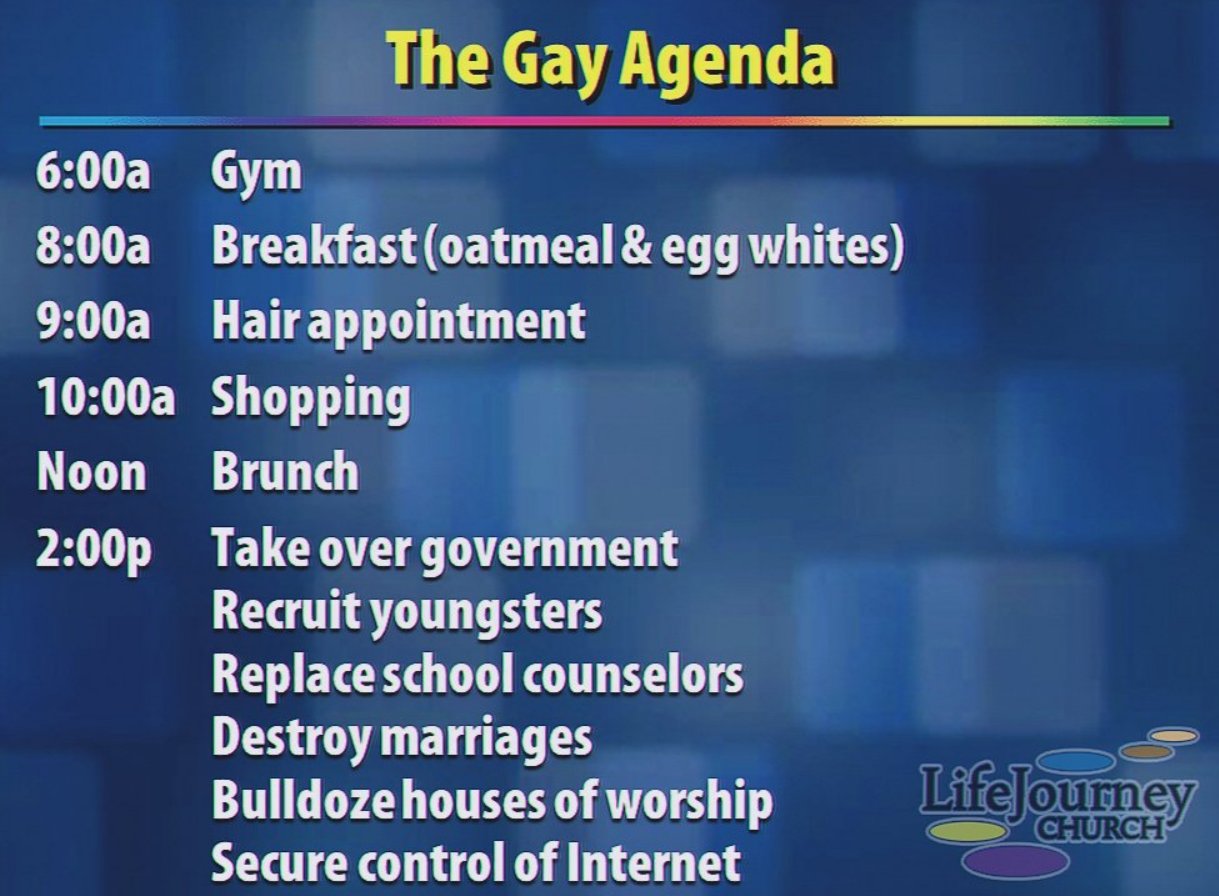
Everyone’s heard the phrase “gay agenda.”  Most of us make a joke about it anymore, mocking the religious and political leaders who obviously have no idea of what it means to be gay or how a person “becomes” LGBTQ.  That being said, maybe we need to do, as a community, what we have always done since the beginning.  Maybe we need to grab a hold of these catch phrases and insults and turn them to our advantage.  I would like to suggest that we actually create a “Gay Agenda” and as item number one on that agenda we list in bold, all caps, complete with hashtag:  #STAYALIVE.

Here are some frightening facts that I found.  Keep in mind two things. 

1.     When dealing with studies and statistics we always have to admit that there is an under-reporting that takes place with regard to self-report.  People who want to keep things on the down-low are never going to be honest when asked questions about certain topics.  An individual who attempts suicide may simply say he’s dealt with depression “all his life” but he will choose not to disclose that he has also struggled with his identity for just as long.  Because the individual fails to self-report the identity piece, the idea that he struggles with sexuality, his attempt won’t be documented within the body of research reflecting suicide and suicide attempts in the LGBTQ community.  Statistics, though accurate as far as the study and research are concerned, really don’t capture the reality of the situation because people fear being honest about things that will bring judgment and may even out them.  And, by the way, this isn’t just the reality for LGBTQ research.  This happens in any kind of study that relies on any kind of self-reporting.
2.     Similarly, the statistics I’m about to share are older statistics.  Recently I’ve been citing a survey in which 48% of respondents between the ages of 13 and 20 identified themselves as exclusively heterosexual.  This means that 52% of young people in this study identified themselves somewhere in the LGBTQ spectrum.  This is a revolutionary piece of information and I suspect that findings like this survey are going to be seen more and more among the younger population and we will eventually see statistics like the ones I’m going to talk about altered significantly in light of this new information and the willingness to share it.   

I want to make one thing clear.  LGBTQ people are not depressed because they are LGBTQ.  They do not consider suicide because they are LGBTQ and they do not commit suicide because they are LGBTQ.  There are no mental deficiencies caused by “being gay” any more than “being gay” is caused be a mental deficiency.  If you still subscribe to this nonsense you are literally stuck in the 1960’s because legitimate science abandoned your nonsense in the early 1970’s.

So if we’re going to talk about mental health challenges faced by LGBTQ people, particularly youth, let’s look at real causes rather than politically motivated causes or religiously imagined causes.

In 2013 the National School Climate Survey reported that “schools nationwide are hostile environments for a distressing number of LGBT students.”  The survey, which was completed by nearly 8,000 students between the ages of 13 and 21 and of whom nearly 60% identified as gay or lesbian, found:
·        55.5% of LGBT students felt unsafe at school because of their sexual orientation and 37.8% because of their gender identification. 
·        Roughly 1/3 of LGBT students had missed at least one day of school in the last month because they didn’t feel safe
·        More than 1/3 avoided gender-segregated spaces in their schools (i.e., bathrooms, locker rooms) because they felt unsafe
·        Most avoided school functions [Which, of course, adds to that sense of isolation.]
·        71.4% of LGBT students heard “gay” used in negative ways and 90.8% felt distressed because of that language
·        64.5% heard other homophobic remarks often
·        56.4% heard negative remarks about “not acting masculine enough” or “feminine enough” often.
·        1/3 heard negative remarks about transgendered people
·        51.4% of students reported hearing homophobic remarks from their teachers or school staff.  55.5% of students reported hearing negative remarks about gender expression from teachers or other school staff.  (Again, you wonder why I had to write about teachers being completely inept at facilitating conversations about equality and allowing students to talk about “fag marriage” and “shooting their mentally deficient and gay children?”)
·        74.1% of LGBT students were verbally harassed (called names, threatened) in the past year because of their orientation.  55.2% because of their gender expression
·        36.2% were physically harassed (pushed, shoved, etc.) because of their orientation.  22.7% because of their gender expression.
·        16.5% were physically assaulted because of their orientation.  11.4 because of their gender expression.
·        Almost half of LGBT students experienced electronic harassment/cyber bullying (i.e., text messages, facebook messages)
·        Nearly 2/3 of LGBT students who were harassed or assaulted in school did not report the incident to school staff usually because they doubted the effectiveness of any intervention.  [Which you can understand why when teachers/staff are contributing to the hostility of the environment.]
·        Over 2/3 of the students who did report an incident indicated the school staff did nothing.
·        Nearly 1/3 of LGBT students reported being disciplined for the same public displays of affection non-LGBT students engaged in freely.
·        18.1% of LGBT students were prevented from attending school dances/functions with a same gender date/partner.
·        17.8% of students were not allowed to form or promote support groups.
·        17.5% of students were prohibited from discussing or writing about LGBT topics in school assignments.
·        15.5% were prevented from wearing clothing or items supporting LGBT issues.
·        9.2% of students reported being disciplined for simply identifying as LGBT.
·        Policies which were reported that directly affected transgender youth:
o   42.2% of transgender students were prevented from even using their preferred name. [Which makes you wonder considering how many non-trans students are allowed to use stupid nicknames born from athletic participation, right?]
o   59.2% of transgender students had been required to use a bathroom or locker room based on their so-called “legal sex.”
o   31.6% of transgender students had been prevented from wearing clothes considered inappropriate for their “legal sex.”

Now this is where we get into the actual effects of all of this hostility, inequality, intolerance, and blatant ignorance and hate.

Students who experienced higher levels of victimization because of their sexual orientation were three times as likely to have missed school in the past month, had lower grade point averages compared to students who were “less often harassed” (2.8 vs. 3.3), were twice as likely to report a lack of plan/desire to pursue college or trade school, and had higher levels of depression and lower levels of self-esteem.

Students who experienced higher levels of victimization because of their gender expression were three times as likely to miss school in the past month, had lower GPAs, were twice as likely to report they didn’t plan to pursue higher education, and had higher levels of depression and lower levels of self-esteem.

These same statistics translate from victimization to discrimination. 

A .pdf of the entire study can be found here. 

How does all of this play out?  How does all of this well-documented violence and hostility toward a specific and vulnerable sector of America’s youth translate into tragedy and the loss of life? 

A 2012 Stonewall Survey gives us some insight.  Young gay men are 30 times more likely to attempt suicide than their heterosexual counterparts.  Lesbian young people are six times more likely to attempt suicide.  Some have made up to nine unsuccessful attempts to kill themselves.  The highest rates of suicide are among those who are isolated from support.

This same article reports “US News reported that teenage gay people who have been rejecred by their parents are far more likely to self-harm, take hard drugs and commit suicide than teenagers who are…loved and supported by their parents.”

25% to 60% of gay people seek counseling at some stage in their life as reported by the Counseling Directory. 

But where does all of this come back to?  Where do people receive tacit and/or overt approval for their intolerance and ignorance?  This is a hard question for me to actually answer not because the answer is elusive but because admitting it ultimately leads to an admission of a certain amount of complacency.  The answer?  The Church.  Or more specifically:  Religious and faith communities and institutions.

It doesn’t take a lot of research to convince people that traditional religious understanding bolsters contemporary intolerance of LGBTQ people.  It’s common knowledge.  It’s as well and basically understood as knowing the KKK is not a supporter for the African-American community.  More and more research is published in which people, victimized by narrow and superstitious understandings of religious texts, share their stories and bring awareness to the damage the Church, for example, has done for generations. 

And it’s not just the Christian Church struggling with these issues and attempting to push back against hundreds of years of intolerance and ignorance.  A 2012 study of Suicide and Suicidal Behavior in Tel Aviv discovered “a staggering 20% of the homosexuals and lesbians surveyed reported suicide attempts—112 times the rate among the general population.”  The study goes on to note that “this sector…does not get enough notice, and it is a hotbed for suicides that you later hear about after the fact.  The suicide rate among the religious homosexuals is the highest because they experience more distress when confronting their families.”

I cannot tell you how angry reading studies and reports like this makes me.  I cannot tell you how my heart aches when I hear people share their stories of rejection by faith communities who claim to embody the love of God and the ministry of Jesus Christ.  I grew up in the Church.  I still consider myself a part of the Church.  But the Church makes me so angry when their hypocrisy reaches this breaking point, when they claim to be the Body of Christ, to embody the Spirit of Jesus of Nazareth who led people beyond their self-imposed boundaries to people who were different, though differently, behaved differently, loved differently—not to preach at them or tell them how they need to change but to simply love them—and then these same Churches preach a doctrine of intolerance that creates fear and self-loathing in LGBTQ people who fear not only losing the love and connection of their family but, through hateful and ignorant words, feel themselves cast far away from the love of God.


We have SO MUCH work to do—in our religious communities, in our schools, and in our society at large.  No subset of our population should have to share stories of their suicide attempts any more than they should have to share stories of police violence and institutional racism.  We have to do better.  We have to educate ourselves better. 

We have to #STAYALIVE because it is getting better.  We need you to help make that happen.  


Sunday, March 20, 2016

The View from Here

I was a strange child.

Well, okay.  Maybe “strange” is a bit over the topic.  Let me try a few other words. 

Unique?  Peculiar?  Unusual? 

Getting closer.  But I think all of those words still miss the reality.  Not to mention they carry with them a bit of a stigma that needs to be unpacked.

How about…creative?  Pensive?  Imaginative? 

Hrm.  Those are good adjectives that described me as a child but they still aren’t quite capturing the reality I’m trying to describe. 

Maybe because there is no easy, clean-cut way to describe people.  Or, in this case, the result of what people become because of the coping mechanisms they end up using.

Let me explain.

Today I’m having one of those “stuck on the outside, looking in” sort of days.  It’s a phrase that basically means there’s something separating you from all of the activity you want to be a part of.  Think of it like walking down a city street and passing a huge window through which you see a party going on.  Fun looking people eating great food while laughing and dancing and celebrating life in one another’s presence. 

The reality, though, is that when I say this, like many other people, I mean, “I’m trapped on the inside, looking out.”  In other words, I’m stuck inside myself and the reality I experience, longing to be a part of the world I see around me.  This isn’t a new phenomenon for me.  A lot of LGBTQ people feel this way, especially when they are literally trapped inside of themselves for fear of revealing who they truly are. 

Some of you might recognize this experience.  Growing up, particularly in my teenage years, school was not a pleasant experience.  It wasn’t that the academic work was difficult; I would have had straight A’s if I would have decided that was what I wanted.  What made it difficult was watching the people around me and, in many cases, wanting to be involved in what they were doing but never daring to step up and be involved.  I was awkward and inept, like all teenagers, I suppose.  But the big thing that kept me from coming out of my shell was fear of simply coming out.  How would I dare try to hang out with one of the guys that simply radiated cool when it wasn’t his charisma that attracted me to him but how incredibly attractive he was?  Sandy brown hair, bright green eyes flecked with gold, not a zit in sight, and (don’t you dare laugh) a permed mullet that was so damn sexy back in the day.  Not to mention his sense of humor, his quick wit, his athletic body….

….you get the idea.

Like I said, some of you will recognize the experience.  And you’ll also recognize the fear that grips you in these situations because you’re so worried about being “too interested” in something he or she does or says.  What if I laugh too hard?  What if I ask the wrong question?  What if I just say the wrong thing and he figures out who I actually am and what I actually see when I look at him?

When those are your fears, when you live with the anxiety of being discovered and outed, it just becomes easier to withdraw and live inside yourself.  If you don’t interact you don’t risk interacting too much.   Sure, that means watching the world move on around you—people laughing, having fun, falling in love, having relationships—but it’s worth the occasional twinge of pain at being left behind if you can protect yourself.

Isn’t it?

I mean, look at it this way.  If the story I’m about to share would have happened today, it would have ended quite differently.  When I was in ninth grade I was the victim of what today would have been considered an assault.  Or worse.

It was in an art class.  “Back in the day” we were required to take a certain number of art classes, music classes, writing classes…the artsy classes that are only occasionally offered now as electives because there’s not enough time in the day to indoctrinate students on taking standardized tests.  These classes were mandatory in my school.  It was a large room that seemed to ramble on in every direction.  The main part of the classroom was near the door.  Large, wooden worktables with worn tabletops which had been nicked and painted and stained by generations of pubescent Picassos were our desks.  I don’t remember what the teacher was lecturing on that day or what we were actually working on but I do remember the sense of panic I experienced when one of my classmates took a wire used for slicing chunks of clay off of the larger blocks and, from behind me, wrapped it around my neck and pulled it tight.  I’m not sure how long he held the wire around my neck but I remember the laughter of his friends and the pain when he finally released the wire.  I don’t know where the teacher was when this happened; he never did find out about it.  Plenty of students on my side of the room saw what happened but no one ever said anything.  Probably because I never said anything.  I forced myself to laugh, as if I was in on the planning of the morning’s entertainment.  I knew that if I made an issue about it my complaint would just draw more attention and more attention was not what I wanted.

If this was the kind of thing my peers did when they only suspected I was gay, what would they do if they actually knew I was gay?  If I said the wrong thing, did the wrong thing, walked the wrong way, talked the wrong way, gave someone too much attention….It was just easier (and safer) to withdraw as much as possible within myself.

I think this is how my imagination and creativity blossomed. 

I began to write in junior high school, which for me began in seventh grade.  Puberty had arrived, bringing with it a number of realizations that couldn’t be unrealized.  This is when I started pulling back within myself.  But once there, apart from the world outside, I would create worlds and scenarios.  Sometimes I would even bring the people around me from the “real world” into my imagination; if I couldn’t hang out with them in the “real world,” I could hang out with them in my fictional world where I could be the cool one that they wanted to hang around and emulate. 

So I wrote stories starring mythical versions of myself and the people who were either too cool for me to talk to or the guys I was too attracted to that I avoided lest they look into my eyes and see my soul.  Looking back at the thought of writing those stories I have to admit I’m embarrassed—but not for reasons you would think.  I’m not embarrassed because of what I turned my fear and anxiety into and how I attempted to capture the personalities and characteristics of my classmates.  It was the writing that was cringe worthy. 

I think some of the best writing, some of the best fiction, has to come from something relatable and something real.  Learning to take my struggle and turn it into a narrative in which I learned to expose my thoughts and feelings to even fictional versions of the people around me was an important lesson for me to learn.  I still do it.  In These are the Days, I’ve inserted pieces of myself and people I know into the characters.  In the new story I’m working on I’ve taken it a step further and am actually using people I knew as the rough outline of the characters in the story—and it’s working really well.

Where am I going with all this?  Well, I have two points I need to make.

The first point goes back to where I began:  I’m having a “trapped on the outside, looking in” sort of day.  It’s been….an undisclosed number of years since my high school days but old habits die hard.  There are a many people whose own paths mine has connected with in some way, whose light I find refreshing and inspiring.  Being a connection oriented person I find myself aching to learn more about these people.  This is why I hate doing “meet and greets” at concerts; the twenty minutes or so I have with the artist or artists isn’t nearly enough for me to develop that connection—especially when I have to share the artist with other people with meet and greet tickets.  So, for example, when I try to interact with people through social media and my attempts fall flat, I feel like I’m looking in through that large window at fun people having a fun time and I have no idea how to get involved. 

Still happens. 

I think it will always happen. 

So I think it’s important to remember that I’m in control of how I respond to this feeling.  If I let myself be consumed by the sights that are holding my attention through that window, I’ll become rooted to the spot.  I’ll never find a way in and I’ll just make myself feel worse and worse.  But if I choose to change my perspective, to leave that spot and turn away from those tantalizing sights, I might someday find my way “into the party.”  Or…better yet….I might find something even better to be a part of.

Remember, though, that the grass is never greener on the other side. 

The second point is this:  You aren’t alone.  I know there are people reading this who can identify with my story.  I know there are people out there who are victims not only of the ignorance and prejudice of the people around them but who are also victims of their own coping strategies, the things they do to make it through life.  Things like disengaging from the world around you because you’re too afraid that the world around you won’t accept you.  It gets better.  It really does.  And the experiences you had or are having, experiences like mine, will give you something.  They’ll give you lessons to help you be a better person.  They’ll give you motivation to become a better person.  And they may stimulate your imagination and creativity to help you help others to stimulate their imaginations while telling them that there is absolutely nothing wrong with who they are.