Follow Me on Twitter!

Find me on twitter @TroyComets
Showing posts with label community. Show all posts

Wednesday, April 13, 2016

Anti-LGBT Politicians? The Power of Christ Compels You!

One of the best known, most often repeated, and frequently lampooned lines in all of cinematic history is from The Exorcist.  I bet you already know it just by the title. 

“The power of Christ compels you.”


It’s the line in the film that the priest uses to exorcise the demon out of head-spinning-pea-soup-spitting Linda Blair.  The idea, of course, being that by invoking the power of Jesus Christ the priests will be able to cast out demons.  They’re modeling behavior the writers of the biblical gospels record of Jesus exorcising demons out of what the Bible calls “people tormented by spirits/demons.” 

Hold onto that thought for a while.

In recent weeks we’ve seen a lot of anti-LGBT legislation being pushed by politically conservative politicians in a variety of states.  As I’ve written before, this has absolutely nothing to do with legitimate issues and everything to do with election year politics.  Because of the supreme court ruling on marriage equality Republican politicians have tried to come up with a new way to demonize LGBT people and dehumanize them for their political ends.  Zeroing in on transgender people, states like Mississippi and North Carolina have passed legislation requiring transgender people to use the public restroom that matches their birth gender.  The idea of course is that those “sick, perverted crossdressers” want to get into the women’s bathroom and ogle your daughter while she uses the facilities.  As I wrote last week, though, there is no evidence of such a thing happening and, in fact, there is a considerable history of Republican politicians behaving in a lewd and perverted manner in public restrooms.

Tennessee is poised to enact a law which allows counselors and therapists the right to openly discriminate against LGBT people on religious grounds.  The problem is, of course, that this is completely unethical.  It is a violation of the American Counseling Association’s Code of Ethics which professionals are obliged to abide by.  But, as I said, Republicans like to make something out of nothing for their political ends. 

All of these bills are cleverly couched in religious language.  It’s what Republicans do to get people to vote for their stuff.  Remember “The Patriot Act?”  Or “Defense of Marriage Act?”  The rhetoric that surrounds these bills becomes quite incendiary.  “Can you believe Senator So-and-So doesn’t support the Patriot Act?  What kind of American is she?”  Or “Can you believe that Representative So-and-So is anti-marriage?  He can’t even put his name to a bill to defend the institution of marriage.  Makes you wonder if he has a mistress on the side or something.”

The worst is when politicians play the God card, trying to convince people that they are actually supporting this law because of their fear the Christianity and Christian principles are under attack.  These are the same people that celebrate the annual “war on Christmas” and bemoan the fact that teachers are no longer allowed to lead prayer time during class time.

Here’s what I know.

About two thousand years ago a guy by the name of Jesus of Nazareth spent about three years confronting the “Republicans” of his day.  These religious leaders were doing what they thought was right based on their understanding of the religious traditions.  They weren’t the bad guys.  (You can read more about them here.)  They truly believed they were being faithful people, abiding by their holy heritage and protecting the people entrusted in their care.  The problem?  They were so focused on enforcing “the Law” that they forgot all about seeing the person at the end of the Law.

In Hebrew, our English word “justice” means more than “punishment.”  In fact, our English word “punishment” comes from a Greek word which means “revenge.”  In Hebrew, in the language of the Old Testament, “justice” was more about ensuring people received what they needed rather than punishing them for suffering through the absence of a needed thing.  For example, justice to the ancient Hebrew people, as explained in the Old Testament, would be to make certain people had food.  If people don’t have food, they would steal food.  In our modern system of justice, the State enters in at the point of theft to punish the victims of society’s failure to provide.  Do you see the difference?  The Hebrew word “justice” is more about giving what is needed than dishing out arbitrary consequences to wrong doers. 

Even 2000 years ago the Jewish people had lost track of this fact.

And so we read about this Jesus guy confronting the leaders, feeding hungry people, healing sick people, hanging out with sinners, and so on.  Why does he do this?  Apart from the physical restoration Jesus offered through his “healing miracles,” Jesus offered a restoration to community.  Each time he reached out to an “outsider” whether they be ill, a non-Jew, a woman—Jesus’ actions were a profound statement against the prevailing mentality of his time.  “No matter what these leaders say the law says or how they weigh you down with their legal interpretations and enforcements, know that God loves you and considers you apart of God’s community.” 

That is the message of Jesus Christ. 

That is precisely what modern Republican politicians ignore.

And it’s not that they ignore this truth because they’re evil people.  They’re trying to be faithful to their religious understanding.  The problem is that when they cite biblical passages from Leviticus or Romans to condemn LGBT people, they do so ignoring the fact that it’s precisely these very same laws Jesus spoke against as he tried to erase manmade boundaries in bringing the kingdom of God into the here and now. 

Galatians 3.28:  “There is neither Jew nor Gentile, neither slave nor free, nor is there male and female, for you are all one in Christ Jesus.”  That is to say:  If you are a Christian, a legitimate follower of Jesus, then these distinctions of who’s in and who’s out, who’s worthier than others, etc.—all of these distinctions are meaningless.  This passage can easily be modernized and contemporized by inserting “There is neither Jew nor Gentile, neither slave nor free, nor is there male and female, nor gay or straight, for you are all one in Christ.”

Interpreting the Bible, if you are a Christian, begins and ends with Jesus.  If you’re ignoring the message of Christ in favor of the law of Leviticus or the opinions of the author of Romans, then you’re not being true to your calling as a Christian.  You’re a Biblicist.  Christ frees people.  The Gospel frees people from laws that strip people of their humanity and their dignity.  It allows people to be seen and drawn back into community where they belong. 

There’s nothing more dehumanizing than stripping a person of their equal standing in a community because they fail to meet arbitrary or impossible criteria. 

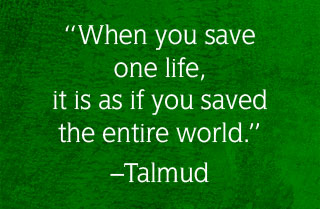
This is where these religious lawmakers in Mississippi, North Carolina, Tennessee, Kansas, and so on miss the mark every time.  The point of the law shouldn’t be to dehumanize people—especially if you’re going to invoke your Judeo-Christian heritage.  The point of the law should be to improve people’s conditions and thereby improve the state of the community.  There’s that old saying “To save a life is to save the world.”  I think a Christian analogy to this saying would be “To recognize a life—to actually see a person and hear their story—is to save the world.”


But of course to do that, to see people and understand people, you would have to acknowledge that they are people.  Politically conservative politicians aren’t good at this.  After all, “Why waste your time with those people?  They’re ne’er-do-wells living off the system, threatening our way of life.  You just need to look at them to know all about them.”

Today I was listening to This American Life.  It was a podcast of last weekend’s episode.  The first act dealt with a study in which researchers discovered what many of already knew:  To change people’s minds (about marriage equality, LGBT rights, etc.), it takes individuals reaching out and sharing their stories.  In a noncombative, nonconfrontational way, it takes people engaging with others to share how prejudice and intolerance affects them.  It’s empathy that makes the difference. 

There are too many people in our culture, most of whom unfortunately claim that moniker “Christian,” who refuse to listen to others’ stories.  Which is ironic because of how often Jesus listened to people’s stories in the Bible.

This brings us back to The Exorcist. 

The best way to understand the exorcisms we read about in the Bible is not to take them literally.  This was a superstitious, unsophisticated culture in which the presence of demons and the eventually casting out of demons was highly symbolic.  It’s best to think of an exorcism as a metaphysical healing with the goal of allowing the individual to rejoin the community.  Sick people, devil possessed people, blind people, etc.—these people were all seen as sinful and made to live outside of the community—literally outside of town, often in graveyards.  Once healed, they would be allowed to come back into community, to have the support of the community, to be recognized as one of and one with the community.

That is what the power of Christ compels the Christian faithful to do.  It has nothing to do with “religious protection laws” so transgendered people can’t use the bathroom of their actual gender or so therapists who think LGBT people are damned by God don’t have to provide services to LGBT people.  That’s not Christian.  Not in the least.

So, self-professing Christian politicians who are voting for these hate bills and laws of ignorance and intolerance, my advice to you?  Take a long look at the gospels.  I guarantee you’ll see a striking difference between Jesus’ actions and yours. 


Sunday, April 10, 2016

Do LGBT YouTubers Have a Special Responsibility?

Before I begin I want to make a few things clear.

1.     I’m not picking a fight or manufacturing drama.  I’m simply sharing my opinion on this topic.
2.     I am not speaking for Jack Merridew (@OfficialJackM) nor am I trying to put words in his mouth.  I’m simply writing my impressions.  Jack can speak (and clearly has spoken) for himself. 
3.     I am not attacking DaveyWavey (@TheDaveyWavey).  Again, just writing my impressions.   
4.     And I am certainly not speaking ill of Gayety (@gayety), who help to raise so much awareness of the LGBT community. 

A couple of weeks ago I wrote about role models and how some people you absolutely don’t agree with are actually very good role models because of the way they connect with ages and cultures others can’t connect with.  In that post I talked a little about Jack Merridew and a video he had recently shared on gay sex-ed.  Though it wasn’t the kind of video I would be comfortable making, I applauded it for its frankness and honesty and providing necessary information to young LGBT people who may not get the same reliable information elsewhere. 


This morning the online news resource, Gayety, shared an article/video produced by YouTuber DaveyWavey.  It was Davey Wavey’s explanation on how to safely have gay sex.


I’ll be honest.  My initial reaction was, “Jack just did this and did a better job of it.”  But the more I thought about it the more I realized that that really wasn’t the problem I was having with DaveyWavey’s video.  It wasn’t about who did what first.  Here’s where I was struggling. 

I’ve been watching Jack’s videos for a while.  The more I watch them the more I appreciate the ongoing narrative behind them.  Jack speaks candidly.  He is open and honest about things.  Heck, this week he shared a video in which he was completely upfront about losing his virginity as well as his views on sex.  In listening to this narrative you actually get the picture of someone who is almost shy, very humble, but very much wanting to get good information out to people who need it.  Jack seems to recognize what it takes to be an effective communicator for his growing audience.  He’s meeting an important need in the LGBT community.  He’s a role model.  I know for a fact from interacting with folks through social media people look up to Jack.

I’ve followed DaveyWavey for a while.  At first I thought I was missing something.  I know his reputation and how famous he’s become but, to be honest, something just wasn’t clicking for me.  I think I figured it out this morning.  To me, when I watch DaveyWavey, the narrative I see is the narrative of someone pushing an envelope for the sake of pushing the envelope and not so much about improving the LGBT community and, by extension, the world.  I’m not so sure how helpful that is right now.

Let me explain.

Over the past few videos on DaveyWavey’s YouTube channel, not only have we seen the “do it for the chuckles” comedic videos about “bro jobs” and “It’s only gay if our balls touch” and watched him interview people while have battery operated sex toys attached to their penises but we’ve also seen DaveyWavey talk a straight guy into having sex with him and another straight guy into douching.  I worry that pushing the envelope for entertainment purposes when it comes to LGBT themes might actually work against the LGBT community.

Right now we are seeing a frenzied movement of hate bills being passed in conservative leaning states and being introduced in many moderate states.  The momentum behind these bills is that there is a “perversion” about LGBT people and to “give in” to their demands for equal protection and rights will only lead to corruption of young people or even sexual assault in our public restrooms.  We can sit here and provide all the facts we want.  We can point out to these political and religious leaders that in fact there have been more Republican politicians arrested for lewdness in public restrooms than transgender people and that states who have adopted laws providing for equal protection have had none of the incidents that the supporters of these hate bills claim are coming.  None of that matters.   Reality doesn’t matter.  Facts do not matter.  In situations like this what matters is who controls the narrative. 

And as we all know conservative politicians and religious leaders are very good at controlling the narrative.  Why?  Because when you disregard facts and ignore the existence of nuance, it’s simple to cram your message onto a bumper sticker.  Once you’ve stripped reality out of the equation and have a catchy slogan, it’s easy to get that slogan repeated by the masses.  When it’s repeated enough times, it becomes “truth.”

When members of the LGBT community push the envelope solely for entertainment purposes or to dance on the edge of daring so as to increase their audience, I think they do the greater community a disservice.  DaveyWavey’s content is a good example of this.  Apart from the innuendo and explicit videos, there are these two recent additions that you know anti-LGBT people can pull out and say, “Look, sexuality is a choice!  Look how this gay YouTube star has influenced these straight guys into gay sexual activity.”

It’s not a conspiracy theory.  I know enough about people to know this kind of thing happens.

And when we have people like Minnesota nutcase and member of the state legislature Glenn Gruenhagen taking control of the narrative by pretending to understand mental illness and the American Psychiatric Association’s Diagnostic and Statistical Manual, I think we need to be very careful about how we portray ourselves. 

This morning I commented on Twitter about Gayety’s article.  I said that Jack Merridew was able to cover the “how to” of gay sex more effectively and less provocatively.  I don’t think I chose the right word there.  In fact, if you read my post on role models you’ll probably remember me talking about Jack being provocative and me being okay with that.

The word “provocative” picked up a sexual connotation in the seventeenth century.  The word actually comes from a Latin word that means “to call forth.”  Think of it as elicit, draw forth, bring out, or evoke.  The idea was to call forth conversation. 

Jack’s videos always call forth conversation.  Again, some of the content might be a little more risqué than some might think is necessary, but that’s the beauty of what Jack does.  That daring dance Jack does earns him respect for being honest and open.  After all, how many of us would be able to sit there and make a video about how we lost our virginity or even talking about struggles with body image?

It seems the only struggle with body image DaveyWavey has ever dealt with is whether he should wear a shirt or not.

And I’m not saying that all LGBT YouTubers need to do the same thing.  I think a plurality of voices is necessary because not no one can be all things to all people.  The LGBT community is made up of a wide variety of people with a wider variety of experiences and backgrounds.  We need all of these voices to speak to our community. 

I just don’t think we need to do things, say things, produce things that others intent on the destruction of our community can use against us.  That might mean that YouTubers in our community are going to be held to a higher standard.  Should that be surprising?  Our community has always been held to a higher standard.  Most minority groups are.  But I think the celebrities of our community, the ones who have developed a name for themselves from within the community and out into the greater world, have a responsibility to attend to how what they do and say might impact the community. 

I’m not trying to pick on DaveyWavey or impart sainthood on Jack Merridew.  I’ve seen far worse than what DaveyWavey has put out and I’ve seen better than what Jack has put out—all from members of the community.  But those “better” and “worse” evaluative terms?  Those are mine and I completely recognize they are my opinion. 


Once again:  I am grateful for the diversity of voices within the celebrity circles of the LGBT community.  I just think that right now, with the political climate the way it is, we need to be fighting good fights to improve the community and secure our rights and not just be doing things to increase our own individual notoriety and publicity.  

Share it forward!
Follow me on Twitter @TroyComets

Wednesday, April 6, 2016

The Grandma Agneses of the World

WARNING: 

Today I’m writing about The Real O’Neals.  I know.  I can almost hear some cries of indignation over the sound of eyes rolling.  I know it seems like I’ve become your one stop shop for commentary about this ABC sitcom.  I wasn’t going to blog about it anymore (at least for a while) but then I watched last night’s episode and I just can’t get some thoughts out of my head.

So if you’re tired of me blogging about The Real O’Neals, now’s your chance to click out of my blog.  Come back tomorrow and I’ll have something else for you.

Back to our irregularly scheduled blog post.

I don’t know if you’ve ever participated in a live Twitter conversation during a TV show but it’s quite an experience.  When you tweet during The Real O’Neals you not only get to connect with other fans of the show but pretty much the entire cast is there, sitting on the virtual couch, with all of the fans.  They crack jokes with the fans.  They give behind the scenes commentary to the fans.  And, most importantly, they support the fans.  I don’t think there’s been a week that’s gone by that fans haven’t tweeted their gratitude to cast members for validating them or helping them come out.  It’s powerful stuff.

Last night was episode 107 entitled “The Real Grandma.”  In short, Eileen (the terrifying and judgmental, very religious mother, played by Martha Plimpton) is visited by her mother (an even more terrifying, judgmental, and religious mother) played by the incredibly talented Frances Conroy of American Horror Story fame.  Eileen, who has always struggled for her mother’s approval, hides the fact that she and her husband, Pat (Jay R. Ferguson), are divorcing and that Kenny (Noah Galvin) is gay.   This doesn’t go over well with Kenny who eventually defies his mother and comes out to his grandmother by presenting her with a rainbow cake.


Grandma Agnes doesn’t take the news very well and announces to the family that Kenny has ruined cake and rainbows for her forever.  She also declares her intention to stay until “she saves Kenny’s soul.”

Meanwhile Kenny is pressuring his mother to admit to her mother that she’s planning to divorce Pat.  So, in order for Eileen to come out to her mother about the divorce, she plans a good old fashioned corned beef and cabbage dinner.  During the course of the meal, Grandma Agnes says to Kenny, “I know you think I’m a silly old woman and you’ve been mocking me and my beliefs.  But even if you don’t care what I think, you should care about what God thinks….You don’t accept that God doesn’t accept you.  He thinks you’re broken and I do too.”

The screen is then filled with Kenny’s face and you can see the shock and the pain these words have caused.  We hear Kenny doing a voice over, saying “I didn’t think anything grandma said could upset me, but I was wrong.”

My initial reaction was, “Oh, I’ve got to blog this!  This is exactly why I wrote what I wrote yesterday about One Million Moms!”  But, like I said, the ol’ blog has been pretty The Real O’Neals heavy of late and I was reluctant to do it. 

I finished the episode.  It has a spectacular ending.  I won’t give the details beyond saying that Grandma Agnes tries to force the family to go to church that evening.  The family ends up going, without Grandma Agnes and at Kenny’s suggestion.  Hold that thought.

If you’ve read many of the posts on my blog you will have noticed by now a strong theme in what I’ve shared:  Religion, over the centuries, has done horrible things to good people simply because the devotees of the religion subscribe to a superstitious view of the world, are legalistic about thingstheir holy books say without even actually knowingwhat those books say, or simply can’t make room in their worldview for continuous revelation ( the fact that God is still speaking despite the silence of biblical authors, namely through the vehicle of science).  As a result, religion, specifically Christianity (of which I am a practitioner), has killed people, maimed people, caused untold psychological damage to people…all because of something zealous adherents couldn’t understand and innocents can’t change.

When Agnes spoke to Kenny at the dining room table and declared that God could not accept Kenny because he was gay, I could feel the silence in every room in which this show was being watched.  I felt winded.  It may have just been a talented actress delivering a line to an emotive actor on the screen, but it was like a punch to the gut.  Why?  Because I don’t think there’s an LGBT person alive who hasn’t had someone they love or someone who loved them speak to them like this.  At some point in every LGBT person’s life a well-meaning but woefully ignorant loved one expresses this same concern:  God does not love you because you are too broken.

Here’s a newsflash, Grandma Agneses of the world:  In our Christian faith, it is precisely for the broken that Jesus came (Mark 2.17).  And it wasn’t to judge them, but to love them and bring them back into community despite the judgments and preconceived ideas of the righteous, holier-than-thou members of the greater faith community.  In other words, Grandma Agneses, Jesus came to bring the Kennys of the world back into the fold despite your objections.

And this is what’s so incredibly sad about the Grandma Agneses of the world and the One Million Moms of the world and the Focuses on the Family of the world and all of the North Carolina, Mississippi, Tennessee politicians of the world who have absolutely no idea what their Christian faith is all about.  It breaks my heart to see what these people do to innocent people in the crosshairs of their judgment but it breaks my heart more to know how far from the center of the Christian faith these people are.

This is why I wrote what I wrote yesterday about the OneMillion Moms organization.  Anything that doesn’t fit into their narrow view of what is right, moral, and acceptable to God is an affront to God and by extension them.  The problem is that the theology of these groups is ill-formed at best, handed down and institutionalized for hundreds of years.  The world has obviously changed and our understanding of the human condition has developed.  They simply can’t deal with the reality of the world we live in.  It’s easier for them to kick and scream and flail against change in an effort to make the world to conform to their expectations.  And, of course, the world pushes back, saying, “No, it’s time for you to change your expectations of the world.”  And upon hearing that, these arch-conservative, para-religious activist groups cry out that they are being victims of religious oppression. 


Disagreement is not oppression.  If you want to see real religious oppression, real religious persecution, I suggest visiting extremist countries where people are actually killed for their beliefs.  My stomach turned a long time ago when I heard about a little boy, about ten years old, who was a Christian.  When his master found out, he was driven out into the desert, his feet nailed to a board, and he was left there to die.  That is what I remember when I hear the likes of Kim Davis, Mike Huckabee, One Million Moms, Pat Robertson, Franklin Graham, Ted Cruz and all the others whine about their sense of religious persecution because they can’t seem to bully people with fear of divine judgment anymore.

So you remember that thought I told you to hang onto?  When I said that the O’Neal family ended up going to church anyway even without Grandma Agnes and her pressure?  It was Kenny’s suggestion.  “I’d still like to go to church.” he says.  I think this is what ultimately tipped the balance and brought me to the computer to write this entry, dear reader.  You see, throughout this ordeal of coming out and despite Grandma Agnes’ declaration of God’s judgment, Kenny still feels that connection to his faith. 

Too many LGBT people have been driven away from their faith because of the Grandma Agneses of the world.  In their view it’s the LGBT people who have left the church, probably because “they just can’t endure the reminder of how broken they are.”  In reality, it’s the church that has left the LGBT people.  Even if I subscribed to the view that being gay was somehow sinful (which I don’t and I can explain why in another post if anyone wants to know—just ask), where did the authors of the four biblical Gospels always show Jesus?  Not in the fancy synagogues hanging with the Grandma Agneses of his time.  He was always with the people that the Grandma Agnes crowd deemed to sinful to hang around.  So, Christians, if you’re going to say you follow Christ (which you do when you claim the title), maybe you should spend time with the people you think are sinners and love them as Jesus did instead of sitting astride your high horse looking down on the broken you think God can’t accept.

When a woman suffers verbal and emotional abuse from her husband and leaves, most of us say, “We support you!  No one should have to endure that!”  When LGBT people suffer verbal and emotional abuse from the Church and leave, most people don’t make the connection.

We need to make that connection.  If not in a religious sense and context (because, again, I recognize the plurality of belief and no belief that exist in the world), then just in a decent human being sense and context. 

Share it forward!
Follow me on Twitter @TroyComets

Saturday, March 26, 2016

Easter and Ignorance

Okay.

I’ve debated long enough on this topic and I’ve decided to write about it.  I went back and forth on it not because I didn’t feel competent and comfortable writing on the topic.  If anything I’m too comfortable and competent to write on it.  I was hesitant because I try very hard not to focus on religion in my blogging because religion has hurt too many LGBTQ people, including myself,  and I don’t want to keep rubbing salt in the wounds. 

I also didn’t want to “tip my hand” and maybe show too much non-Troy Comets knowledge through my Troy Comets activity.  What I mean is this:  Troy Comets has never disclosed what he does off of the internet or what the person behind Troy Comets has actually studied.  I’ve hinted that if you look at my writing you can probably figure out what I’ve studied and how much time I’ve spent in those studies.  After reading this post you may have a more complete idea.  I’m not 100% certain that’s a good thing…but I’m 100% certain it’s not all a bad thing either.

But, here’s the thing.

1.     Trying to avoid talking about religion because of the pain it has caused us isn’t going to make that pain go away.  Maybe I’m wrong to avoid the topic the way I do.  Maybe I should acknowledge religion’s role in the oppression of the LGBTQ community more.  Maybe I should acknowledge our pain—my pain—more in my writing.  Maybe it could be more a part of the healing process than I’ve previously imagined it could be.  All I know is that I don’t want this blog to become “Troy Comets’ Ongoing Commentary about How Messed Up the Church Is.”  Though I know there’s MORE THAN ENOUGH to talk about there, there’s more for us, LGBTQ and non-LGBTQ people alike, to worry about and talk about.
2.     Sometimes I can’t turn off the things I know.  It would be nice.  Believe me.  Sometimes I can’t think of anything that would bring me more peace than to forget half the things I know.  But, as I write this, it’s Holy Saturday.  Tomorrow is Easter.  We’re ending Holy Week….and, as a Christian person of faith, religion is all around me right now and I can’t escape it.  Add to that the fact that I’ve wasted an hour and a half of my life today by watching Tyler Perry’s “The Passion Live” and I’m more than a little angry about how ignorant the Church is about its own heritage and its own story.

I just tweeted a comment that to understand the Passion of Jesus, the whole story that’s told between what is usually referred to as “The Triumphal Entry” (Palm Sunday) through the Last Supper, the trial and execution, and ends with the Resurrection—to understand any of this, a person needs to understand politics in first century Palestine.  Let me explain why.

The Jewish leaders get a bad rap in traditional Christianity.  As they’re portrayed in biblical interpretations throughout history they are the antagonists to our hero, Jesus.  They try to shut him down.  They want to argue with them.  They appear clueless and obstinate.  Nothing could be further from the truth.  The fact of the matter is that these were faithful men of God.  They were not only adhering to the interpretation of Hebrew Scriptures that had been handed down to them but they were also trying to protect their people. 

Judea, where the bulk of Jesus’ ministry takes place in the four biblical Gospels, was an occupied territory.  Since its fall in “Old Testament Times” it had changed ownership a number of times.  It was prime real estate.  You couldn’t travel anywhere in the region without moving through Israel and Judea.  At the time of Jesus, it’s Rome that holds the deed to Judea and Rome wasn’t known for its kind and gentle ways when it came to occupation.

Within living memory of most of the elders of the Jewish people at the time of Jesus there was at least one revolt that was stamped out tragically by Rome.  What the leaders understood was that there was going to be no uprising as long as Rome was a factor.  There would be no independence until God’s anointed appeared, the “messiah” or “Christ,” who would lead God’s chosen people back to their chosen status in the world.

So when Jesus, who overtly and tacitly claims to be this messiah, begins to amass a following, who challenges the status quo, who attracts people like Judas the Zealot to his cause—when the leadership begins to see this, it makes them worried.  They see the makings of another revolt and, remembering the last revolt and how Rome dealt with it, they begin planning ways to get Jesus out of the picture before it’s too late.  Why do you think one of the charges the Jewish leaders argue in front of their Roman rulers is, “He’s no friend of Caesar’s?”  He’s a traitor and you need to deal with him.

So, of course, he’s dealt with.  There’s a trial in which Pontius Pilate famously gives the people a choice between two prisoners—Jesus or Barabbas.  Never mind the fact that no such tradition even existed.  Our English Bibles tell us that Barabbas was a criminal/murderer.  The actual word in Greek which describes him is “zealot.”  Like Judas, Barabbas was a freedom fighter.  He was a patriot.  He probably would have been considered a “terrorist” by today’s standards.  Which would you choose if you were under occupation?  Someone who just a few days ago came to town with under the auspices of being the messiah who would kick Rome out but the most he could do was throw a tantrum in the Temple?  Or the guy with the proven track record of undermining the occupational forces?  The gospel author is making a point here—not giving us a history lesson. 

If you watched “The Passion Live” on FOX you might remember Tyler Perry’s explanation of what crucifixion was like and then what was done with the body.  According to Tyler Perry’s script, Jesus was buried in a tomb which was sealed with a boulder and guarded by Roman soldiers—all under Pilate’s orders.  Of course nothing like it happened.  The earliest Gospel we have is Mark.  Mark tells us that it was the day of preparation.  We already know it’s late in the afternoon so the pressure’s on under Jewish religious law to get things done before Sabbath begins.  Joseph of Arimathea, who is identified as a Jewish leader, comes to Pilate and asks for the body.  Pilate gives it to him and Joseph of Arimathea quickly buries Jesus in Joseph’s own tomb.  It really was a “hurry up and get it done” affair.  Sabbath was hours and minutes away.  This is why later in the story the women return on the first day of the week (Sunday) to do the burial rituals after Sabbath. 

What Tyler Perry’s scriptwriter and the majority of Christians fail to understand here is the process of developing what Christian theologians call “a high Christology.”  What this means is that years and years after the fact, followers of “The Way” (which is what this sect of Judaism was initially called) struggled to make the story of Jesus flow out of the story of God as recorded in the Hebrew Scriptures.  We see the beginnings of the development of this Christology in Mark, with its use of the terms “Christ” and “Son of God.”  Mark, remember, was written about 35 years after Jesus’ death.  But this Christology advances again by the time Matthew and Luke are written, roughly 20 years after Mark.  Matthew and Luke begin to answer questions that the earliest Christian community started asking.  Questions like “Where did Jesus come from?”  In reply, Matthew and Luke give detailed birth narratives.  They also address the arguments of skeptics.  “Maybe Jesus wasn’t really dead.”  This is why in Matthew one of the Roman soldiers impales Jesus’ through the side with the spear.  “Maybe someone stole Jesus’ body and created the whole resurrection story.”  Again, this is why Matthew has Pilate setting guards on the tomb. 

But Christians have done  exactly what Tyler Perry’s scriptwriters have done throughout history.  We don’t pay attention to what is written or ask why it’s written the way it is.  Instead, we harmonize the stories and stupidly recite them during the most holy times in our religious calendar.  Like Christmas.  All of a sudden we have Mary and Joseph having a child in a barn (because there’s a feed trough being used) and we simultaneously have angels (which, by the way, are messengers from God and not divine beings with wings.  The whole angelic cult is developed later.) and wise men from the East showing up all at the same time.  Never mind the fact that the wisemen (of an undesignated number, by the way.  Scripture never tells us three beyond three gifts which are symbolic in their own right) show up YEARS after Jesus’ birth.

This is what makes me so freaking angry about my fellow adherents to the Christian faith:  Too many people are comfortable in their ignorance, blindly accepting the watered down, dumbed down, Christian message that generations of preachers and pastors and priests have massaged to diminish its power and “teeth.”  Again, for an example, I turn to “The Passion Live” in which the song performed to capture the spirit of this “triumphal entry” into Jerusalem is “Love can Move Mountains” by Celine Dion.  The triumphal entry of Jesus into Jerusalem was not “lovey dovey, love conquers all” nonsense.  It was a protest.  It was desperation.  The crowd was shouting “Hosanna!”  Hoshi’ana!  “SAVE US!”  People were flocking to the person who was supposed to be their liberator crying out in pain and anguish! 

How many congregations capture that spirit in their annual Palm Sunday parades of palm waving and Sunday School children singing?

But this is the issue:  All of these biblically conservative Christians who, like the people they vilify in the gospel stories, may mean well.  But unlike the people they treat as antagonists in the Jesus story, they are completely oblivious to what it is they’re reading, where it came from, and how it’s been transmitted.

And it drives me nuts.

This brings me back to “The Passion Live” once again.  This feel good, for club members only, overly produced, poorly researched and written spectacular dumbed the story down still further and didn’t pause to consider the full implication of the music they chose to accentuate the story.

For example.  Trisha Yearwood as Mary singing “In the end only kindness matters.”  Really?  See, the biblical message claims that in the end it’s the love of God that matters.  Or Jencarlos Canela  as Jeuss singing “I won’t give up if you don’t give up.”  Really?  The commitment of Jesus Christ is dependent on my commitment?  Then we’re all screwed because, newsflash, human beings are fickle creatures incapable of commitment.  That’s why the biblical message highlights God’s commitment to humanity trumping humanity’s commitment to God.

What’s worse than picking songs with bad theology?  Picking songs that capture good theology and thinking that the people singing the song will embody the meaning of the song.  I’m referring to the song used by “The Passion Live” at the climax of the performance:  Unconditionally  

Come just as you are to me
Don't need apologies
Know that you are all worthy
I'll take your bad days with your good
Walk through this storm I would
I'll do it because I love you, I love you

This!  This is the message that so many people, so many people in so many subsets of our society, not just the LGBTQ community--but SO MANY PEOPLE need to hear.  It's the message of the story of God told through the pages of the Christian Bible.  It's the power behind the Hebrew word chessed and the Greek word agape.  It's unconditional love--it's love poured out without qualification, without prerequisite, without the receiver moving himself or herself to a place in which they might "fit in better" or "conform more appropriately" the beliefs and behaviors of any particularly community that holds power and domination.  It's a love that says, "You.  Just as you are.  You are special.  You are loved.  Just the way you are."

The Church will join Jencarlos Canela. It will sing this song, add it to its repertoire of “contemporary hymns” and then it will turn around and, as a rule, insist gay people should be straight, people in poverty should pull themselves up by the bootstraps, that women should be obedient to their husbands…..you get the idea.

Which makes me wonder how Katy Perry feels about the Church coopting her song.

Look, I get it.  The Church, like every other human institution whether religious or secular, is flawed.  It’s broken.  It’s far from perfect.  That’s what happens when human beings enter the picture and try to take something as powerful as a movement like civil rights or Christianity and make it a system.  It’s going to lose momentum, power, and even sight of its mission and purpose.  That doesn’t mean we can use that as an excuse.  That doesn’t mean we can ignore the damage we’ve done and continue to do.  That doesn’t mean we forgive our own blatant ignorance and hypocrisy when we sing songs like “Unconditionally” but turn around and tell people to “give up your sinful ways and be something you can’t possibly be and then God will love you.”

The reason I’m rethinking my approach to religion and the Church, at least for this post, is that it’s Easter in the Western Church.  It’s the season of resurrection, renewal, and hope.  Traditionally and historically it’s understood as a moment of profound change where God alters the rules and breaks down barriers that seem unbreakable.  It’s a season of forgiveness.  It’s a celebration of how far God is willing to go to demonstrate God’s love. 

For people reading this who are solidly inside the Church, maybe the barrier that God is breaking down is the barrier that keeps you from exploring and even challenging the theology that has been handed to you.

For people reading this who are outside of the Church because it is where you have been placed by people within the Church or where you have placed yourself for your own protection and self-preservation, maybe the renewal that God is offering you is the renewal of God’s promise of unconditional love—whether the institutional Church is willing to offer it to you or not.  If it’s one thing that has been made abundantly clear:  God does not need the participation or approval of faith institutions to love God’s children. 


For people reading this for whom faith is not a part of your life, I hope I haven’t offended or bored you.  Thank you for giving me the space to share these thoughts.

As always, feel free to share these thoughts forward.

Follow me on Twitter @TroyComets 

Wednesday, March 16, 2016

Discussions of Equality in High School

It’s easy to forget but sometimes the words we use and how we use them can be incredibly painful and even deadly. 

Imagine for a moment that you have a secret.  Absolutely nobody knows about your secret.  You have tried very hard to keep this secret hidden from everyone, including your family.  It’s not that this secret makes you ashamed or that you don’t want to share this secret.  The reverse is actually true:  You are aching to share this secret, to be honest with the people around you, especially the people you love.  You keep this secret because you have learned by watching the world around you that honesty isn’t always met with reason.  People who have shared this same secret have been met with judgment and ignorance and intolerance.  Some have had their lives taken from them.  Some have taken their own lives because of how they were treated after confessing their secret, after revealing their truth. 

This secret doesn’t make you feel alone.  It makes you alone.  You are isolated.  No one to confide in.  No one to support you.  No one to comfort you when hateful words are thrown around without a care as to who could hear them and how they will be heard.

This is what it’s like for many LGBTQ people. 

Today a friend of mine casually dropped a comment on social media about a conversation that took place in his history class.  The assignment had been given:  Prepare a one page discussion on your opinion as to the state of equality in American society and provide an example of how society could be made more equal.  During the course of the review discussion of the assignment, the teacher asked if there was anything else the class wanted to discuss.  One student blurted out, “Yeah.  Fag marriage.”

And apparently it all went downhill from there.

My immediate question was:  What did the teacher do in response to the offensive language?  The answer:  Apparently nothing.  Students referred to LGBTQ people as “diseased.”  One student said that if he had a child “who had a mental disorder or was gay or trans” he would lock “it” up.  It.  He called his theoretically child an “it” because he needed to distance himself from the humanity of a theoretical child that failed to suit his inherited, preconceived notions of what was acceptable.

And the teacher said nothing.

Another student took this a step further and said that he “would probably shoot it.”   

And the teacher said nothing.

And my friend, the student, was trapped, listening to this ignorance that science abandoned over forty years ago and even contemporary religion has begun walking away from.  Yet, here was my friend, stricken by the lack of compassion, lack of human recognition, his fellow students were parroting.  I stress parroting because kids don’t develop this kind of hate on their own; it’s nurtured into them by parents who were spoon-fed the same nonsense when they were children.

And the teacher said nothing.

I want to stress again that my friend was trapped.  He wasn’t able to leave the class lest it bring more attention to him and his situation.  He couldn’t speak to the point without tipping his hand.  He was forced to sit in his high school history class and listen to people liken sexuality to mental disorders that are deserving of death while the teacher, who was either woefully unprepared to address the topic or woefully uneducated to address the topic sensibly, finally managed to say, “"I don't have a huge problem with it....but do two people really have to get married to proclaim their love?”  Never mind the fact that apparently this teacher did get married to his wife to proclaim his love. 

In case people have missed it, we are in the year 2016.  Applied to this situation, this means a few things:
1.      If you are a teacher who invites discussion about controversial topics over an assignment about equality you had better have the education and the wherewithal to ensure that the participants in that discussion are respectful of the equal standing of all human beings regardless of age, gender, sexual identity, religion, ethnicity, and so on.  If you can’t maintain a modicum of decorum in your class when it comes to these conversations then you had better not invite these conversations.  Today this teacher failed his students.  He failed to model the spirit of a lesson on society’s call to provide equality by allowing students to cross a very serious line in their rhetoric and demeanor.
2.     Absolutely everyone in this country (and even the world) is free to develop and speak their own opinions.  You are not, however, free to treat that opinion as fact.  What makes you, a high school student, more intelligent and more informed than an entire scientific community who rejected your theories decades before you were even born?  What makes you, a high school student, more versed in law and legal issues than the nine men and women who sit on the highest court in the United States and declared that opinions like yours are not valid opinions in a court of law and are therefore out of step with the spirit of the constitution of the United States? 
3.     Parents, if this is the kind of thing that you are teaching your children at home or are subjecting your children to in the life of your religious or faith communities, you better think again about the damage you are potentially doing to your children.  It used to be said that three of every ten people were LGBTQ.  A recent survey reported that nearly half of today’s teenagers identify as something other than straight.  And, yes, that includes young people in the Bible belt and conservative pockets of the United States.  Pushing your uninformed, medieval notions of homosexuality is not only perpetuating ignorance; you are also probably causing stress and anxiety in, statistically, half of the children in your home. 

I’m not going to name names.  I’m not going to identify the school.  I don’t want this to come back and cause problems for my friend.  That being said I have absolutely no doubt that a copy of this essay is going to find its way into the hands of the school’s administration and I hope to God that this issue is addressed.  I’m not suggesting suspensions or detentions.  I’m suggesting that students and teachers would benefit from a little education with regard to the history of the LGBTQ movement and how stupid, ignorant, throw away comments can undo a person’s sense of self-worth. 


Wednesday, March 9, 2016

A Beginners Guide to Troy Comets

Today I’m going to take a break from the relatively more serious posts I’ve been doing lately.  The last month or so I’ve seen a huge spike in blog traffic which has generated some feedback.  This makes this whole blogging adventure very exciting for me because I honestly didn’t think the blog was going to go anywhere.  I mean, I’ve tried blogging before—even using my real name and sharing it with family and friends and colleagues.  But to be honest?  I’ve had more readers and support and reaction from you, dear reader, using my pseudonym, than I did when I used my real name and shared with people who actually know me.  Kind of makes you think, doesn’t it?

So, I thought I would pause today and share a few things you might like to know about me and my blog. 

·        Just to be clear, Troy Comets is a fictitious name.  If you haven’t had a chance to do it yet, you might want to quick go and read my first blog post here.  It gives you some important background on why I chose to write with a pseudonym (fake name).  The cliff notes version is this:  Because of my life situation, coming out has been next to impossible and became more complicated with each passing year.  Obviously that wasn’t my intention; even telling lies for what seem like very good reasons results in chaos that doesn’t just affect your life but the lives of people around you.  Adopting the name “Troy Comets” has allowed me to not only publish the kind of stories I would have wanted to read as a teenager/young adult if the world had been different but it’s given me the chance to start this blog and try to make a difference.
·        Because of my need for anonymity and my appeal to you, the reader, to respect that, I try very hard not to share too many details about my non-Troy Comets life.  I think I’ve let a few things slip between Twitter (@TroyComets) and a few remarks in some blog entries.  I do live in Minnesota and I have traveled a bit.  I have quite a bit of education behind me.  I’m not saying that to brag and I’m not going to go into detail.  I think, dear reader, if you stick around long enough you’ll probably be able to figure out what my areas of study were in graduate school.  I just want to remind you of our agreement:  I’ll be here for you, sharing my knowledge and experience and even being that hole in the virtual wall through which you can scream and yell and cry (which I’ve been for a few of you already and you don’t know what an honor it is to have that experience)—all I ask in return is that you don’t go peaking around the curtain.  I’m not naïve.  I know if someone wanted to know who Troy Comets really is they could find out in no time.  But I believe in the inherent good of people and know that my readers aren’t the kind of people to out someone who has explained why coming out isn’t an option right now.
·        Blogging is an interesting thing for me.  I sometimes find that I blog the way I speak.  The way I speak is considerably different from the way I write.  Here’s the difference.  A couple of weeks ago I wrote this blog post on “Community,” having been inspired by a YouTuber by the name of Travis Bryant (@TravisBryantNYC on Twitter).  This is what a lot of my non-fiction writing looks like.  It’s research and cohesive argument driving to an ultimate point.  When I speak publicly as part of my non-Troy Comets life I intentionally leave loopholes and gaps in my thoughts and arguments.  I’ve noticed this approach in my blogging now, too.  The reason for this is that when I speak and when I blog I’m trying very hard to engage people in conversation.  I’m not here to impress you, dear reader, with my knowledge and my experience and beat you over the head with sound, air tight arguments every time I post a blog entry.  There’s a place for that kind of written communication and, as a rule, it’s not here.  I prefer to think of my blog as a kitchen table at which we can gather.  I’ll bring my stories and my experiences and you bring yours and let’s just…talk.  So I leave gaps in my blog writing.  I don’t always flesh out concepts or drive home arguments as hard as I could because I don’t want to control what you think.  I’ll share a thought or an idea or an experience, talk a little about it, and leave it alone for YOU to turn over and interact with.  One of the critiques I give myself is “You should develop this idea more” or “Talk more about this.”  For example, my post Soundtrack could have had more detail, more meat to it.  But that wasn’t my goal.  I didn’t want to talk about myself, I wanted to use myself as an example to encourage you to think about yourself.  I hope that makes sense.  I also hope that it doesn’t come off as condescending.  I just want to have a conversation and that’s just not going to happen if I’m dominating my blog with fine-tuned rhetorical arguments and research discourses. 
·        My goal with the blog since the beginning was to put out two posts each week: Wednesday and Sundays.  The problem is that inspiration is a fickle partner in this adventure.  Though I don’t think I’ve dropped below two posts in any week, I know that I’ve gone beyond that.  Just know that my goal has been two posts each week.  The other factor that complicates things is I’m currently working on my second book.  I’m really pleased with its premise and progress.  It seems like the story is so desperate to be told that it’s writing itself.  But it is a time consuming process and, unlike These Are The Days, I’ve had to do a lot more research for the new book.  I’m still writing what I know and what I would have liked to read but fortunately I always need to know more.  So know that if I’m late on a post or I miss my quota, I’m probably consumed with the new book.  My goal is to get it out early summer. 
·        If you haven’t done it yet, you really need to follow me on Twitter (@TroyComets).  That way I can follow you, too.  Like I said, the whole point of much of this blog is to have conversations.  I can’t tell you how much I appreciate you taking time to read my thoughts but I also want to hear your thoughts.  I want to hear your story.  Following me on Twitter also gives you a chance to help me out with the blog.  Sometimes I throw ideas out there or request ideas/stories from my Twitter followers.  If everyone who reads my blog were to follow me on Twitter and engage in some way….I just got goosebumps over just thinking about the great conversations we can have and what we could learn from each other.  Since starting the blog at the end of January it’s had just over 800 views from all over the world.  That’s a HUGE kitchen table!  Let’s make use of it!


That’s it!  I want to close, though, by expressing my sincere gratitude for your support.  It means so much to me, dear reader, that of all the choices you could make and all the things you could do and all of the other blogs you could be reading, you are taking the time to read this one.  Thank you.  I hope I make it worth your while.  

Tuesday, March 1, 2016

Community

Recently I took the opportunity to sit in on a YouNow session with the very talented and inspirational Travis Bryant.  If you don’t recognize his name, you can find him on Twitter @TravisBryantNYC and you can catch his videos on Youtube by searching for “Travis Bryant.”  Travis is a youtuber.  He’s part of a growing group of individuals who document parts of their lives and create entertaining and thought provoking videos for the world at large.  If you want to check Travis out, start with this video.

During the course of the live streaming conversation between Travis and roughly one hundred fans on YouNow, Travis started talking about trying to encourage a positive and supporting community for all of his fans to be at home in.  This resonated with me.  I quickly typed a question into the chat field.  “How much of your desire to create community comes from the fact that you didn’t really have a place to belong when you were younger?”  Travis saw the question (which is a bit of a miracle if you think about it because with one Travis and 100+ fans, you can imagine that the flow of conversation moves pretty fast).  He confirmed what I suspected: It definitely comes from not having a sense of belonging while growing up. 

Human beings are communal creatures.  We crave community.  We look for groups of people that meet our needs and help inform and affirm us as individuals.  It’s not just a social need that is being met when we connect with community; we learn from the community and, through our participation, the community is made stronger. 

Before I go any further I want to pause and define what it is that I mean by “community.”  Often times I think returning to the origin of words helps us understand the word the best; that is certainly the case with a word like “community,” which has somewhat lost some of its power in recent years as it has moved into the ever-broadening lexicon of “buzzwords.”

The entry at dictionary.com for “community” isn’t the best but it includes this discussion of the word’s origin:   

Latin communitatem" was merely a noun of quality ... meaning 'fellowship, community of relations or feelings.” 

I don’t like this discussion for two reasons.  First, as I’ve gotten older I’ve come to understand what my third grade teacher used to yell at us about when we did vocabulary words:  You can’t use the word you’re trying to define in the definition of your word.  Dictionary.com is basically telling us that the word community comes from a Latin word that means community.  Thanks, dictionary.com.

The second reason I don’t like this discussion is that it’s too truncated.  I wonder what those ellipses are replacing. 

The one thing that this explanation has going for it is that it describes what this “fellowship, community” is established around:  relations or feelings.  This is key.  Remember this.

As I said above, “community” has become a buzzword in many circles.  People are looking for a thing called community.  People are establishing something called community in new ways and in unexpected places.  We are beginning to understand that something called community is no longer bound geographically or involves a shared ownership/stake in a tangible thing (“community pool,” “community garden,” etc.).  This revolution in the consideration of community, what it is/how it looks/where it is found, is a direct result of the advancement of technology, specifically social media.  Remember this, too. 

So what is it about this thing called “community” that calls to us?  Why do we crave it?  What do we get out of it?  And, most importantly, what happens if we don’t have it?

In 1986 social Psychologists McMillan and Chavis published a theory in The Journal of Community Psychology .  The theory was called “Sense of Community” and McMillan defined it like this: 

“Sense of community is a feeling that members have of belonging, a feeling that members matter to one another and to the group, and a shared faith that members’ needs will be met through their commitment together.”

Please note that I don’t believe that McMillan’s use of the word “faith” here should be understood in a religious context.

In 2013, David Spinks explores the research McMillan and Chavis did and identifies four factors that contribute to a sense of community.  They are:
1.     Membership (including a process of gate keeping, creating trust and emotional safety, a sense of belonging, personal investment or having a stake in the community, and a rallying symbol like a jersey, gang colors, pink ribbon, etc.)
2.     Influence (influence of members over the community and community over members; members need to know they have a say that matters and the community means something to its members)
3.     Integration and Fulfillment of Needs (members feel rewarded/completed/fulfilled by their participation in the community)
4.     Shared Emotional Connection (this includes a shared/common history and sense of a future trajectory in and for the community; “This factor is believed to be the ‘definitive element for true community.”)

I would also like to suggest as part of the shared/common history of members within the community there is a transmission of values and ideals.  That is to say that the things that are important within the community, the mentality and traits that are valued by the community and the behaviors exhorted by the community, are handed down from generation to generation or sideways from existing members to new members.  Another way to think about this is that it’s through community that we send and receive elements of our culture.

But notice how most of these four elements connect in some way with that idea of a shared relationship or feeling?  There is a fellowship (companionship) centered on emotional elements.

So here’s the question with which we should struggle:  What happens if we lack that sense of community?  What happens if we are denied access to this thing that psychology tells us with greater and greater urgency is so important to not just our development but our ongoing mental well-being?

I know a number of families who have adopted children across ethnic lines.  On the surface it’s a beautiful thing but it does come with some struggles.  Part of the struggle comes when the identity question, complicated by the adoption, surfaces.  One of the families, who adopted two children from Korea, experienced significant struggles with one of the children.  Part of the problem was the community question; the family, though quite active, couldn’t seem to find a community that would meet the child’s needs.

That was an obvious example.  It’s obvious in that there are physical traits that enter into the equation when considering the community question.  It’s difficult to participate in and develop a connection with a community when you never completely feel accepted by the community because of physical traits that define you as different.  In an overwhelmingly White community with minimal multi-ethnic understanding or even tolerance, where do you find community when you are obviously not White?  You’re an outside out of the gate and connection with the community is going to be complicated. 

What if the example isn’t so obvious?  What if it’s not a question of appearance or physical characteristics?  What if it’s a question of an identity that is in development, an identity that is labeled as “deviant” by the communities a child is socialized in by a family that doesn’t know any better?

This is what happens with so many LGBTQ people.  I almost said “kids” but it’s not just kids.  Adults, too, who struggle with identity struggle in part because there is no community for them, no way to gain that sense of belonging, sense of normalcy, sense of “you’re okay, we’re in this together.”  In fact, many LGBTQ people receive the opposite from the communities they are naturally matriculated into—political organizations, churches, skill and development organizations.  This isn’t as bad as it used to be.  For example, the Boy Scouts no longer discriminates against LGBTQ people (at least policy wise) but remember that just because there is an absence of discrimination doesn’t mean there is actual acceptance. 

And that’s really the problem, isn’t it? 

Michael Friedman, PhD, wrote an article entitled “The Psychological Impact of LGBT Discrimination” in 2014.  In this article Dr. Friedman identifies a number of troubling statistics and phenomenon faced by LGBT people including:

·        As many as 50% of LGBT teens experience a negative reaction from parents when they come out.
·        30% of LGBT teens experience abuse
·        LGBT children make up 40% of all homeless youth due in large part to family rejection
·        LGBT adults who report rejection by their families are six times more likely to experience depression, three times more likely to use illegal drugs, and eight times more likely to attempt suicide than their “non-rejected” peers.
·        85% of LGBT children are verbally bullied in schools during the course of a school year.
·        40% of these report physical bullying
·        19% of these report being physically assaulted (Remember, too, there is a thing called reporting bias in which people aren’t always honest and forthcoming when it comes to reporting these things because they fear the potential for repercussion.)
·        30% of those LGBT students who experience bullying cite the bullying as a principle reason for missing school because they feel unsafe.
·        LGBT students who experience bullying are six times more at risk for depression and suicide than their straight peers.

How do you experience community when you are denied the experience of family?  How can you experience the element of trust and safety if the people who should love you are the people who abuse you because of something you can no more change than the color of your eyes?  How can you discover a sense of belonging when you are perpetually in transition?

And, again, it’s not just kids.  Adults experience this as well.  42% of LGBT adults experience workplace discrimination; according to Dr. Friedman, this is four times the rate of straight employees.  Those who have experienced workplace discrimination because of their sexual identity have higher levels of psychological stress and health related problems, less job satisfaction, and greater absenteeism. 

I hope you’re getting the idea.  So many experiences in the lives of LGBTQ people alienate and isolate LGBTQ individuals.  Just because a person might appear active and busy, involved in different organizations and appears to be socially engaged, it doesn’t necessarily mean that the individual’s need for community is being met.

Justin Worland (@justinworland), a writer for TIME Magazine, wrote a piece on March 18, 2015 entitled “Why Loneliness Might Be the Next Big Public Health Issue.”  Mr. Worland doesn’t speak directly to the LGBTQ issue in his piece but he does bring up some important points to consider.  These points are developed out of a study published by Brigham Young University, which, coincidentally, isn’t too likely to consider taking up a study about loneliness in LGBTQ populations.  If they were, I think they might find the opposite of this observation is true in LGBTQ circles:

Many social scientists say technology and housing trends are increasing the risk of loneliness. More Americans are living alone than ever before, and technology like texting and social media has made it easier to avoid forming substantive relationships in the flesh and blood. Yet research shows that relationships can improve health in a variety of ways, by helping us manage stress, improving the functioning of the immune system and giving meaning to people’s lives.

For a long time I’ve been skeptical of technology’s ability to host and house sustainable community.  It’s fleeting, it’s not tangible, there’s no sense of physicalness and the security that it can give or the emotional support that can be shared.  Emoji are cool but I have yet to see a study where an emoji can trigger the same emotional/psychological reaction as a hug can. 

And yet I think the one population among whom technology encourages a sense of connection and community is in LGBTQ circles.  Why?  Because it can be anonymous; honesty in the real world comes with a price whereas honesty online can be safe as long as you protect certain truths.  I mean, think about:  You are reading the blog of an author who won’t use his real identity to publish anything because of the real life consequences his coming out would cause.  Cyberspace may not be as stable as the real world (but, remember, stability is a subjective thing particularly when you remember the statistics Dr. Friedman cites with reference to LGBTQ youth) and emoji aren’t hugs, but in cyberspace stories can be shared, a common history discovered, and acceptance can be found.  At least in some measure.

This brings me back to Travis Bryant and many other youtubers out there.  I only discovered Travis about two months ago.  I haven’t met him in person.  I haven’t talked with him outside of the conversation I cited at the beginning of this post.  But I *do* see something special in him and people like him.  They are able to share their stories and create a community around themselves where others can share their stories by participating in the life of the community.  By taking just an hour of his time on a Sunday afternoon to sit in front of a camera and hang out with 100+ fans, Travis models behavior and acceptance that too many teens (and adults) are literally dying for.  In the two months since I first stumbled across Travis’ videos rarely has there been a week in which I haven’t thanked him for his willingness to share his story and be a role model for the LGBTQ community.  Not only does this model turn writer normalize an identity that on the surface may be gaining greater acceptance but he is willing to open up about his struggles and encourage a positivity that I would bet the majority of those 100+ fans who were in that virtual room on Sunday don’t experience in their day to day lives. 


That is community.