Follow Me on Twitter!

Find me on twitter @TroyComets
Showing posts with label narrative. Show all posts

Monday, April 4, 2016

Life Lessons from Dungeons and Dragons

Last Friday I wrote about the challenge I have in writing LGBT antagonists.  On the one hand I said that I like to write fiction with which the readers can identify.  It’s unfortunately extremely easy for LGBT readers to identify with LGBT characters whose stories show a struggle with the “traditional” mentality of the non-LGBT majority.  IN my writing the LGBT character/community is the hero going up against institutionalized ignorance and homophobia in families, religious communities, schools, and politics.

On the other hand I confess that there is a danger in always setting up a story with this formula.  Even though I still believe that this particular formula makes it easy for LGBT people to see themselves in the story and identify with the characters because they share a common struggle, I also have to acknowledge that the world isn’t as black and white as we sometimes make it out to be.  Not all non-LGBT people and institutions are bad guys (obviously) and not all LGBT people are heroes. 

I’ve been chewing on this idea since I posted that 500 word essay last week.  I’ve come to the conclusion that, though I’m obviously well intentioned, I’m feeding the beast that is one of our society’s most challenging problems:  Oversimplification leading to polarization.

In Harry Potter and the Order of the Phoenix, Harry is complaining to Sirius Black about the new teacher, Professor Umbridge.  He clearly believes Umbridge could be a Death Eater, the bad guys who support He-Who-Must-Not-Be-Named.  In response Sirius observes, “…the world isn’t split into good people and Death Eaters.  We’ve all got both light and dark inside us.  What matters is the part we choose to act on.  That’s who we really are.”  I think this also becomes part of the answer to the recurring question of, “If all the bad guys come from Slytherin, why not just kick them out?”  Because it’s not that simple. Look at Snape, one of the best literary characters of all time. 

What stings a little as I come to terms with this oversight on my part is this.  You would think that someone with a background in counseling and psychology, who is a fierce advocate for the appreciation of any individual’s story rather than summarily dismissing or categorizing the individual based on my limited understanding of their story—you would think I would know better.  You would think that I would be more aware of the “shades of gray” when it comes to individual morality and personality types.  To truly understand an individual’s motivation we need to hear their story and, after hearing their story, we will very rarely ever find that the individual does what they do because they describe themselves as “evil.”

Here’s a great example.  Last night the season six finale of The Walking Dead aired and it shocked fans.  I mean, Alfred Hitchcock once said, “Always let your audience suffer as long as possible.”  Well, The Walking Dead takes Mr. Hitchcock’s advice to the next level.  Last night we were introduced to the new antagonist, a guy by the name of Negan, and by the end of the episode all we know is that Negan has killed one of our heroes.  We don’t know who.  All we know is that we now hate Negan. 

After new episodes of The Walking Dead, there’s always a show in which actors, creators, and fans sit down and process what they’ve just seen.  It really is a massive group therapy session.  Last night was the creator of the show, a producer, and the guy who plays Negan along with someone who might be our dead character (because we won’t know who died until the new season airs later this year).  As the audience in the studio and at home was processing the loss of a character and their hatred of Negan, I think it was the creator of the show that said, “Look, if we would have started from day one with Negan instead of Rick (our main hero) and followed his story instead of Rick’s story, you would understand Negan’s motivations better and sympathize with Negan and think it’s Rick who’s the out of control psychopath.”  This assessment was spot-on.  The audience’s estimation of the “evilness” of Negan rests solely on the fact that we know Rick’s story and not Negan’s.  Negan’s not “evil.”  Negan is trying his best to establish order in chaos.  And it’s obviously working because no one has taken him out yet.  You see?

In our post 9/11/01 world it’s a difficult truth to accept because we have been so conditioned by politicians and the media to paint with a broad brush when we use the word “terrorist.”  However, this is another perfect example of the fact that people are not motivated by “evil.”  One person’s terrorist is another person’s freedom fighter.  Over Easter weekend there was a terrorist attack in Pakistan.  It’s easy to dismiss the perpetrators of the act as “evil” but it doesn’t solve the problem.  I’m not an apologist for heinous activity, but I do know that if we took the time to understand why people keep blowing themselves up in their effort to blow up as many other people as possible, we’d be further along to ending this so-called war on terror.  Certainly much further than using “advanced interrogation techniques.” 

And the thing is, when it comes to my writing, I’ve written stuff that is more nuanced when it comes to morality and ethics.  I’ve just never done it my LGBT young adult stuff.  I suppose that’s because, going back to my first assertion, I want to write things that readers can easily see themselves in.  I’ve said it before:  I try to write the kind of story that I really wish I could have read when I was growing up. 

So, setting aside real life for a while (which is what writing is all about for me), let me briefly explain how I normally develop characters.

It’s a process, character development, and it’s usually never done.  I joked a few weeks ago that in my current book the characters weren’t cooperating.  Sometimes it’s like, “You think you know me?  Well, just because you’re the one at the computer coming up with this crap doesn’t mean you know what I’m going to say and do.”  And it’s true!  Sometimes I’ll be clipping along in a story and BAM!  I’m completely sidelined by a comment or a reaction from a character.  When I start the story I obviously sketch out histories and goals and motivations; these end up being parameters for the character.  For example, in These are the Days, Caleb is extremely motivated to be honest about everything.  It’s one of the things he values the most.  So when it comes to dating Tyler, who hasn’t come out yet and is actually “in a relationship” with one of Caleb’s female friends, it causes Caleb a considerable amount of stress.  It would never be in Caleb’s character to turn a blind eye to something he thought was deceitful.  Honesty is a boundary Caleb won’t cross.  So, I set the boundaries but as I get to know the characters in the first and second and all the way through to the final drafts, they characters themselves fill in the space between the boundaries.  It’s how I work.

In planning those boundaries, I go back to something really simple.  It’s about the only thing I ever learned by heart from my attempts at playing Dungeons and Dragons.  Character alignment. 
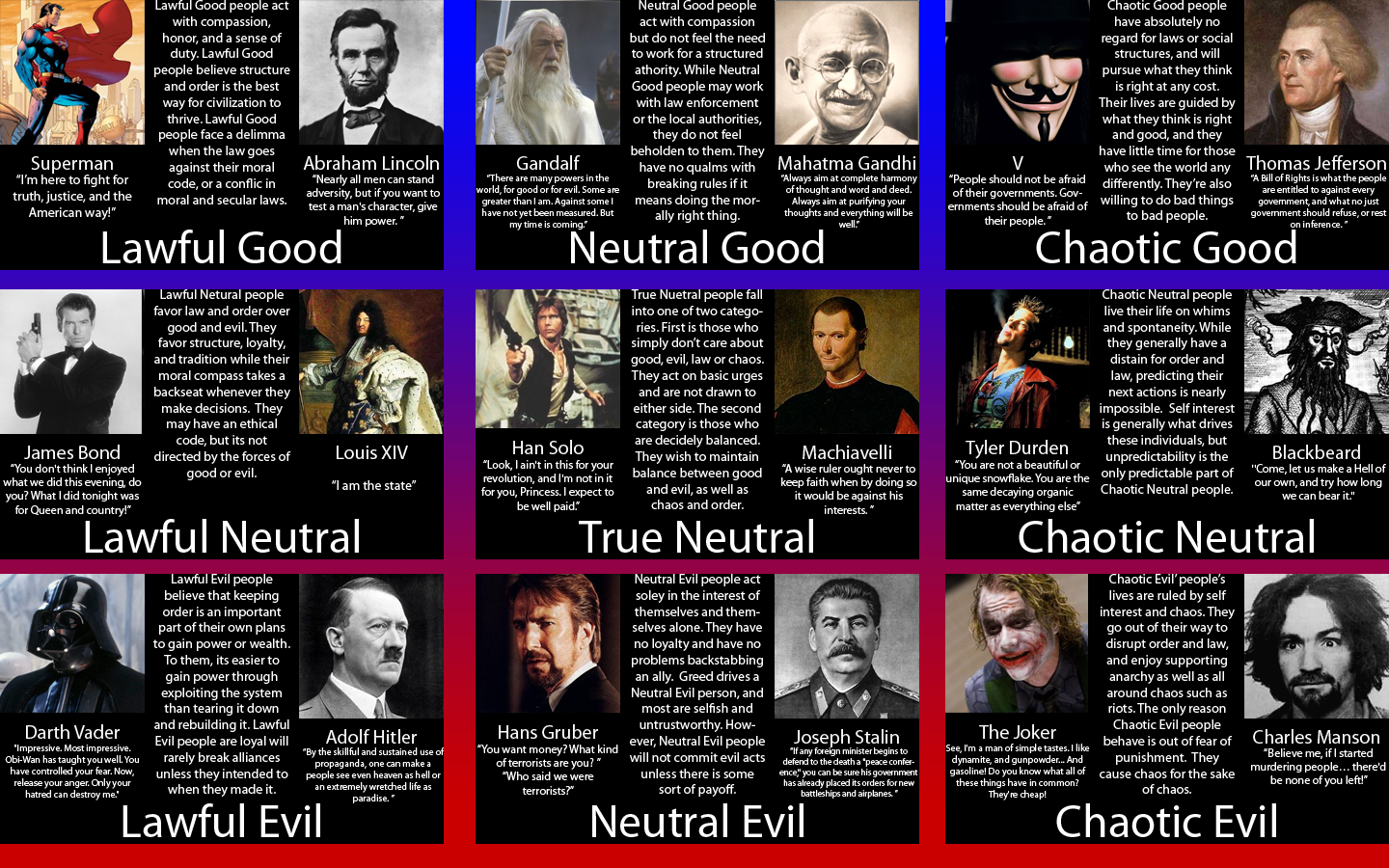

I like this image because it gives fictional examples as well as real life examples as it describes one of the nine basic alignments as seen through Dungeons and Dragons.  There are other ways of doing this, identifying character traits, beliefs, and motivations which ultimately lead to the character’s position on the “good vs. evil” spectrum.  You can even go so far as to tap into psychological theories like Bowen’s Family System’s Theory to understand the fictional people you’re creating or even the very real people in your life—not so that you can pigeon hole them but so that you know how to both approach them and protect yourself.  Basically, so you know to get along with them. 

I think the most important thing to remember, though, is that charts like this are objective.  Hitler wouldn’t describe himself as “evil.”  Gandhi wouldn’t describe himself as “good.”  These are external estimations applied to an individual.  Again, if you really want to understand a person’s morality, you need to talk to them and listen to their story. 

Here’s another way to look at it.  When you study ethics, you will learn that an individual who behaves in what appears to be the most unethical way may actually be a very ethical person.  Ethics is the branch of philosophy that involves systematizing, defending, and recommending concepts of right and wrong.  Going back to Hitler, most of the world would agree that he was immoral or even amoral, his actions unethical.  To Hitler, he had systematized and was obviously able to defend his beliefs and actions, thus creating them, in his mind and in the minds of his followers, as perfectly ethical.  It goes back to the same truth:  In order to understand a person, you have to hear their story.  We don’t do this anymore in our world.  It’s just easier to dismiss people with whom we disagree or who we need to be enemies as “evil.” 

And that brings me back to where I started.  Maybe by setting up my young adult fiction according to the simplified formula of “hero vs. anti-hero” I’m contributing to a mentality that is crippling our society.  It makes for nice, clean story telling that doesn’t drag out with loads of exposition to reveal internal dialogues and motives.  There’s a challenge here I need to explore more.  It’s something I’ve done in other writing but it is a more complex way of writing.

But maybe that’s the ultimate lesson in this.  Maybe I’m underestimating the intelligence of my readers. 

The bottom line is this:  It’s easy to say, particularly in our present election cycle, that this candidate or that party is the physical embodiment of evil.  I may not always agree with certain politicians, religious leaders, high profile actors, etc., but I don’t think any of them are “evil.”  I might think of them as uninformed and ignorant, their ideas and positions as aberrant and abhorrent, and their policies as regressive but I don’t think any of them are actually evil.  This means I have to take the time to understand them, why they say the things they say and why they do the things they do. 

I’m pretty sure I’m a better person for the effort.  

Share it forward!

Follow me on Twitter @TroyComets

Tuesday, March 22, 2016

Suicide and the Gay Agenda

While visiting with more and more LGBTQ people, particularly over social media where I can get a variety of insights from a wider range of geographic and cultural contexts, I’ve noticed a new trend.  This new trend creates a sense of relief in me while at the same time chilling me to the bone. 

When people talk and connect and engage in a deeper, story-sharing dialogue, it doesn’t take long for common themes between people to emerge.  For LGBTQ people, who often grow up isolated and desperate for this kind of connection, obvious themes quickly emerge.  Themes surrounding “When did you know you were gay/bi/trans?” and “What was coming out like?” and “How did/do you handle crushes on straight friends?” are top on the sharing list.  But the theme I’ve been tracking more and more?  “I thought about/came close to/attempted suicide when…”

On the one hand I am so incredibly relieved we’ve arrived at a place, if only internally within the LGBTQ community, in which we can more openly talk about mental health issues like self-concept and self-harm.  It’s ironically no secret that in the culture of the United States actually talking about mental health is still a difficult thing.  Traditional stigma are still attached to people who struggle with depression, anxiety, identity, and so on.  People are reluctant to share their mental health challenges for fear of judgment and, face it, when you already live with the judgment of huge sectors of society or fear of judgment because of being who you are, you’re not going to rush out and add fuel to the fire by saying, “Oh, by the way, I’m not just gay but I’m also depressed and I’ve seriously thought about suicide.” 

But among “our own” we can have these conversations. 

And that’s what I find so frightening about this theme.  It seems like suicidal ideation and suicide attempts are becoming a part of the “coming of age narrative” for LGBTQ people.  It’s almost a given that this theme will surface in conversations within the LGBTQ community.  “Yeah, I knew I was gay when I was twelve but I was terrified to say anything because my parents were super religious.  It was so bad, I felt so alone, that I tried to kill myself when I was fifteen.”

I’ve written before about the isolation LGBTQ people experience (Oubliette, Discussions of Equality in High School) and the human need for community and the results of not feeling connected with community (complete with research and statistics) (Community).  Today I’m going to bring these topics together and talk about the real threat the LGBTQ community faces.


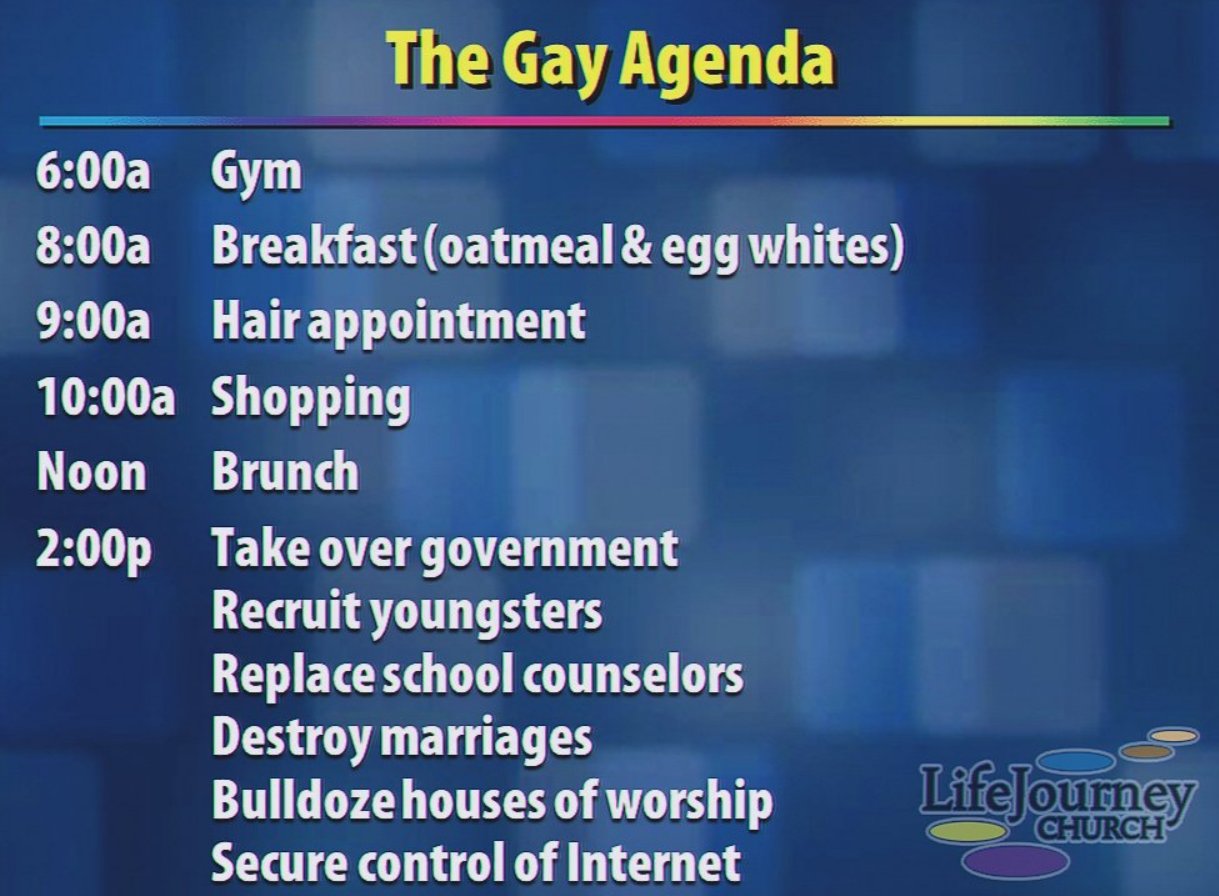
Everyone’s heard the phrase “gay agenda.”  Most of us make a joke about it anymore, mocking the religious and political leaders who obviously have no idea of what it means to be gay or how a person “becomes” LGBTQ.  That being said, maybe we need to do, as a community, what we have always done since the beginning.  Maybe we need to grab a hold of these catch phrases and insults and turn them to our advantage.  I would like to suggest that we actually create a “Gay Agenda” and as item number one on that agenda we list in bold, all caps, complete with hashtag:  #STAYALIVE.

Here are some frightening facts that I found.  Keep in mind two things. 

1.     When dealing with studies and statistics we always have to admit that there is an under-reporting that takes place with regard to self-report.  People who want to keep things on the down-low are never going to be honest when asked questions about certain topics.  An individual who attempts suicide may simply say he’s dealt with depression “all his life” but he will choose not to disclose that he has also struggled with his identity for just as long.  Because the individual fails to self-report the identity piece, the idea that he struggles with sexuality, his attempt won’t be documented within the body of research reflecting suicide and suicide attempts in the LGBTQ community.  Statistics, though accurate as far as the study and research are concerned, really don’t capture the reality of the situation because people fear being honest about things that will bring judgment and may even out them.  And, by the way, this isn’t just the reality for LGBTQ research.  This happens in any kind of study that relies on any kind of self-reporting.
2.     Similarly, the statistics I’m about to share are older statistics.  Recently I’ve been citing a survey in which 48% of respondents between the ages of 13 and 20 identified themselves as exclusively heterosexual.  This means that 52% of young people in this study identified themselves somewhere in the LGBTQ spectrum.  This is a revolutionary piece of information and I suspect that findings like this survey are going to be seen more and more among the younger population and we will eventually see statistics like the ones I’m going to talk about altered significantly in light of this new information and the willingness to share it.   

I want to make one thing clear.  LGBTQ people are not depressed because they are LGBTQ.  They do not consider suicide because they are LGBTQ and they do not commit suicide because they are LGBTQ.  There are no mental deficiencies caused by “being gay” any more than “being gay” is caused be a mental deficiency.  If you still subscribe to this nonsense you are literally stuck in the 1960’s because legitimate science abandoned your nonsense in the early 1970’s.

So if we’re going to talk about mental health challenges faced by LGBTQ people, particularly youth, let’s look at real causes rather than politically motivated causes or religiously imagined causes.

In 2013 the National School Climate Survey reported that “schools nationwide are hostile environments for a distressing number of LGBT students.”  The survey, which was completed by nearly 8,000 students between the ages of 13 and 21 and of whom nearly 60% identified as gay or lesbian, found:
·        55.5% of LGBT students felt unsafe at school because of their sexual orientation and 37.8% because of their gender identification. 
·        Roughly 1/3 of LGBT students had missed at least one day of school in the last month because they didn’t feel safe
·        More than 1/3 avoided gender-segregated spaces in their schools (i.e., bathrooms, locker rooms) because they felt unsafe
·        Most avoided school functions [Which, of course, adds to that sense of isolation.]
·        71.4% of LGBT students heard “gay” used in negative ways and 90.8% felt distressed because of that language
·        64.5% heard other homophobic remarks often
·        56.4% heard negative remarks about “not acting masculine enough” or “feminine enough” often.
·        1/3 heard negative remarks about transgendered people
·        51.4% of students reported hearing homophobic remarks from their teachers or school staff.  55.5% of students reported hearing negative remarks about gender expression from teachers or other school staff.  (Again, you wonder why I had to write about teachers being completely inept at facilitating conversations about equality and allowing students to talk about “fag marriage” and “shooting their mentally deficient and gay children?”)
·        74.1% of LGBT students were verbally harassed (called names, threatened) in the past year because of their orientation.  55.2% because of their gender expression
·        36.2% were physically harassed (pushed, shoved, etc.) because of their orientation.  22.7% because of their gender expression.
·        16.5% were physically assaulted because of their orientation.  11.4 because of their gender expression.
·        Almost half of LGBT students experienced electronic harassment/cyber bullying (i.e., text messages, facebook messages)
·        Nearly 2/3 of LGBT students who were harassed or assaulted in school did not report the incident to school staff usually because they doubted the effectiveness of any intervention.  [Which you can understand why when teachers/staff are contributing to the hostility of the environment.]
·        Over 2/3 of the students who did report an incident indicated the school staff did nothing.
·        Nearly 1/3 of LGBT students reported being disciplined for the same public displays of affection non-LGBT students engaged in freely.
·        18.1% of LGBT students were prevented from attending school dances/functions with a same gender date/partner.
·        17.8% of students were not allowed to form or promote support groups.
·        17.5% of students were prohibited from discussing or writing about LGBT topics in school assignments.
·        15.5% were prevented from wearing clothing or items supporting LGBT issues.
·        9.2% of students reported being disciplined for simply identifying as LGBT.
·        Policies which were reported that directly affected transgender youth:
o   42.2% of transgender students were prevented from even using their preferred name. [Which makes you wonder considering how many non-trans students are allowed to use stupid nicknames born from athletic participation, right?]
o   59.2% of transgender students had been required to use a bathroom or locker room based on their so-called “legal sex.”
o   31.6% of transgender students had been prevented from wearing clothes considered inappropriate for their “legal sex.”

Now this is where we get into the actual effects of all of this hostility, inequality, intolerance, and blatant ignorance and hate.

Students who experienced higher levels of victimization because of their sexual orientation were three times as likely to have missed school in the past month, had lower grade point averages compared to students who were “less often harassed” (2.8 vs. 3.3), were twice as likely to report a lack of plan/desire to pursue college or trade school, and had higher levels of depression and lower levels of self-esteem.

Students who experienced higher levels of victimization because of their gender expression were three times as likely to miss school in the past month, had lower GPAs, were twice as likely to report they didn’t plan to pursue higher education, and had higher levels of depression and lower levels of self-esteem.

These same statistics translate from victimization to discrimination. 

A .pdf of the entire study can be found here. 

How does all of this play out?  How does all of this well-documented violence and hostility toward a specific and vulnerable sector of America’s youth translate into tragedy and the loss of life? 

A 2012 Stonewall Survey gives us some insight.  Young gay men are 30 times more likely to attempt suicide than their heterosexual counterparts.  Lesbian young people are six times more likely to attempt suicide.  Some have made up to nine unsuccessful attempts to kill themselves.  The highest rates of suicide are among those who are isolated from support.

This same article reports “US News reported that teenage gay people who have been rejecred by their parents are far more likely to self-harm, take hard drugs and commit suicide than teenagers who are…loved and supported by their parents.”

25% to 60% of gay people seek counseling at some stage in their life as reported by the Counseling Directory. 

But where does all of this come back to?  Where do people receive tacit and/or overt approval for their intolerance and ignorance?  This is a hard question for me to actually answer not because the answer is elusive but because admitting it ultimately leads to an admission of a certain amount of complacency.  The answer?  The Church.  Or more specifically:  Religious and faith communities and institutions.

It doesn’t take a lot of research to convince people that traditional religious understanding bolsters contemporary intolerance of LGBTQ people.  It’s common knowledge.  It’s as well and basically understood as knowing the KKK is not a supporter for the African-American community.  More and more research is published in which people, victimized by narrow and superstitious understandings of religious texts, share their stories and bring awareness to the damage the Church, for example, has done for generations. 

And it’s not just the Christian Church struggling with these issues and attempting to push back against hundreds of years of intolerance and ignorance.  A 2012 study of Suicide and Suicidal Behavior in Tel Aviv discovered “a staggering 20% of the homosexuals and lesbians surveyed reported suicide attempts—112 times the rate among the general population.”  The study goes on to note that “this sector…does not get enough notice, and it is a hotbed for suicides that you later hear about after the fact.  The suicide rate among the religious homosexuals is the highest because they experience more distress when confronting their families.”

I cannot tell you how angry reading studies and reports like this makes me.  I cannot tell you how my heart aches when I hear people share their stories of rejection by faith communities who claim to embody the love of God and the ministry of Jesus Christ.  I grew up in the Church.  I still consider myself a part of the Church.  But the Church makes me so angry when their hypocrisy reaches this breaking point, when they claim to be the Body of Christ, to embody the Spirit of Jesus of Nazareth who led people beyond their self-imposed boundaries to people who were different, though differently, behaved differently, loved differently—not to preach at them or tell them how they need to change but to simply love them—and then these same Churches preach a doctrine of intolerance that creates fear and self-loathing in LGBTQ people who fear not only losing the love and connection of their family but, through hateful and ignorant words, feel themselves cast far away from the love of God.


We have SO MUCH work to do—in our religious communities, in our schools, and in our society at large.  No subset of our population should have to share stories of their suicide attempts any more than they should have to share stories of police violence and institutional racism.  We have to do better.  We have to educate ourselves better. 

We have to #STAYALIVE because it is getting better.  We need you to help make that happen.  


Friday, March 11, 2016

Confession Time

I want to make a confession.  It’s nothing terrible.  It’s nothing tabloid worthy.  It’s kind of embarrassing to think about it now.  But in order for you to appreciate the confession and what’s behind it, I need to give you some background and context. 

I know that you know that there was a time before satellite TV.  Our phones were tied to the wall with wires.  Our movies weren’t on demand; we had to rent them on VHS or Beta tapes at the local video rental place, usually at a mall.  And believe me if your parents were anything like mine there was definitely no “demand” about movies. (Oh, yeah—we shopped at malls.  Amazon wasn’t around back then.) Our music was on cassette tapes and MTV actually was Music Television.  And all the wonders of the internet had yet to be dreamed of.  In fact, computers were just become “a thing” in school when I was in fifth grade.  Some of you might recognize one of these if your parents or partners drag you around to antique shops.


Not having the internet complicated life in the closet.  It wasn’t just the isolation that we experienced at a time in which tolerance for LGBT people was ever fluctuating.  The advent of the internet also made it easier for LGBT people of all ages to appreciate, in relative privacy, the attributes of their attractions.  I’m not just talking about the ease and availability of porn, but I’m talking about being able to “fanboy” and “fangirl” in secret as well.  Today it’s nothing to pull out your smart phone and look up facts and photos of that movie star or lead singer.  Back in the day it was a little more complicated than that. 

So, now, my confession.

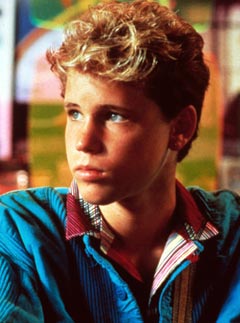
When I was a teenager I had a HUGE crush on Corey Haim. 

In 1986 the movie The Lost Boys was released.  It was one of a flurry of Corey Haim/Cory Feldman cinematic team ups that came out in the 80’s.  The best one of if you ask me.  Though, I suppose, Dream a Little Dream comes in a close second.  The Lost Boys had all the big names of the time:  The two Cory’s, Kiefer Sutherland, Jason Patric, Jami Gertz.  Beautiful people, dressed fashionably (for the time—don’t laugh), and gyrating to one of the best soundtracks of all time.  But at the center of it all, for me, was Corey Haim.


So, picture it.  It’s the 80’s and you live in one of the most conservative pockets in the region.  You’re surrounded by the small town mentality of “traditional” values, where deviation from the time honored norm resulted in bullying and harassment and even violence.  You know you’re gay; you have no interest in girls and panic regularly in the locker room before and after phy ed.  You watch a movie and become enamored by one of the lead actors.  What do you do? 

You get creative and you get sneaky. 

It wasn’t long after The Lost Boys came out that I was able to talk my dad into buying the family a VCR.  Shortly after that the VCR migrated from the family room to my bedroom where I connected it to my little 12” black and white TV.  Somehow I got my hands on a copy of The Lost Boys and voila!  My crush was in my bedroom.  To this day I’m not sure how I didn’t wear out that video tape. 
 

Let me pause for a moment and make an important point.  My crush on Corey Haim wasn’t just teenage lust provoking the typical reaction from a teenage boy.  Even back then I was more relationship oriented than “sex” oriented.  I would rather connect with a person than hook up with a person.  I just don’t want you going away with the wrong idea. 

So, I had “my Corey” on the huge 12” black and white television.  But there was more to feed my crush.

If you were like me, growing up in the 80’s from the safety of a closet, you may have had a sister.  Somewhere in that sister’s bedroom would be a collection.  Sometimes this collection would be proudly displayed.  Sometimes it would be tucked away for safe keeping.  Sometimes this collection would be inconveniently gutted and plastered all of the walls.  I’m talking about magazines.  But not just any magazines.  I’m talking about THE magazines filled with beautiful teenage boys, occasionally flashing some skin, smiling boldly.  In that smile was an unspoken message:  “So what if you’re gay.  I’m here for you.  Let’s talk about how hot I am.”


Occasionally one or two of these magazines would come to visit me in my bedroom.  They would bring New Kids on the Block with them along with Johnny Depp, Jonathan Brandis, Ralph Macchio, and Jay R. Ferguson of the dreamy eyes who I recently blogged about. 

You see, we didn’t have YouTube to watch clips of our crushes dorking around or sending greetings to their fans.  We didn’t have Instagram or twitter.  Time spent with our crushes was planned out, two dimensional, and required considerable imagination.  And if you were like me, isolated and afraid that the real you would be discovered, a certain amount of calculating resourcefulness was also required. 

So, I had a crush on Corey Haim (for obvious reasons) and in order to feed that crush I obsessed over a movie on a little black and white TV and snuck teen magazines from my sister’s bedroom.  There.  That’s my confession.  I’ll give you a moment to stop laughing before I continue.

Got it out of your system yet?

And now a disclaimer:  The tone of my thoughts from here on might sound judgmental.  I think it could be easy to relegate them to the “Hey, you kids, get off my lawn!” category.  I hope you don’t do that because my goal isn’t to be preachy here.  I just have a thought and, honestly, I’m curious what all of you have to say about it.

I admit that my opinion might be formed by a sense of nostalgia but I almost wonder if, at least where the idea of crushing and fanboying and fangirling is concerned, things were better before the internet.  I know that might be strange to hear.  It’s strange for me to say.  And it’s definitely not in keeping with the opinion I’ve shared in previous blog entries in which I celebrate the freedom LGBT people find through technology.  But bear with me and let me explain.

I think that there’s something to be said about mystery.  Mystery fuels the imagination.  Mystery fills in the blanks when reality fails or answers are evasive.  Mystery drives us to discovery, channeling us through a labyrinth of experience that helps develop identity and character. 

On the opposite end of this spectrum is everything that comes with internet:  Constantly flowing information, more than we can possibly consume and, sometimes, more than we want to know.  I had to laugh recently when singer/songwriter Sia made an appearance on James Corden’s “Carpool Karaoke” sketch.  Sia talked about wanting to maintain a sense of privacy in an era where stars have no problem tweeting out pictures of themselves from the dentist.  Just this past week Kim Kardashian West tweeted a picture that left absolutely nothing to the imagination.  A few months ago a photographer managed to “sneak” a picture of Justin Bieber sans clothes, finally showing obsessed fans around the world a side of the Biebster they’ve been wanting to see for years. 

I’m not saying these things are bad.  They just are.  I don’t think it’s possible to ascribe them a value apart from a subjective appraisal and those, I think, I pretty much useless in our culture today. 

I just wonder where the mystery is anymore when anything and everything you could possibly know is instantly available literally in the palm of your hand.  Music doesn’t dance around a topic anymore—it comes right out and says it.  Anyone with an internet connection, regardless of age, can watch total strangers have sex.  Heck, according to certain studies (which, admittedly, are problematic in their methodology), teenagers are having sex younger and younger, leaving absolutely no room for mystery and wonder. 

Do you know what I mean?

I think where I’m going with this can be summed up in this thought:  Everything we receive comes with a cost.   I think there is no better example of this than the internet.  Information flows, educating people, connecting people, creating community, liberating not just LGBT people but people who struggle with abuse, addiction, racism, sexism, and so on.  But when the information gate is opened we can’t pick and choose what information flows lest we make judgments about what information is “acceptable” and what information is “dangerous.” 

I’m not a luddite.  I’m not only fond of technology but I’ve grown quite dependent upon it.  Even if we could rewind time and figure out how to keep the “good things” technology does and eliminate the “bad things” that technology brings with it, I wouldn’t want to.  I wouldn’t want to meddle with that history any more than I would want to meddle with the history of my life and take “missed opportunities” to come out.  Time is.  History is.  We are at this moment in time, with all its good and with all its challenge.  The question isn’t “What should we have done differently?” but rather “What can we do now?”

I don’t know if you agree with me.  Maybe it’s just an observation made by someone who likes to think about things like this.  Maybe it’s something similar to what people who came before me thought about “my time” just like you will think of people who come after “your time.”  It might just be the nature of the universe, to see these positives bring their negatives, leaving people with way too much time on their hands to ask these kinds of questions. 

Regardless of whether or not you agree with my thoughts on the internet destroying mystery and imagination when it comes to the development of sexual identity and the feeding of that curiosity (whether straight or LGBT), I hope we can agree on two things.  First, I hope that we can agree that talking about these things doesn’t hurt anything.  I hope we can agree that coming together and having conversations about things that we either see ourselves or things that others see and bring to our attention can only benefit everyone involved.  Conversation is always good as long as all parties are listening and engaging.

I also hope we can agree on something very important.

I hope we can agree that Corey Haim was so hot!


Wednesday, March 9, 2016

A Beginners Guide to Troy Comets

Today I’m going to take a break from the relatively more serious posts I’ve been doing lately.  The last month or so I’ve seen a huge spike in blog traffic which has generated some feedback.  This makes this whole blogging adventure very exciting for me because I honestly didn’t think the blog was going to go anywhere.  I mean, I’ve tried blogging before—even using my real name and sharing it with family and friends and colleagues.  But to be honest?  I’ve had more readers and support and reaction from you, dear reader, using my pseudonym, than I did when I used my real name and shared with people who actually know me.  Kind of makes you think, doesn’t it?

So, I thought I would pause today and share a few things you might like to know about me and my blog. 

·        Just to be clear, Troy Comets is a fictitious name.  If you haven’t had a chance to do it yet, you might want to quick go and read my first blog post here.  It gives you some important background on why I chose to write with a pseudonym (fake name).  The cliff notes version is this:  Because of my life situation, coming out has been next to impossible and became more complicated with each passing year.  Obviously that wasn’t my intention; even telling lies for what seem like very good reasons results in chaos that doesn’t just affect your life but the lives of people around you.  Adopting the name “Troy Comets” has allowed me to not only publish the kind of stories I would have wanted to read as a teenager/young adult if the world had been different but it’s given me the chance to start this blog and try to make a difference.
·        Because of my need for anonymity and my appeal to you, the reader, to respect that, I try very hard not to share too many details about my non-Troy Comets life.  I think I’ve let a few things slip between Twitter (@TroyComets) and a few remarks in some blog entries.  I do live in Minnesota and I have traveled a bit.  I have quite a bit of education behind me.  I’m not saying that to brag and I’m not going to go into detail.  I think, dear reader, if you stick around long enough you’ll probably be able to figure out what my areas of study were in graduate school.  I just want to remind you of our agreement:  I’ll be here for you, sharing my knowledge and experience and even being that hole in the virtual wall through which you can scream and yell and cry (which I’ve been for a few of you already and you don’t know what an honor it is to have that experience)—all I ask in return is that you don’t go peaking around the curtain.  I’m not naïve.  I know if someone wanted to know who Troy Comets really is they could find out in no time.  But I believe in the inherent good of people and know that my readers aren’t the kind of people to out someone who has explained why coming out isn’t an option right now.
·        Blogging is an interesting thing for me.  I sometimes find that I blog the way I speak.  The way I speak is considerably different from the way I write.  Here’s the difference.  A couple of weeks ago I wrote this blog post on “Community,” having been inspired by a YouTuber by the name of Travis Bryant (@TravisBryantNYC on Twitter).  This is what a lot of my non-fiction writing looks like.  It’s research and cohesive argument driving to an ultimate point.  When I speak publicly as part of my non-Troy Comets life I intentionally leave loopholes and gaps in my thoughts and arguments.  I’ve noticed this approach in my blogging now, too.  The reason for this is that when I speak and when I blog I’m trying very hard to engage people in conversation.  I’m not here to impress you, dear reader, with my knowledge and my experience and beat you over the head with sound, air tight arguments every time I post a blog entry.  There’s a place for that kind of written communication and, as a rule, it’s not here.  I prefer to think of my blog as a kitchen table at which we can gather.  I’ll bring my stories and my experiences and you bring yours and let’s just…talk.  So I leave gaps in my blog writing.  I don’t always flesh out concepts or drive home arguments as hard as I could because I don’t want to control what you think.  I’ll share a thought or an idea or an experience, talk a little about it, and leave it alone for YOU to turn over and interact with.  One of the critiques I give myself is “You should develop this idea more” or “Talk more about this.”  For example, my post Soundtrack could have had more detail, more meat to it.  But that wasn’t my goal.  I didn’t want to talk about myself, I wanted to use myself as an example to encourage you to think about yourself.  I hope that makes sense.  I also hope that it doesn’t come off as condescending.  I just want to have a conversation and that’s just not going to happen if I’m dominating my blog with fine-tuned rhetorical arguments and research discourses. 
·        My goal with the blog since the beginning was to put out two posts each week: Wednesday and Sundays.  The problem is that inspiration is a fickle partner in this adventure.  Though I don’t think I’ve dropped below two posts in any week, I know that I’ve gone beyond that.  Just know that my goal has been two posts each week.  The other factor that complicates things is I’m currently working on my second book.  I’m really pleased with its premise and progress.  It seems like the story is so desperate to be told that it’s writing itself.  But it is a time consuming process and, unlike These Are The Days, I’ve had to do a lot more research for the new book.  I’m still writing what I know and what I would have liked to read but fortunately I always need to know more.  So know that if I’m late on a post or I miss my quota, I’m probably consumed with the new book.  My goal is to get it out early summer. 
·        If you haven’t done it yet, you really need to follow me on Twitter (@TroyComets).  That way I can follow you, too.  Like I said, the whole point of much of this blog is to have conversations.  I can’t tell you how much I appreciate you taking time to read my thoughts but I also want to hear your thoughts.  I want to hear your story.  Following me on Twitter also gives you a chance to help me out with the blog.  Sometimes I throw ideas out there or request ideas/stories from my Twitter followers.  If everyone who reads my blog were to follow me on Twitter and engage in some way….I just got goosebumps over just thinking about the great conversations we can have and what we could learn from each other.  Since starting the blog at the end of January it’s had just over 800 views from all over the world.  That’s a HUGE kitchen table!  Let’s make use of it!


That’s it!  I want to close, though, by expressing my sincere gratitude for your support.  It means so much to me, dear reader, that of all the choices you could make and all the things you could do and all of the other blogs you could be reading, you are taking the time to read this one.  Thank you.  I hope I make it worth your while.  

Sunday, March 6, 2016

Taking Control

(This is part two of a blog series I’m working on.  You can read part one here.)

It was a warm autumn evening in 1986.  School had just started.  I was in 9th  grade.  In some schools this might mean a big change.  Maybe a new building with different teachers and even a new bunch of friends.  Not in my school.  Not in my small town.  It was the same building, same teachers, same people I had known pretty much all my life.  Nothing ever changed except the one stoplight in our town, the only one in our county.

Summer freedom had ended.  The days of relative calm and the corresponding lowering of my guard had been brought to a close for the next nine months.  The imprisonment of body and soul in an institution and a routine which choked out creativity, originality, and authentic personality had begun.  It was time to conform to the expectation of peers and to pretend I was normal like everyone else.  Just like everyone else pretended to be normal like everyone else. 

This return to routine also meant a return to other age appropriate expectations.  For me this was represented by a return to church activities, particularly confirmation instruction.  I didn’t mind it.  Church, like other things in my life, seemed to be wired backwards.  Fourteen year olds shouldn’t enjoy church any more than fourteen year old boys should have crushes on other fourteen year old boys.  But I did enjoy my church experience growing up due in large part to experiences like the one that brought me to crossing the paved parking lot outside the local movie theatre on that warm autumn evening in 1986. 

It was a Sunday.  I had gone to church, as was expected of confirmation students.  After worship I went to the church’s basement and sat down at the table in the kitchen for…Sunday School. 

Forget everything you know about stereotypical religious education and Sunday School in general.  There were five of us who were “the regulars” who gathered at this kitchen table weekly to learn from one of the most formative people who has ever come into my life.  She was “religious” but not “holier than thou” religious.  She was a nurse who was enormously compassionate and understanding, patient to a fault sometimes.  And the struggles her son, who had transitioned into early adulthood, gave her a realistic and pragmatic view on the topics that teenagers faced in the mid-1980’s.  Her son’s drug addiction inspired her to be open and authentic with the riskier topics of addiction and other themes that were considered too adult to be taught to a group of teenagers who were being prepared to transition into adulthood in the eyes of the church. 

My Sunday School teacher was cool.

I don’t remember how it came up but I know that by the end of the hour in that kitchen that morning the plan had been made.     We would meet back at the church at 6:00 and pile into the teacher’s station wagon.  One of the other student’s mom would join us.  We were heading to the movies.  And not just any movie.  We were heading to see “Stand By Me.”

Let me put things into perspective since I know that by today’s standards “Stand By Me” is pretty tame.  Kids smoking and swearing?  Kids being honest about the troubles in their lives?  Kids going to find a dead body?  It was an “R” rated movie at a time and in a place where teenagers just didn’t go to see “R” rated movies.  But we were going and our Sunday School teacher was taking us. 

There’s a scene about halfway through the movie where two of the four main characters of the film are talking privately.  Gordy is trying to convince Chris to join him in taking some of the “smart kid classes” when they go back to school in the fall.  “You’re smart enough.” awkward Gordy assures his friend.  “They won’t let me.” Chris, the tough guy/leader of the misfit gang, says quietly.  Gordy presses him to explain and Chris continues.  “It’s the way that people think of my family in this town.  It’s the way they think of me.  I’m just one of those low life Chambers kids.”
           
“That’s not true.” Gordy argues flatly.

“Oh, it is.” Chris declares fiercely.  “No one even asked me if I took the milk money that time.  I just got a three day vacation.”

“Did you take it?”

“Yeah, I took it!  You know I took it!  Teddy knew I took it.  Everyone knew it, I think.  But maybe I was sorry and I tried to give it back.”

“You tried to give it back?!”

Chris shrugs.  “Maybe.  Just maybe.  And maybe I took it to Old Lady Simons and told her and all the money was there.  But I still got a three day vacation because it never showed up.  And maybe the next week Old Lady Simons had this brand new skirt on when she came to school.”

“Yeah!  It was brown and had dots on it!”

“Yeah.  So let’s just say I stole the milk money but Old Lady Simons stole it back from me.”  Chris presses.  “Just suppose that I told the story.  Me.  Chris Chambers.  Kid brother to Eyeball Chambers.  You think that anyone would have believed it?  And do you think that bitch would have tried anything like that if one of those douchebags from up on The View would have taken the money?  Hell no!  But with me?  I’m sure she had her eye on that skirt for a long time.  Anyway, she saw her chance and she took it.  I was the stupid one for even trying to give it back.”

And then we, the audience, see just how talented of an actor River Phoenix was. 

Chris’ lip starts trembling and his voice becomes heady and he starts sniffing back tears.  “I just never thought…I never thought that a teacher….Oh, who gives a fuck anyway?  I just wish that I could go someplace where nobody knows me.”  And tough guy Chris cries.


At the time, my fourteen year old self could completely identify with Chris Chambers.  Not that I had ever stolen anything or been accused of stealing anything.  But in Chris’ desire to be someplace else, to escape the stigma attached to his name and the judgment from the people around him—my fourteen year old self heard his own voice in Chris’ desperate wish.  Rumors, gossip, judgment, and everyone thinking they knew absolutely everything about absolutely everybody—that I could identify with in a painful way from the confines of “my closet.”

It’s one of my all time favorite films, “Stand By Me,” and so I find myself watching it regularly.  As the years went by and I grew to both understand the world and these fictional representations of very real people in the world, I began to see this powerful scene differently.   This is more than a kid feeling trapped by the sins of his family and the judgment of his community.  This is a kid who’s beginning to take back control of his story.  It’s from this point onward that we hear more and more from the adult Gordy, who is narrating the story, that Chris, unlike Teddy and Vern, takes the heavy academic classes with Gordy while Teddy and Vern disappear into the crowd, having taken the more “traditional” classes for people of their “class.”  Chris graduates and becomes a lawyer, a “peace maker,” the adult Gordy calls him at one point. 

There is nothing more damaging to a person’s self-esteem and self-concept than to let other people tell their story.  It limits us.  It handicaps us.  It puts us into a box.  When people, even well-intentioned people, decide what our themes and motives are, what our story is, how we could and should interact and react to the world around us—when we allow other people to tell our story, we lose ourselves to their interpretations and expectations.  We even run the risk of believing what others think and believe is the truth about us.  

This works both ways, by the way.  It’s not always about adopting the “negative” interpretations of our identities that others try to apply to us.  “Positive” reputations can be just as damaging.  Think about how many musicians and actors have crashed and burned because they started to believe all the hype surrounding them.  It’s more difficult to step away from attempts at wrestling this kind of control away from ourselves because, frankly, who doesn’t like to hear about how awesome we are?  There’s a huge difference between acknowledging a compliment and adopting another’s view of who we are and how awesome they think we are.  Sometimes being told that you can do no wrong only to discover that you can is more damaging than being told you can do nothing right and then discovering that you actually can do many things right.

I don’t know what it is in people that makes them want to recast the people around them for their purposes.  It might just come down to convenience.  It makes things much easier when we think we have everything figured out and everyone does what we want and responds the way we wish. 

Today I struck YouTube gold.  I’ve been chewing on this post for a while and trying to come up with a really good example of someone taking control of their story, someone who is able to speak to the struggle and occasional pain a person experiences when they try to push back against the confines of the box in which they’ve been placed.  Today, not even an hour after it had been posted, this video caught my attention.  

I love Chris’ video for a number of reasons.  The first is the sincerity with which he speaks, particularly when he talks about his desire to share parts of himself and show the things in which he believes.  As the video unfolds we realize the Chris that begins the video is a Chris from a week ago who just couldn’t find the right words or work up enough courage to take control of his story.  I don’t want to interpret or reinterpret Chris’ words or motivation but, taken at face value, I think he presents a very genuine struggle with enduring questions and allusions to his possible identity.  I think that a lot of his care and hesitancy in telling his story here is that he wants to be honest about who he is and take possession of the narrative of his life but he also desperately doesn’t want to appear judgmental or hurt anyone in the process.  If I’m wrong or missing something, I’m hoping that Chris will let me know.  I have to say, though, that this is one of the best candid and uncontrived conversations I’ve ever heard on the topic. 

It’s amazing to me how YouTube has become a vehicle of empowerment which encourages people more and more to simply tell their story.  I think it’s like anything; when a person starts there’s a certain amount of finding your voice that takes place but eventually authenticity begins to show through.  We, the audience, learn more about you, the artist, and we begin to see your personality, your values, your passions, and even your fears.  You inspire us to be the best us we can be.  Through honest conversations like this one of Chris’, we become emboldened and brave.  We discover our own voice and then we use it to share our story. 

Here’s the thing.  I’ve blogged a little bit before about the struggles of being in the position that I’m in.  I will not deny it:  I am very jealous of LGBTQ youth and young adults today because of how “easy” you have it compared to those of us who came before you.  You tell your stories honestly.  You even own your fear and uncertainty.  Like my fourteen year old self seeing River Phoenix playing a character in a movie who wanted to escape to a place where he could be himself, I look at you and wish the same thing.  I end up going through the, “If onlies” at breakneck speed.  “If only I could have had those opportunities…”  “If only I could have had a family like that….”  “If only the internet had existed when I was that age…”  “If only I could have just had the courage to be honest.”

But the problem is that if any of those “if onlies” were true, my story wouldn’t be my story.  Many of the experiences I’ve had, like the experiences many of us have had, have been far from pleasant or ideal.  Things have not “been fair.”  But these downs—all of these negative experiences and painful struggles—have been MINE.  They help to define me and create my story just as much as all of the good things I so easily own and celebrate.  Without these experiences and the knowledge that has come with them I wouldn’t be in the position I’m in now, a position of hopefully helping others to be true to themselves.

So, yes, I sometimes watch YouTube videos with a wistful eye and wish that my life could have been something else.  We all do that.  It’s human nature.  But we can’t let that desire for a life that simply isn’t ours force us to abandon our own stories.  In the end this becomes just as destructive and damaging as letting someone else define us. 

There is absolutely no one in the world better suited to tell your story than you.  You’ve been there every step of the way.  You’re the only one who can truly speak to your motivations and your decisions.  You’re the only one who can detail your joys and sorrows.  You’re the only one who can competently identify the themes in your life because it is your life. 

And, believe me, people want to hear your story. 


Saturday, March 5, 2016

Our Whole Lives Are Just Stories

I am a huge fan of the Vikings. 

Yeah.  No.  Not those Vikings.  Let me clarify.

On the History Channel there is a historical/costume drama called “The Vikings.”  It is created by the same imagination behind Showtime’s “The Tudors” and “The Borgias.”  His name is Michael Hirst and the guy knows his history.  He does a very good job at dramatizing it for public consumption.  “The Tudors,” of course, tells the story of King Henry VIII and his wives.  “The Borgias” is about Pope Alexander VI and his illegitimate and often times frightening family who served as inspiration for the modern epic “The Godfather.” 

“Vikings” is a drama that focuses on—wait for it—the Vikings, those conquering warriors from Scandinavian lands who terrorized (and to a certain extent civilized) much of Europe, especially the British Isles, around the 8th century.   I’m a fan not just because I think Michael Hirst is a gifted story teller but because “Vikings” speaks to my heritage.  My mother’s mother was first generation born in the United States; her parents emigrated from Norway.  Of all of my ethnic backgrounds, my Norse ancestry is the least explored.  So not only am I entertained by “Vikings,” it causes me to think and gives me direction to read and research something that seems too large and unknown to know where to begin.   

I’ve started re-watching the series again in preparation for the premiere of the new season.  I often stream something in the background while I’m working and, since today is Saturday and blog writing day, I had “Vikings” going while I tried to write, back up, and start over.  Some days the blog writes itself.  Some days I can’t seem to put two sentences together without abandoning the effort and starting over a dozen times.

Guess what kind of day today was. 

And then the sky opened and the Norse gods literally smiled down on me and I knew I finally had the angle for the post I was struggling to compose. 

Season one, episode seven.  Our hero, the recently made Earl, Ragnar, has headed west again to sack British villages and towns and his imposing wife, Lagertha, a character who would score high on the Bechdel Test, is left in charge.  A married couple, who had apparently struggled for years with an inability to have children, present themselves in front of Lagertha.  Apparently the woman had given birth to a son and her husband was outraged, declaring that the child couldn’t possibly be his.  He relates to Lagertha and “the court” that a young man calling himself Rig had visited their home roughly nine months before and the husband was certain that the stranger was the father of the child.  His wife, in tears, said she didn’t know who the father of the child was.

Lagertha, who is as intelligent in court as she is deadly on a battle field, beckons the woman closer to her place on the throne.  She asks the mother, “Do you know who this Rig was?”  And, of course, the woman trivializes him by saying he was just some young man.  Lagertha continues:  “On the contrary.  We know from our ancient stories that Rig is another name for Heimdal.”  This stuns the young mother who can’t seem to get her head around the idea that this young man who had visited her could possibly be one of the Viking gods.  Lagertha says, “You are fortunate that he chose your household to appear.”

The husband isn’t having any of this.  He says, “My lady!  That’s just a story!”  and Lagertha, fixing him with a contemptuous gaze, responds, “Our whole lives are just stories.”  She continues by chastising the husband for not trusting his wife despite the joy and comfort she has brought him by delivering him a son.  Lagertha’s judgment?  “Do not punish her.  Rejoice with her.  Drink wine with her.  And sacrifice one of your animals to Heimdal the God.  But if I hear that you’ve harmed this woman, or this child, you will answer for it to me.”

Okay, so Lagertha’s judgment and warning go beyond where I could have stopped but…I just couldn’t stop myself.  Lagertha’s a badass and to stop where her words started to serve my purpose would be to ruin Lagertha’s story. 

And, since I want to talk about this idea of story, I couldn’t very well destroy this one to prove my point.

“Our whole lives are just stories.”

From the moment we are born to the day we are laid in a casket with family and friends gathered around us, celebrating our lives, we are a story.  We are the protagonist and sometimes our own worst antagonist.  Every experience we have, every struggle we meet and every success we achieve, creates the arc of our story complete with chapters and themes. 

We wear the advertisements of our story on bodies, in our social media, and even in our vocations.  These things become our book’s cover, our public readings, and the forum for encouraging from others a deeper understanding of our story and through our story a deeper understanding of the world.  This about David Sedaris telling stories from his life in his books or on “This American Life” which connect to larger themes and provoke greater thought.

We are also “storied at” throughout our lives.  The great narrative of our history surrounds us, with its shame and its victories.  Our religious traditions imbue us with yet more story.  The stories of the people in our lives—our family, our friends, our colleagues and coworkers—all bring their stories into our lives and, just as the sharing of our story with them broadens their understanding of the world, in the sharing of their stories we begin to see things differently as well. 

We can’t escape the idea of being caught up in a story or being storied by institutions, conventions, and family traditions.  Why?  Because our stories are the only thing we have to make sense of our lives.

It kind of makes me think of that scene at the end of “Men in Black 2” where Agent K shows Agent J that the world is bigger than what J believes it is.  This is how we make sense of our lives, by connecting it to larger stories outside of ourselves. 

How we hear stories and how we remember stories help us to learn and to understand.  From our oldest religions we have….stories.  From our history text books we have….stories.  From our parents and grandparents we have….stories.  From our teachers we have…stories.  To our children we give…stories. 

Think about the last conversation you had.  Maybe you were trying to explain why you chose to study what you studied in university.  Maybe you were trying to share something you thought was funny.  Maybe you were trying to help someone understand that whatever they were going through is something many people have experienced.  You can’t do any of these things without sharing your story. 

Here’s where we tend to run into trouble.

Because our world is smaller and moves faster than it ever has before we are considerably more disconnected from the “story keepers” in our lives.  Now, I’m not saying that parents and grandparents have all of the answers because they flat out don’t.  But traditionally, when the world was larger and slower, the older people in our lives were able to hold onto our communal stories—our histories, our traditions, etc.—and could place them (and us) into the context of time.  It was from their sharing that we could learn more about our place in the world.  We were more rooted as a Western people. 

Some of you might be old enough to remember “The Waltons.”  I think it’s still on TV running on Halmark channel now.  It’s a story of a multigenerational family living through the depression and World War II.  It aired during the 1970’s.  Think about the grandfather in that show:  He was always ready to share a story, to anchor his grandchildren in their history, but he absolutely never told them who they should be or what they should do with that knowledge.  That’s an ideal example of what I’m talking about with regard to the “story keepers” from the older generations. 

But that’s not the world we live in anymore—if any of us actually did live in a world in which we were fortunate enough to have a Socratic story teller like Grandpa Walton.  Instead we bump along as best we can, children of working parents and chaotic, frenetic families, learning what it means to be ourselves while being told through the stories in our music, in our friendships, through the internet, from teachers and leaders that we should be this way and we shouldn’t be that way.  We are bombarded with stories that are not our own and can’t possibly be our own and it confuses us and it distracts us from our own story. 

We used to call it “peer pressure.”  We were told by people who seemed cooler than us what we should do, how we should act, what we should wear, and so on so that we could be cool, too.  I’m sure our peers still do this but I think what we suffer from now is story confusion. We watch shows on Nick and Disney and we see people we want to be.  We want their stories.  We mimic their behaviors and copy their voices and mannerisms.  We become an echo of a fictional person because we become convinced that this person who shares our lives through the television is who and what we should be. 

And it’s not just teen programming.  Think about your favorite shows and how, even as an adult, you want to be cool or successful or liberated like your show’s hero.  Or you want to live into a romanticized life where the complications of work-a-day life are resolved by clever wit in a reasonable amount of time without a great deal of the mess that real world problems deliver to their victims. 

Now think beyond television.  Think about the music you listen to and how we adopt these stories.  In my non-Troy Comets work I have confronted a number of people over changes in their personalities because of the music that they start listening to.  “You become the music that you listen to” is repeated by me over and over in many different contexts.  We’ve all seen this happen.  Someone is introduced to “emo music” and they begin to dress and act and talk “emo.”  Someone is introduced to “country music” and all of a sudden they’re telling us about running out of beer, their girlfriend leaving them, their truck not starting, and their dog dying.

Sorry.  I couldn’t help myself.  There’s more to country music than losing alcoholic beverages and riding around in pickup trucks.

I think. 

But you get the idea, I hope.  And this really isn’t a new phenomenon.  People have done this ever since human beings learned to tell stories.  Our stories have heroes and we want to emulate those heroes.  We want to be remembered in story just like our heroes are remembered.  It happens in holy writings and it happens in secular writings.  Think about this clip from “A Christmas Carol” in which Ebenezer Scrooge talks about the comfort he received as a child from the heroes in his books. 

We have to train ourselves to keep our own stories uncluttered and untangled from the stories of the people around us, whether they are real or not or directly in our lives or not.  If we lose track of our stories we lose track of ourselves.  The confusion of our own story is one of the biggest causes of identity issues people face today.  It’s definitely tricky since we have, as a whole in the Western World, lost our traditional anchors (for better or worse, by the way) and in place of these story keepers we have, through technology, gazillions of other stories to adopt or sort through or learn from. 

I’m not sure what the solution is when it comes to story confusion.  I have ideal, textbook-based thoughts on it but we don’t live in such a black and white world anymore and I think these idyllic solutions only act to confuse our stories even more.  It’s just another voice telling another story of what we should be. 

I think the only thing I’m comfortable saying about the topic (at least right now) is this:  People need to figure out how to hold onto their own stories.  Here’s what I mean.  Since its premiere on Tuesday night, I’ve watched on social media how people have responded to the characters and the stories of “The Real O’Neals.”  The ones I enjoy the most are the ones that read like “I see so much of myself in [insert character’s name here].”  That’s healthy, wonderful, and incredibly helpful in discovering your own story.  It starts “from home” and moves outward to touch on someone else’s story.  The alternative would be “I really want to be [insert character’s name here].”  In this statement we don’t even start “from home” and immediately want to adopt a story that isn’t ours. 

I hope I haven’t made this too complicated to follow.  I am going somewhere with all of this.  Trust me.  I wouldn’t be laying all of this seemingly complicated mumbo-jumbo out there for you, dear reader, if I didn’t have a plan in mind.  But let me summarize it all for now like this:

“Our whole lives are just stories.”  We have our internal stories that help us understand ourselves and the world around us and we have our external stories that help us orient ourselves in time and place.  All of these stories live in us but are occasionally threatened by stories that aren’t ours that demand our attention and tantalize our imagination and want to usurp the stories that actually make us who we are and not a character on TV, an idea of a person from a song, or an understanding of who our heroes are.  We need to pay close attention to how other people’s stories interact with ours, how that interaction might help us tell our story or might confuse us and draw us away from our story. 


Stay tuned for part two.