Follow Me on Twitter!

Find me on twitter @TroyComets
Showing posts with label Jay Ferguson. Show all posts

Thursday, March 24, 2016

Lightworkers and Making It Through

I need to tell you about my cousin, Joanna. 

So I’m really good with people.  It’s equal parts education and intuition, I think.  I spend a lot of time watching people and I’ve spent a lot of time working with people.  It doesn’t take me long to figure a person out.  It comes with my background and training.  People talk to me or I listen to people and things just click into place, giving me an insight into the person’s goals, interests, fears, and challenges. 

For example.  If you tell me that you have a difficult time having a relationship because you exhaust yourself and neglect yourself for the energy you invest in the relationship, I can tell you that you haven’t had people to connect with in the past and you’re so desperate not to repeat a pattern of broken connections that you put everything into your relationships.  You are driven to connection but by the time you’ve poured all you have to pour into a relationship in order to secure that relationship you’ve burned yourself out.  (This is just an example from a conversation I recently had.  It’s not a universal truth.)

It’s easy for me, given some time, to figure people out. 

My cousin, Joanna?  It takes her absolutely no time to figure a person out.  She is so good at intuiting people, their motivations, their fears, their emotions, that it makes a lot of people uneasy.  She’s so good at this she’s developed this shtick in which she “reads palms.”  She’ll hold your hand, point at the different lines, tell you the names of the lines and what they all mean, and then she’ll completely ignore your hand and tell you everything about yourself.  I’ve seen her do it hundreds of times and it’s fascinating. 

It’s not always received well.  Once people know she does “this palm reading thing” they’ll race up to her, holding out their hands.  Once people see how accurate she is in her observations, people’s hands start disappearing into their pockets.  I have family members who actually stay on the opposite side of any room Joanna’s in for fear that she’ll see their secrets and truths in their eyes.

My cousin Joanna is unconventional.  She’s a free spirit.  She’s a seeker.  She’s deeply spiritual but challenges a lot of ideas about traditional religion.  I’ve learned a lot from her—about people, about myself, about faith and spirituality. 

I’ve held onto something Joanna taught me a few years ago.  It was such a brilliant way of explaining and describing something I see in certain people and how these people affect the world around them.  She taught me the concept of a lightworker.

One of the reasons I held onto this information the way I have is that nearly every approach I take to explaining how people react to and interact with the world around them is based in traditional Christianity.  I use Christian terminology to explain, in Christian terms, how God works through people to improve the word, specifically in providing care for the least and the lowest.  This works great if it’s Christian people of faith I’m speaking with, but as regular readers of my blog may have figured out by now, I have a particular interest in reaching out to the people the Church has hurt in some way.  Who wants to hear about how God works through people when the people who should be God’s hands and voice in the world are the very people who have rejected you, called you names, and stripped you of your humanity for simply not conforming to their expectations?

So I’ve held onto this idea of lightworkers.  I’ve used the term before with people.  The trick of it, for me, is that I’m abandoning Christian terminology and concepts for the language and metaphor of another religion…and that doesn’t make me feel comfortable either.  My discomfort isn’t that I think Christianity is right and the other religion is wrong.  My discomfort comes from the fact that I’m not a part of the faith tradition that speaks of lightworkers.  I don’t want to be one of those people who picks over other religions, philosophies, and cultures for “the good stuff” and then, in my arrogance and ignorance, misrepresent the thing I’ve stolen.  I also never want to speak for a group or culture to which I don’t belong.

But I find myself using this term more and more because I think it accurately represents a phenomenon that can be seen in people regardless of faith tradition.  So as I talk about lightworkers, I hope that I do so respectfully and accurately.

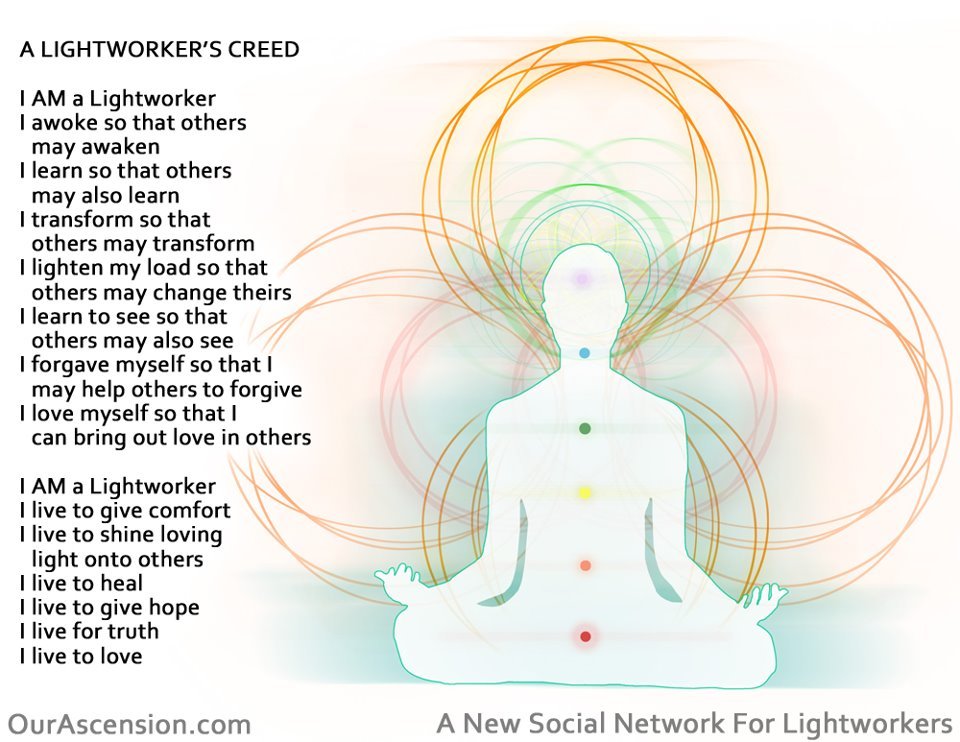
What exactly is a lightworker?  One resource suggests the following:

Lightworkers are souls who carry the strong inner desire to spread Light – knowledge, freedom and self-love – on earth. They sense this as their mission. They are often attracted to spirituality and to therapeutic work of some kind.

Because of their deeply felt mission, lightworkers often feel different from other people. By experiencing different kinds of obstacles on their way, life provokes them to find their own unique path. Lightworkers are nearly always solitary individuals, not fitting into fixed societal structures.

I think this description might be a bit conservative compared to others I’ve seen in that the individual actually may not realize how spiritual they are or recognize how their work (light) actually affects the people around them.  I do think it’s universal that these individuals are “helpers” in some way.  It may not be some sort of therapeutic or healing job in which they work but somewhere along the way they engage in healing activities to help people around them.  Healing in this case is more than just physical healing.  They are motivated to see healing in the world—healing within communities and healing within individuals. 

That’s kind of the “ground floor” explanation of lightworkers.  From there the definition and identification of traits becomes more and more spiritual.  I don’t want to go any deeper into the spiritual conversation for our purposes here mainly because I’m not qualified to speak to the deeper spirituality.  What I want to focus on is the fact that these are people who, consciously or subconsciously, reach out to the hurting people around them to ease their pain and make the world a better place.

Think about everything you know about the imagery of light.  Light is used to connote healing, knowledge, wisdom, life, and good.  It can convey grace or blessing from divine forces.  The disappearing of light can reflect fear, anxiety, cold, illness, and death.  The coming of light can convey understanding, growth, healing, and salvation from difficulty.  Light metaphors permeate our literature (“…what light through yonder window breaks?”) our music, our movies, and our religious expressions.  It’s universally known imagery within the whole of human experience even apart from a religious context—and that’s why I’m drawn to the term.

To me a lightworker is an individual who has a knack for understanding things differently, through compassionate eyes that see deeper into the humanity of struggles most politicians and religious leaders choose to over-simplify.  With that unique understanding comes the ability to connect with people to pass the light which is within them along to others. 

I believe lightworkers are able to make these connections through common struggles and pains.  I think that’s why, within the context of the LGBTQ community and relationships/friendships, it’s through the recognition of common struggles, themes, and pains that create the bridge for the light to pass between the lightworker to the person in need of healing.  Why do you think the “It Gets Better” campaign is so successful?  People who watch these videos and hear these stories are able to see themselves in the “expert’s” story. 

Why am I even bringing this up?  Over the past couple of weeks my blog has focused on taking control of your own story along with some serious discussions about homophobia, bullying, and suicide.  I’ve spent time taking my faith tradition to task for continuing to hold onto ignorant and superstitious interpretations and institutionalized prejudices.  Why am I suddenly talking about this concept of lightworkers?

Like all of you I’ve been watching the news.  Brussels was just attacked; another city of innocents drawn into a war of ideology and politics that the Western world created but refuses to take responsibility for.  North Carolina has legalized bigotry by passing a law that does not protect LGBTQ people from discrimination.  The state of Georgia is on the verge of signing into law a bill that would give religious officials in the state the option to refuse to perform same-sex marriage ceremonies and for tax-funded groups to deny services to gay people.  Donald Trump’s rise to power continues.  The Senate GOP refuses to do its job by calling for hearings to confirm Judge Merrick Garland to the Supreme Court.  Iran sanctions, Obama in Cuba….it all just gets to be too much.  The news is so incredibly discouraging and that just the news.  The talking heads on the 24/7 news networks have no idea of the struggles of my life or yours, the pain that doesn’t hit close to home but lives in our homes.  It’s easy to feel like the darkness is about to swallow us whole.

But one of the things I’ve noticed more and more is this:  The darker things seem to get, the more people I would consider lightworkers I seem to notice.  I guess it’s true: You can’t appreciate the power of a candle until all of the lights have gone out. 

I see a lot of candles in the darkness.

They’re all around us.  They come to us from a variety of places, usually unexpected places as the world continues to change.  They reach out to us, to reassure us and bring us healing and hope, to remind us that we matter and have value.  The tell us it will get better. 

I think the old saying still holds true.  “The world is going to hell in a handbasket.”  But that’s nothing new.  Humanity has been visiting pain and suffering onto itself since we learned to walk on two legs and make fire.  But more than that and much more importantly than that:  We are able to do so much more good.  Sometimes I wonder how our public mood would change if 24/7 news networks would start reporting light-related stories rather than the headlines that have traditionally made them money—headlines of murder, terror, and fear.


So, look around you.  I guarantee that no matter how dark it seems right now in your life and how overwhelmed you are by the horrible stuff that is going on in the world and in your life, there are lightworkers right there with you, ready to share their light.  I also guarantee that everyone who is reading this right now has enough light inside of themselves to reach out to the broken world around them to make life a little better for the people around them as well.  You are both worthy of the gift of hope that people will offer you and able to share that gift with others.  I promise you.

Wednesday, March 23, 2016

A Real Look at "The Real O'Neals"

Lent is coming to a close so that means I should get all my repenting done. 

I need to repent something on my blog.  On March 2 I posted my thoughts on the premiere episodes of ABC (American Broadcasting Company)’s The Real O’Neals.  In my reflection I moved through stages of concern over how the show would be received and what good the show will ultimately do to a “Okay, well, it’s here so let’s give it a try” mentality. 

I got it all wrong.  Mea culpa.  Mea maxima culpa.

The show is brilliant and let me explain why and what was wrong with my original views.

The biggest issue I had with the show was that I didn’t believe the target audience was going to be there.  That is, I didn’t believe that the LGBT youth who would be able to identify with the main character would actually be sitting on the sofa next to their parents and watching the show.  I still don’t know if they are or aren’t but what I’ve discovered is that it simply doesn’t matter.  Why?  Because social media has made the living room sofa HUGE. 

For the past few weeks I’ve gotten to know clueless yet well intentioned Jimmy, sneaky, underhanded, duplicitous Shannon, terrifying and judgmental Eileen, Pat who may or may not have figured out how the drier turns off by now, Aunt Jodi who’s always got her emergency child pageant kit in her car, and, of course, dear, sweet, gay Kenny.  And as I’ve gotten to know this caricature of an American family I’ve sat on the virtual couch via Twitter and watched other people get to know them, too.  What’s more I’ve watched as Martha Plimpton, Jay Ferguson, Matt Shively, Mary Hollis Inboden and the rest of the cast join in the conversation.  This is the gift of social media:  Stars were unapproachable in previous generations but are literally right there watching with you now…from a different time zone, sometimes, but laughing and joking and enjoying the show right along with you in real time.

Social media has changed how we approach television. 

But THIS is what I’ve witnessed that has made me completely change my mind about this show.  I now believe it is one of the most important programs on TV for the LGBT community. 

Last night I watched episode 105.  In a nutshell, Shannon tells her brothers that their mother is internet dating but the truth of the matter is that she’s actually looking for a job.  This leads to his siblings encouraging Kenny to do some internet dating of his own.  I won’t spoil it for you but I will say that porn and limencello lead to A LOT of great lines.  And amidst the killer one liners and the word plays come the truly touching lines that mean the world to the LGBT audience.  In a brief exchange between characters the LGBT audience can identify themselves in the conversation for similar conversations they’ve actually had in their own lives or they see the kind of healthy and functional family that they can’t seem to find in their own lives.

In last night’s episode, as Kenny sat next to his father in the car, and lamented that he was going to die alone because the relationship thing was too complicated and that there’s a lot of homework to being gay, his father, Pat, responds with nothing but support and encouragement, saying, “It’s not complicated.  Just think about your ideal person.  What’s he like?”  Kenny says, “Right now I just want someone cute to smile at me.”

How many of us can identify with Kenny’s situation?  How many of us long for the support of Kenny’s father?  I had to stop myself midtweet from commenting that I wish Jay Ferguson would adopt me because too many of us ache for that kind of support. 

And that’s when I saw it.  People were getting that kind of support.  Not only was the show validating their own feelings, seeing themselves in Kenny’s situation, but as they tweeted about Kenny’s father’s response, so many of the cast of The Real O’Neals were right there giving people that support.  Matt Shively became Jimmy, the older brother who wants to help but just doesn’t have a clue and tweeted support.  Mary Hollis Inboden became Aunt Jodi, with her whimsy and solid support and encouragement and tweeted hugs and a willingness to be everyone’s Aunt Jodi.  And during his live tweeting Noah Galvin became a mirror for so many people at that moment you could just feel the looming clouds of many LGBT people’s lives breaking up to allow a glimpse of that rainbow—of hope and promise. 

I was right in my first reflection on one thing, though.  This show isn’t about simple entertainment.  We’ve become so accustomed to the current sitcom formula in which we’re entertained by jokes and slapstick that we forget there was a time in which sitcoms carried a bit of a “punch” to them—a glimpse into real life and suggestions on how to make it through.  Because The Real O’Neals’ premise lies in the midst of a culture that has struggled for recognition and equality for so many decades, I knew that it had to be on target and address the realities of the LGBT community within the framework of comedy.  I wrote at the time that I was worried that the show would simply be known as “that show with the gay kid.”  I don’t think there’s any danger of that anymore.  I think The Real O’Neals is the show about the gay kid we either were, are, or wish we could be and the family who, along with him, is trying to figure out what it all means.  The gift is that not only does the show take the audience along this journey of discovery but the cast have gone out of their way to join the audience on the audience’s journey of discovery.

So, I have definitely transitioned from tentative support to fierce fan and advocate.  The LGBT community and the world need this show.  It’s doing something—something I didn’t expect and something I can’t quite get my head around.  All I know is how it’s affected me and how I’ve seen, through social media, the show affecting others.

So, ABC decision makers, if you’re reading this, you really need to make sure season two happens.  You won’t regret it.

#TheRealONeals
#RenewTheRealONeals
#LetsGetReal

#YouGayBro

Saturday, March 19, 2016

Not Your Role Models

I know that my readers vary in age and life experience and, though I hate to divide you, I want to talk to you separately for a moment.

First, I want to talk to the parents, grandparents, and older folks who might be caregivers of younger folks.

Every generation has a habit of looking at the next generation with an overly critical eye.  I want to make clear that we have, as older generations, an obligation to help guide and impart values and culture on the younger generation and the younger generation has a responsibility to engage in this transmission process.  That does not mean that we, the current older generation, have the right to trivialize the developing morals and values of this younger generation.  We understand more and more that to attack a person’s ideas and values and demean what is important to them actually causes considerable damage to the individual’s self-concept over a period of time.

Don’t forget, too, that the teenage years are marked by a process called “differentiation” in which teenagers seeks to define themselves as something different from their parents.  It’s part of identity development.  It’s often the case that the harder parents and other formative adults push an idea or value or theory, the harder the teenager will fight to reject that idea, value, or theory.  If you think that’s just new age psychobabble, think about your own childhood and how you fought against ideas like women being relegated to either the secretary pool or the family home or how men couldn’t be nurturing, stay-at-home parents. 

I bring this up because, given both the nature of time and human nature, we find ourselves as an older generation being the caretakers of the most progressive generation—a generation which some call “lost” or “amoral” or even “disastrous.”  Some people who feel called to comment on the status of society lament that we aren’t the “country we used to be” because we’ve lost so many of our “traditional values” as we continue to cave to the “pressure” of being our children’s friends and not their authority figures.  There’s obviously a number of things wrong with this mentality. 

1.     Our country has never been what we think it was.  That’s the trap of nostalgia; we can remember things as fondly as our imaginations will permit but the reality is that when we were living through “the good old days” they actually weren’t that good.
2.     There has never been such a thing as monolithic “traditional values.”  I wish there was a way we could strike this pairing of words from our common consciousness.  Often times we see this phrase thrown around within the context of marriage equality conversations.  “Gay marriage goes against traditional Christian values” is a statement we hear over and over again by people who have obviously never opened their Bibles to see that so-called “Christian marriage” was a contractual ceremony in which a man took possession of his new property.  What’s more, in the accepting of that new property he would actually be paid to take her.  For me, as a Christian person of faith, “traditional Christian values” means attending to the teachings of Christ and not some pastor/preacher/priest.  You know, doing the things Jesus of Nazareth commanded like feeding the hungry, housing the homeless, caring for the sick, working for justice….those sorts of things that people who complain about an absence of “traditional values” mock and intentionally disrupt through their political maneuvering.
3.     Using the knowledge that we are given through science and psychology is not caving to the pressure our kids supposedly put on us.  We are not their friends.  We simply acknowledge that the world has changed and the same authoritarian approach to coerce compliance to some abstract standard that may no longer be relevant in today’s world is a waste of time. 

Again, if you doubt what I’m saying, think about your own childhood.  But as you do remember what I said about “the good old days” and don’t let your mind play the nostalgia trick on you.

When we, as an older generation, look at what the younger generation recognizes as leadership, as their heroes, as their role models, we all too often find ourselves shaking our heads and dismissing any possible good that might come from that movie, video, song, or message.  We can’t see past the clothes they wear, the language they use, the “intentional affront to morality and decency” we perceive.  We reject them as purveyors of pornography and their message as devoid of value. 

But here’s the thing.  The younger generation or the segments of the younger generation that that actor or artist or activist is addressing sees that message sender because of how they’re dressed.  The clothes, the hair, the makeup—the whole package—establishes an instant bond and a certain amount of credibility.  Why do you think Christian clergy wear dog collars?  The language they use, including that “profanity” we might think is so completely unnecessary, communicates an authenticity to the intended audience.  It says that the speaker respects them enough not to filter their words or pretend to be something they aren’t. 

If you want to see a really good example of what I’m talking about, look at this YouTube video created by Jack Merridew (on Twitter @OfficalJackM).  A lot of Jack’s followers were upset by the content and the language.  They thought it was crude and the subject material even disturbing.  But here’s the thing:  I would be surprised if Jack Merridew ever did a video that wasn’t provocative in some way but what Jack does in videos like this is actually POWERFUL.  He’s being authentic.  He’s sharing necessary information to an audience that may not have anyone to ask and because Jack doesn’t treat them as inferior and presents himself as a real person, they trust Jack to be honest with him.  Is it the way I would have a conversation like the one Jack does?  Hell no.  But I also recognize that we can’t be all things to all people.  We just need be what people in need need us to be.  (See, that’s “traditional” Christian values talking there.)  Jack’s approach is needed because he has a credibility people like me don’t have and uses a language people like me find uncomfortable and even sometimes embarrassing.  We need to be grateful for the multitude of voices that speak to these important topics because each one, whether we agree with their approach or not, has and audience and is important.

These are not your heroes or your role models.  They are not going to use a language that you decided was appropriate; the same language the generation before yours said was too far over the line.  They are not going to abide by the rules you adhered to after breaking the rules that were set on you.  This is the natural progression of the generations, to step out and define themselves as they poke and prod and explore the world around them to determine what is right and wrong, what works and what doesn’t, and what to keep from the previous generations and what to lay to rest.

Now, for the rest of you who happen to be my younger readers.  I’m not going to spend as much time with you.  (I actually wanted to spend time with the older folks today and I think you know why.)  I hope you don’t feel cheated.  I’m not going to repeat things I’ve said with regard to becoming who you associate with and so on because I’ve already blogged about all that.  What I want to say is this:  As difficult as it sometimes is, please be patient with the adults in your life.  It’s not easy raising parents today because over the past 20 years our world has changed so dramatically it’s left a lot of older folks who were raised in the dark ages before cell phones and Instagram lost and confused.  The rapidity of information exchange and the ideas that are so easily circulated confuse and worry many of the adults in your life because their brains haven’t been trained to keep up with it all like yours have been. 

We used to focus on obvious culture gaps in our society.  They were “obvious” because they were visible.  The civil rights movement, for example, demonstrated an enormous culture gap.  But I think, with the ever evolving digital landscape, there’s an even larger culture gap between young people and older people.  I mean, there’s a whole set of cultural rules and norms for Twitter that adults don’t get and think is a waste of time.  Like the whole “liking” of things.  How many of you feel guilty for missing the opportunity to “like” something on Twitter?  How many of you feel slighted if someone doesn’t like something you tweet?  These are things adults, as a rule, don’t get.  But you get it and it’s important to you.  You can try to explain it to but be patient.  If they still don’t get it, make them listen to this piece from “This American Life” that features three teenagers trying to explain the politics of Instagram.  

By the way, adults reading this?  If you need your fix of “Hey you kids, get off my lawn!” check out this blog post I did a week or so ago.

We can get caught up in the moment.  We can make nearly any moment a make-it-or-break-it moment.  We can fight so hard to try to force “the other side” to understand and even accept “our side” (and this is true for older folks AND younger folks alike).  My suggestion?  For everyone involved?  Step back and take a breath.  I guarantee that the vast majority of adults and the vast majority of teens aren’t out there trying to intentionally upset you just because you sit on one side of the divide.  People like Jack Merridew aren’t putting content out there to “undo the fabric of civilization” or to undermine “traditional values” (whatever they may be).  We’ve become so focused on winning and winning people to “our way” of thinking that we’ve forgotten one of the most important things we should be doing:  Talking with each other. 


Friday, March 11, 2016

Confession Time

I want to make a confession.  It’s nothing terrible.  It’s nothing tabloid worthy.  It’s kind of embarrassing to think about it now.  But in order for you to appreciate the confession and what’s behind it, I need to give you some background and context. 

I know that you know that there was a time before satellite TV.  Our phones were tied to the wall with wires.  Our movies weren’t on demand; we had to rent them on VHS or Beta tapes at the local video rental place, usually at a mall.  And believe me if your parents were anything like mine there was definitely no “demand” about movies. (Oh, yeah—we shopped at malls.  Amazon wasn’t around back then.) Our music was on cassette tapes and MTV actually was Music Television.  And all the wonders of the internet had yet to be dreamed of.  In fact, computers were just become “a thing” in school when I was in fifth grade.  Some of you might recognize one of these if your parents or partners drag you around to antique shops.


Not having the internet complicated life in the closet.  It wasn’t just the isolation that we experienced at a time in which tolerance for LGBT people was ever fluctuating.  The advent of the internet also made it easier for LGBT people of all ages to appreciate, in relative privacy, the attributes of their attractions.  I’m not just talking about the ease and availability of porn, but I’m talking about being able to “fanboy” and “fangirl” in secret as well.  Today it’s nothing to pull out your smart phone and look up facts and photos of that movie star or lead singer.  Back in the day it was a little more complicated than that. 

So, now, my confession.

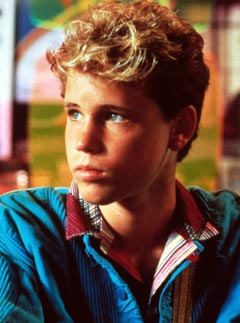
When I was a teenager I had a HUGE crush on Corey Haim. 

In 1986 the movie The Lost Boys was released.  It was one of a flurry of Corey Haim/Cory Feldman cinematic team ups that came out in the 80’s.  The best one of if you ask me.  Though, I suppose, Dream a Little Dream comes in a close second.  The Lost Boys had all the big names of the time:  The two Cory’s, Kiefer Sutherland, Jason Patric, Jami Gertz.  Beautiful people, dressed fashionably (for the time—don’t laugh), and gyrating to one of the best soundtracks of all time.  But at the center of it all, for me, was Corey Haim.


So, picture it.  It’s the 80’s and you live in one of the most conservative pockets in the region.  You’re surrounded by the small town mentality of “traditional” values, where deviation from the time honored norm resulted in bullying and harassment and even violence.  You know you’re gay; you have no interest in girls and panic regularly in the locker room before and after phy ed.  You watch a movie and become enamored by one of the lead actors.  What do you do? 

You get creative and you get sneaky. 

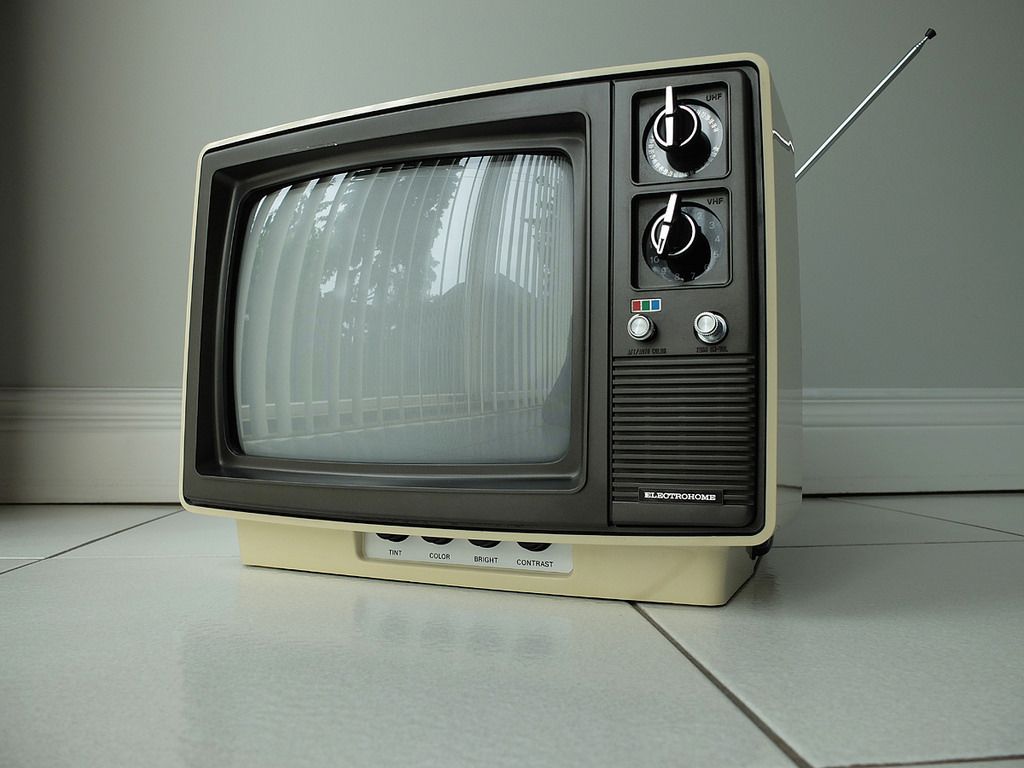
It wasn’t long after The Lost Boys came out that I was able to talk my dad into buying the family a VCR.  Shortly after that the VCR migrated from the family room to my bedroom where I connected it to my little 12” black and white TV.  Somehow I got my hands on a copy of The Lost Boys and voila!  My crush was in my bedroom.  To this day I’m not sure how I didn’t wear out that video tape. 
 

Let me pause for a moment and make an important point.  My crush on Corey Haim wasn’t just teenage lust provoking the typical reaction from a teenage boy.  Even back then I was more relationship oriented than “sex” oriented.  I would rather connect with a person than hook up with a person.  I just don’t want you going away with the wrong idea. 

So, I had “my Corey” on the huge 12” black and white television.  But there was more to feed my crush.

If you were like me, growing up in the 80’s from the safety of a closet, you may have had a sister.  Somewhere in that sister’s bedroom would be a collection.  Sometimes this collection would be proudly displayed.  Sometimes it would be tucked away for safe keeping.  Sometimes this collection would be inconveniently gutted and plastered all of the walls.  I’m talking about magazines.  But not just any magazines.  I’m talking about THE magazines filled with beautiful teenage boys, occasionally flashing some skin, smiling boldly.  In that smile was an unspoken message:  “So what if you’re gay.  I’m here for you.  Let’s talk about how hot I am.”


Occasionally one or two of these magazines would come to visit me in my bedroom.  They would bring New Kids on the Block with them along with Johnny Depp, Jonathan Brandis, Ralph Macchio, and Jay R. Ferguson of the dreamy eyes who I recently blogged about. 

You see, we didn’t have YouTube to watch clips of our crushes dorking around or sending greetings to their fans.  We didn’t have Instagram or twitter.  Time spent with our crushes was planned out, two dimensional, and required considerable imagination.  And if you were like me, isolated and afraid that the real you would be discovered, a certain amount of calculating resourcefulness was also required. 

So, I had a crush on Corey Haim (for obvious reasons) and in order to feed that crush I obsessed over a movie on a little black and white TV and snuck teen magazines from my sister’s bedroom.  There.  That’s my confession.  I’ll give you a moment to stop laughing before I continue.

Got it out of your system yet?

And now a disclaimer:  The tone of my thoughts from here on might sound judgmental.  I think it could be easy to relegate them to the “Hey, you kids, get off my lawn!” category.  I hope you don’t do that because my goal isn’t to be preachy here.  I just have a thought and, honestly, I’m curious what all of you have to say about it.

I admit that my opinion might be formed by a sense of nostalgia but I almost wonder if, at least where the idea of crushing and fanboying and fangirling is concerned, things were better before the internet.  I know that might be strange to hear.  It’s strange for me to say.  And it’s definitely not in keeping with the opinion I’ve shared in previous blog entries in which I celebrate the freedom LGBT people find through technology.  But bear with me and let me explain.

I think that there’s something to be said about mystery.  Mystery fuels the imagination.  Mystery fills in the blanks when reality fails or answers are evasive.  Mystery drives us to discovery, channeling us through a labyrinth of experience that helps develop identity and character. 

On the opposite end of this spectrum is everything that comes with internet:  Constantly flowing information, more than we can possibly consume and, sometimes, more than we want to know.  I had to laugh recently when singer/songwriter Sia made an appearance on James Corden’s “Carpool Karaoke” sketch.  Sia talked about wanting to maintain a sense of privacy in an era where stars have no problem tweeting out pictures of themselves from the dentist.  Just this past week Kim Kardashian West tweeted a picture that left absolutely nothing to the imagination.  A few months ago a photographer managed to “sneak” a picture of Justin Bieber sans clothes, finally showing obsessed fans around the world a side of the Biebster they’ve been wanting to see for years. 

I’m not saying these things are bad.  They just are.  I don’t think it’s possible to ascribe them a value apart from a subjective appraisal and those, I think, I pretty much useless in our culture today. 

I just wonder where the mystery is anymore when anything and everything you could possibly know is instantly available literally in the palm of your hand.  Music doesn’t dance around a topic anymore—it comes right out and says it.  Anyone with an internet connection, regardless of age, can watch total strangers have sex.  Heck, according to certain studies (which, admittedly, are problematic in their methodology), teenagers are having sex younger and younger, leaving absolutely no room for mystery and wonder. 

Do you know what I mean?

I think where I’m going with this can be summed up in this thought:  Everything we receive comes with a cost.   I think there is no better example of this than the internet.  Information flows, educating people, connecting people, creating community, liberating not just LGBT people but people who struggle with abuse, addiction, racism, sexism, and so on.  But when the information gate is opened we can’t pick and choose what information flows lest we make judgments about what information is “acceptable” and what information is “dangerous.” 

I’m not a luddite.  I’m not only fond of technology but I’ve grown quite dependent upon it.  Even if we could rewind time and figure out how to keep the “good things” technology does and eliminate the “bad things” that technology brings with it, I wouldn’t want to.  I wouldn’t want to meddle with that history any more than I would want to meddle with the history of my life and take “missed opportunities” to come out.  Time is.  History is.  We are at this moment in time, with all its good and with all its challenge.  The question isn’t “What should we have done differently?” but rather “What can we do now?”

I don’t know if you agree with me.  Maybe it’s just an observation made by someone who likes to think about things like this.  Maybe it’s something similar to what people who came before me thought about “my time” just like you will think of people who come after “your time.”  It might just be the nature of the universe, to see these positives bring their negatives, leaving people with way too much time on their hands to ask these kinds of questions. 

Regardless of whether or not you agree with my thoughts on the internet destroying mystery and imagination when it comes to the development of sexual identity and the feeding of that curiosity (whether straight or LGBT), I hope we can agree on two things.  First, I hope that we can agree that talking about these things doesn’t hurt anything.  I hope we can agree that coming together and having conversations about things that we either see ourselves or things that others see and bring to our attention can only benefit everyone involved.  Conversation is always good as long as all parties are listening and engaging.

I also hope we can agree on something very important.

I hope we can agree that Corey Haim was so hot!


Wednesday, March 2, 2016

Thoughts on "The Real O'Neals"

Tonight on ABC (American Broadcasting Company), a new sitcom premiered:  “The Real O’Neals.”  I don’t watch much television on the TV.  It’s the 21st century; I stream and do on-demand when I’m in the mood to watch something.  It just happened that I found myself in front of the TV tonight and caught the first episode of a show I only heard about two days ago online. 

But before I get into it and share my thoughts on the show, in the interest of full disclosure I need to point out how ironic it is that in 2016 I’m watching a show that stars one of my very first “movie star crushes” from 1990.  Yes, I’m talking about Jay R. Ferguson.  Here’s a blast from the past.


This is Jay Ferguson as Ponyboy Curtis in FOX TV’s 1990 series “The Outsiders.”  It was the eyes, man.  Look at those eyes.  My teenage self was mesmerized. 

Hold onto this fact for a bit.  I’ll be coming back to it.

So the set up for “The Real O’Neals” is this:  The ideal, normal Irish Catholic family struggles to realize the fact that there is no such thing as normal as family members confess a series of real life issues and struggles:

Jimmy (the older son) is anorexic.
Shannon (the daughter) is a thief.
Kenny (the younger son) is gay.
Mom and Dad are getting a divorce.

So, yeah, that pretty much undermines any sense of “normalcy” in the classic understanding of the good Catholic family. 

Let me be honest for a moment.  I caught the previews for the show two days ago.  They grabbed my attention.  I sat down tonight and watched the first two episodes.  My initial concern was that the show was going to define itself too narrowly as “that TV show about the gay kid.”  What frustrated me about the creation of a show that attempts to normalize the experiences of LGBTQ youth and the whole coming out process these kids go through and the journey their families inevitably take in their acceptance of the reality of the child’s identity—what frustrated me was that, in my mind, the target demographic wouldn’t be sitting down to watch the show.  LGBTQ youth find their normalizing figures and heroes online and not on the television.  Why?  Because this generation of LGBTQ youth look for honesty and connection.  They’re not going to be satisfied with an actor’s portrayal of a struggle that is very real for them.  They will see through a perfectly cultivated and manicured script that, by the end of the half an hour, will solve all of the character’s problems and everything will come up puppies and unicorns.  They see through the Hollywood tricks. When the struggle is real for you, watching it acted out by professionals with scripts that not only solve real problems LGBTQ kids face but solve them by making the LGBTQ characters witty and perfect—it isn’t entertaining.  It isn’t comforting.  It complicates things even more.  It presents yet another impossible ideal for them.  They would much rather log onto YouTube and listen to real stories from the trenches than sit down and watch a romanticized version of a life that doesn’t exist. 

So I worried that the show was going to do more harm than good.  It wasn’t going to reach what I felt was the target audience. And when it would get canceled its critics from the religious and political right would celebrate its demise as demonstrative of how “America isn’t interested in those values.”

And then I started laughing at Martha Plimpton’s comment about “pity pork” in the second episode and I found myself relaxing and rethinking my initial cynicism.  I found myself enjoying the writing more and more.  I started appreciating the individual performances of the brilliant cast.  And then my brain made a connection:  Comedy comes from pain. 

Now, I’m not necessarily talking about dark comedy and gut-wrenching pain.  I’m talking about the fact that as human beings we tend to use comedy to move us through painful times in our lives.  We tend to use humor to soften the edges of our agony and hurt so that our story becomes more bearable.  Imagine what it would be like if we weren’t able to laugh in those dark times. 

Let me give you a quick example that has absolutely nothing to do with “The Real O’Neals.”  My grandmother (the mother of my mother) died from cancer in 1993.  My mother, my at-the-time-very-pregnant-aunt, and my great aunt all went on a road trip to see the best cancer doctors in the area.  They were all in the room with my grandmother when the doctor shared the news that the cancer was terminal and there was nothing that they could do.  My aunt had to leave the room; she was so emotionally distraught.  My grandmother, a few minutes later, followed her out into the hall and said, “You’re ruining all the fun, you know.”  In that moment, my grandmother’s sense of humor broke into a very painful moment to remind my aunt that there was more to their time together than this horrible moment.  My aunt still laughs when she shares this story.

I think that’s what “The Real O’Neals” might be attempting to do.  This isn’t a how-to show.  It’s not like we’re going to tune in to Jay Ferguson, Martha Plimpton, and Noah Galvin to tell us how to navigate issues of marriage, religion, and identity like we would tune into Nicole Curtis on DIY to show us how to sand a window and mount it in the wall.  This is a comedy in the traditional sense:  It’s trying to communicate something through humor to address the pain and struggle many folks experience in their day to day lives. 

That’s when it kind of hit me.  Though I stand by my first reaction (that most LGBTQ kids aren’t going to be on the couch watching this show because it’s in their nature to want something real and not massaged like a sitcom), I realized where my negativity was actually coming from.

And this brings me back to my teenage crush on Jay Ferguson.

When I was a kid and was “forced” to sit and watch “The Outsiders” because my sister was obsessed with the show, I remember to this day the panoply of emotions that tore through me.  It wasn’t just a matter of watching this “hot guy” with killer eyes but it was the struggle of knowing that, in that place and in that time, that kind of attraction was not “normal.”  I would have killed to be able to sit on the couch, even in the silence of an inability to come out, and watch a family struggle to understand there is no such thing as normal even within the context of religion and identity.  Just watching it would have softened the edges of my agony and hurt.

Truth be told, I am still a little worried that “The O’Neals” may end up narrowly defining itself.  But I think I’ve come to a place of appreciation for the show—or at least the first two episodes.  What I think would be interesting is to see how many coming out stories follow the #TheRealONeals hashtag as the show moves forward.  How many LGBTQ youth might actually find the courage to turn to the adults in their lives and say, “Kenny?  Yeah.  That’s me.”  And hopefully the adults will be able to turn to their kids and, even in Martha Plimpton’s Eileen-way say, “I love this project.  I’ve known this project since it was a little project.” 


God knows too many of us should have had opportunities like that when we were growing up rather than suffering in silence.  So even if “The Real O’Neals” does end up narrowly defining itself, at least it’s here now, helping to bring attention to the struggles of LGBTQ youth and their families, and normalizing the struggle of telling their story.