Follow Me on Twitter!

Find me on twitter @TroyComets
Showing posts with label church. Show all posts

Wednesday, April 13, 2016

Anti-LGBT Politicians? The Power of Christ Compels You!

One of the best known, most often repeated, and frequently lampooned lines in all of cinematic history is from The Exorcist.  I bet you already know it just by the title. 

“The power of Christ compels you.”


It’s the line in the film that the priest uses to exorcise the demon out of head-spinning-pea-soup-spitting Linda Blair.  The idea, of course, being that by invoking the power of Jesus Christ the priests will be able to cast out demons.  They’re modeling behavior the writers of the biblical gospels record of Jesus exorcising demons out of what the Bible calls “people tormented by spirits/demons.” 

Hold onto that thought for a while.

In recent weeks we’ve seen a lot of anti-LGBT legislation being pushed by politically conservative politicians in a variety of states.  As I’ve written before, this has absolutely nothing to do with legitimate issues and everything to do with election year politics.  Because of the supreme court ruling on marriage equality Republican politicians have tried to come up with a new way to demonize LGBT people and dehumanize them for their political ends.  Zeroing in on transgender people, states like Mississippi and North Carolina have passed legislation requiring transgender people to use the public restroom that matches their birth gender.  The idea of course is that those “sick, perverted crossdressers” want to get into the women’s bathroom and ogle your daughter while she uses the facilities.  As I wrote last week, though, there is no evidence of such a thing happening and, in fact, there is a considerable history of Republican politicians behaving in a lewd and perverted manner in public restrooms.

Tennessee is poised to enact a law which allows counselors and therapists the right to openly discriminate against LGBT people on religious grounds.  The problem is, of course, that this is completely unethical.  It is a violation of the American Counseling Association’s Code of Ethics which professionals are obliged to abide by.  But, as I said, Republicans like to make something out of nothing for their political ends. 

All of these bills are cleverly couched in religious language.  It’s what Republicans do to get people to vote for their stuff.  Remember “The Patriot Act?”  Or “Defense of Marriage Act?”  The rhetoric that surrounds these bills becomes quite incendiary.  “Can you believe Senator So-and-So doesn’t support the Patriot Act?  What kind of American is she?”  Or “Can you believe that Representative So-and-So is anti-marriage?  He can’t even put his name to a bill to defend the institution of marriage.  Makes you wonder if he has a mistress on the side or something.”

The worst is when politicians play the God card, trying to convince people that they are actually supporting this law because of their fear the Christianity and Christian principles are under attack.  These are the same people that celebrate the annual “war on Christmas” and bemoan the fact that teachers are no longer allowed to lead prayer time during class time.

Here’s what I know.

About two thousand years ago a guy by the name of Jesus of Nazareth spent about three years confronting the “Republicans” of his day.  These religious leaders were doing what they thought was right based on their understanding of the religious traditions.  They weren’t the bad guys.  (You can read more about them here.)  They truly believed they were being faithful people, abiding by their holy heritage and protecting the people entrusted in their care.  The problem?  They were so focused on enforcing “the Law” that they forgot all about seeing the person at the end of the Law.

In Hebrew, our English word “justice” means more than “punishment.”  In fact, our English word “punishment” comes from a Greek word which means “revenge.”  In Hebrew, in the language of the Old Testament, “justice” was more about ensuring people received what they needed rather than punishing them for suffering through the absence of a needed thing.  For example, justice to the ancient Hebrew people, as explained in the Old Testament, would be to make certain people had food.  If people don’t have food, they would steal food.  In our modern system of justice, the State enters in at the point of theft to punish the victims of society’s failure to provide.  Do you see the difference?  The Hebrew word “justice” is more about giving what is needed than dishing out arbitrary consequences to wrong doers. 

Even 2000 years ago the Jewish people had lost track of this fact.

And so we read about this Jesus guy confronting the leaders, feeding hungry people, healing sick people, hanging out with sinners, and so on.  Why does he do this?  Apart from the physical restoration Jesus offered through his “healing miracles,” Jesus offered a restoration to community.  Each time he reached out to an “outsider” whether they be ill, a non-Jew, a woman—Jesus’ actions were a profound statement against the prevailing mentality of his time.  “No matter what these leaders say the law says or how they weigh you down with their legal interpretations and enforcements, know that God loves you and considers you apart of God’s community.” 

That is the message of Jesus Christ. 

That is precisely what modern Republican politicians ignore.

And it’s not that they ignore this truth because they’re evil people.  They’re trying to be faithful to their religious understanding.  The problem is that when they cite biblical passages from Leviticus or Romans to condemn LGBT people, they do so ignoring the fact that it’s precisely these very same laws Jesus spoke against as he tried to erase manmade boundaries in bringing the kingdom of God into the here and now. 

Galatians 3.28:  “There is neither Jew nor Gentile, neither slave nor free, nor is there male and female, for you are all one in Christ Jesus.”  That is to say:  If you are a Christian, a legitimate follower of Jesus, then these distinctions of who’s in and who’s out, who’s worthier than others, etc.—all of these distinctions are meaningless.  This passage can easily be modernized and contemporized by inserting “There is neither Jew nor Gentile, neither slave nor free, nor is there male and female, nor gay or straight, for you are all one in Christ.”

Interpreting the Bible, if you are a Christian, begins and ends with Jesus.  If you’re ignoring the message of Christ in favor of the law of Leviticus or the opinions of the author of Romans, then you’re not being true to your calling as a Christian.  You’re a Biblicist.  Christ frees people.  The Gospel frees people from laws that strip people of their humanity and their dignity.  It allows people to be seen and drawn back into community where they belong. 

There’s nothing more dehumanizing than stripping a person of their equal standing in a community because they fail to meet arbitrary or impossible criteria. 

This is where these religious lawmakers in Mississippi, North Carolina, Tennessee, Kansas, and so on miss the mark every time.  The point of the law shouldn’t be to dehumanize people—especially if you’re going to invoke your Judeo-Christian heritage.  The point of the law should be to improve people’s conditions and thereby improve the state of the community.  There’s that old saying “To save a life is to save the world.”  I think a Christian analogy to this saying would be “To recognize a life—to actually see a person and hear their story—is to save the world.”
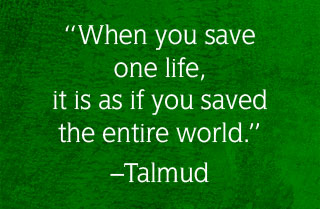


But of course to do that, to see people and understand people, you would have to acknowledge that they are people.  Politically conservative politicians aren’t good at this.  After all, “Why waste your time with those people?  They’re ne’er-do-wells living off the system, threatening our way of life.  You just need to look at them to know all about them.”

Today I was listening to This American Life.  It was a podcast of last weekend’s episode.  The first act dealt with a study in which researchers discovered what many of already knew:  To change people’s minds (about marriage equality, LGBT rights, etc.), it takes individuals reaching out and sharing their stories.  In a noncombative, nonconfrontational way, it takes people engaging with others to share how prejudice and intolerance affects them.  It’s empathy that makes the difference. 

There are too many people in our culture, most of whom unfortunately claim that moniker “Christian,” who refuse to listen to others’ stories.  Which is ironic because of how often Jesus listened to people’s stories in the Bible.

This brings us back to The Exorcist. 

The best way to understand the exorcisms we read about in the Bible is not to take them literally.  This was a superstitious, unsophisticated culture in which the presence of demons and the eventually casting out of demons was highly symbolic.  It’s best to think of an exorcism as a metaphysical healing with the goal of allowing the individual to rejoin the community.  Sick people, devil possessed people, blind people, etc.—these people were all seen as sinful and made to live outside of the community—literally outside of town, often in graveyards.  Once healed, they would be allowed to come back into community, to have the support of the community, to be recognized as one of and one with the community.

That is what the power of Christ compels the Christian faithful to do.  It has nothing to do with “religious protection laws” so transgendered people can’t use the bathroom of their actual gender or so therapists who think LGBT people are damned by God don’t have to provide services to LGBT people.  That’s not Christian.  Not in the least.

So, self-professing Christian politicians who are voting for these hate bills and laws of ignorance and intolerance, my advice to you?  Take a long look at the gospels.  I guarantee you’ll see a striking difference between Jesus’ actions and yours. 


Wednesday, April 6, 2016

The Grandma Agneses of the World

WARNING: 

Today I’m writing about The Real O’Neals.  I know.  I can almost hear some cries of indignation over the sound of eyes rolling.  I know it seems like I’ve become your one stop shop for commentary about this ABC sitcom.  I wasn’t going to blog about it anymore (at least for a while) but then I watched last night’s episode and I just can’t get some thoughts out of my head.

So if you’re tired of me blogging about The Real O’Neals, now’s your chance to click out of my blog.  Come back tomorrow and I’ll have something else for you.

Back to our irregularly scheduled blog post.

I don’t know if you’ve ever participated in a live Twitter conversation during a TV show but it’s quite an experience.  When you tweet during The Real O’Neals you not only get to connect with other fans of the show but pretty much the entire cast is there, sitting on the virtual couch, with all of the fans.  They crack jokes with the fans.  They give behind the scenes commentary to the fans.  And, most importantly, they support the fans.  I don’t think there’s been a week that’s gone by that fans haven’t tweeted their gratitude to cast members for validating them or helping them come out.  It’s powerful stuff.

Last night was episode 107 entitled “The Real Grandma.”  In short, Eileen (the terrifying and judgmental, very religious mother, played by Martha Plimpton) is visited by her mother (an even more terrifying, judgmental, and religious mother) played by the incredibly talented Frances Conroy of American Horror Story fame.  Eileen, who has always struggled for her mother’s approval, hides the fact that she and her husband, Pat (Jay R. Ferguson), are divorcing and that Kenny (Noah Galvin) is gay.   This doesn’t go over well with Kenny who eventually defies his mother and comes out to his grandmother by presenting her with a rainbow cake.


Grandma Agnes doesn’t take the news very well and announces to the family that Kenny has ruined cake and rainbows for her forever.  She also declares her intention to stay until “she saves Kenny’s soul.”

Meanwhile Kenny is pressuring his mother to admit to her mother that she’s planning to divorce Pat.  So, in order for Eileen to come out to her mother about the divorce, she plans a good old fashioned corned beef and cabbage dinner.  During the course of the meal, Grandma Agnes says to Kenny, “I know you think I’m a silly old woman and you’ve been mocking me and my beliefs.  But even if you don’t care what I think, you should care about what God thinks….You don’t accept that God doesn’t accept you.  He thinks you’re broken and I do too.”

The screen is then filled with Kenny’s face and you can see the shock and the pain these words have caused.  We hear Kenny doing a voice over, saying “I didn’t think anything grandma said could upset me, but I was wrong.”

My initial reaction was, “Oh, I’ve got to blog this!  This is exactly why I wrote what I wrote yesterday about One Million Moms!”  But, like I said, the ol’ blog has been pretty The Real O’Neals heavy of late and I was reluctant to do it. 

I finished the episode.  It has a spectacular ending.  I won’t give the details beyond saying that Grandma Agnes tries to force the family to go to church that evening.  The family ends up going, without Grandma Agnes and at Kenny’s suggestion.  Hold that thought.

If you’ve read many of the posts on my blog you will have noticed by now a strong theme in what I’ve shared:  Religion, over the centuries, has done horrible things to good people simply because the devotees of the religion subscribe to a superstitious view of the world, are legalistic about thingstheir holy books say without even actually knowingwhat those books say, or simply can’t make room in their worldview for continuous revelation ( the fact that God is still speaking despite the silence of biblical authors, namely through the vehicle of science).  As a result, religion, specifically Christianity (of which I am a practitioner), has killed people, maimed people, caused untold psychological damage to people…all because of something zealous adherents couldn’t understand and innocents can’t change.

When Agnes spoke to Kenny at the dining room table and declared that God could not accept Kenny because he was gay, I could feel the silence in every room in which this show was being watched.  I felt winded.  It may have just been a talented actress delivering a line to an emotive actor on the screen, but it was like a punch to the gut.  Why?  Because I don’t think there’s an LGBT person alive who hasn’t had someone they love or someone who loved them speak to them like this.  At some point in every LGBT person’s life a well-meaning but woefully ignorant loved one expresses this same concern:  God does not love you because you are too broken.

Here’s a newsflash, Grandma Agneses of the world:  In our Christian faith, it is precisely for the broken that Jesus came (Mark 2.17).  And it wasn’t to judge them, but to love them and bring them back into community despite the judgments and preconceived ideas of the righteous, holier-than-thou members of the greater faith community.  In other words, Grandma Agneses, Jesus came to bring the Kennys of the world back into the fold despite your objections.

And this is what’s so incredibly sad about the Grandma Agneses of the world and the One Million Moms of the world and the Focuses on the Family of the world and all of the North Carolina, Mississippi, Tennessee politicians of the world who have absolutely no idea what their Christian faith is all about.  It breaks my heart to see what these people do to innocent people in the crosshairs of their judgment but it breaks my heart more to know how far from the center of the Christian faith these people are.

This is why I wrote what I wrote yesterday about the OneMillion Moms organization.  Anything that doesn’t fit into their narrow view of what is right, moral, and acceptable to God is an affront to God and by extension them.  The problem is that the theology of these groups is ill-formed at best, handed down and institutionalized for hundreds of years.  The world has obviously changed and our understanding of the human condition has developed.  They simply can’t deal with the reality of the world we live in.  It’s easier for them to kick and scream and flail against change in an effort to make the world to conform to their expectations.  And, of course, the world pushes back, saying, “No, it’s time for you to change your expectations of the world.”  And upon hearing that, these arch-conservative, para-religious activist groups cry out that they are being victims of religious oppression. 


Disagreement is not oppression.  If you want to see real religious oppression, real religious persecution, I suggest visiting extremist countries where people are actually killed for their beliefs.  My stomach turned a long time ago when I heard about a little boy, about ten years old, who was a Christian.  When his master found out, he was driven out into the desert, his feet nailed to a board, and he was left there to die.  That is what I remember when I hear the likes of Kim Davis, Mike Huckabee, One Million Moms, Pat Robertson, Franklin Graham, Ted Cruz and all the others whine about their sense of religious persecution because they can’t seem to bully people with fear of divine judgment anymore.

So you remember that thought I told you to hang onto?  When I said that the O’Neal family ended up going to church anyway even without Grandma Agnes and her pressure?  It was Kenny’s suggestion.  “I’d still like to go to church.” he says.  I think this is what ultimately tipped the balance and brought me to the computer to write this entry, dear reader.  You see, throughout this ordeal of coming out and despite Grandma Agnes’ declaration of God’s judgment, Kenny still feels that connection to his faith. 

Too many LGBT people have been driven away from their faith because of the Grandma Agneses of the world.  In their view it’s the LGBT people who have left the church, probably because “they just can’t endure the reminder of how broken they are.”  In reality, it’s the church that has left the LGBT people.  Even if I subscribed to the view that being gay was somehow sinful (which I don’t and I can explain why in another post if anyone wants to know—just ask), where did the authors of the four biblical Gospels always show Jesus?  Not in the fancy synagogues hanging with the Grandma Agneses of his time.  He was always with the people that the Grandma Agnes crowd deemed to sinful to hang around.  So, Christians, if you’re going to say you follow Christ (which you do when you claim the title), maybe you should spend time with the people you think are sinners and love them as Jesus did instead of sitting astride your high horse looking down on the broken you think God can’t accept.

When a woman suffers verbal and emotional abuse from her husband and leaves, most of us say, “We support you!  No one should have to endure that!”  When LGBT people suffer verbal and emotional abuse from the Church and leave, most people don’t make the connection.

We need to make that connection.  If not in a religious sense and context (because, again, I recognize the plurality of belief and no belief that exist in the world), then just in a decent human being sense and context. 

Share it forward!
Follow me on Twitter @TroyComets

Tuesday, April 5, 2016

Get Real, One Million Moms

I am so tired of reading news releases like this.

The group, One Million Moms, has been attacking the television comedy The Real O’Neals since before the show even aired its pilot episode.  The social activists, on their website, loudly declare:

"The Real O'Neals" mocks Christianity and insults Catholicism. 1MM recognizes this show ridicules people of faith, and Christians across America are offended by it.

You can read more about the group’s most recent attack and attempt to bombard sponsors of the show by clicking here. 

Here’s the thing that certain people don’t understand:  Just because you don’t agree with a thing and just because you find it offensive doesn’t mean everyone needs to agree with you and find the thing offensive.  I know this might come as a surprise to some members of the Church considering you’re still operating under the faulty impression that the Church is the center of the universe, but it’s not.  It hasn’t been since the collapse of colonialism and the end of Christendom.  Which, by the way, as a Christian, I find to be a most happy circumstance because now the majority of people connected to the Church are connected because they feel called to be and not because someone with power and authority is forcing them to be.

It’s the same thing as this article about the Benham brothers in North Carolina claiming that

““the newest fruit of the vine of Sodom is the sexual revolution — and it’s poisoning our land. It has nearly taken over everything and is forcing itself on everyone.”

Again, this might shock some people, but a minority group struggling for equality has been labeled as “the end of civilization as we know it” since the very beginning.  Giving women the vote was going to destroy our country.  Civil rights was going to destroy our country.  Freeing slaves was going to destroy our country.  Letting the Irish into the United States was going to destroy our country.

Do you know what’s going to destroy the United States?  Ignorance.  And it seems that anti-LGBT groups have a surplus of ignorance.

Look at the press release from One Million Moms listing the complaints over The Real O’Neals.

·        Brothers view p-rn on laptop. Gay p-rn made to appear normal and acceptable. Comments between brothers and between father and sons show no form of guilt in watching p-rn. Jokes and other references such as p-rnado and p-rnward are made.
·        Gay character and his brother observe that "10 percent of the population is gay," and suggest that most of those who object to gay p-rn are h-mophobic. In reality, The Centers for Disease Control reports that 1.6 percent of the population is h-mos-xual. That is a far cry from 10 percent, but since a big part of the show's agenda is to normalize h-mos-xuality along with other sins, it makes sense for the show to lie.
·        Student at Catholic school holds up middle finger, which is pixelated.
·        The daughter skips church, doubts God, disrespects priest as she verbally backs him into a corner, and he (the head of their church) fails at answering her questions.
·        ABC network refers to this highly dysfunctional family as "the perfect Irish-Catholic family."
·        Foul language (purposely uses every word imaginable).
·        One of the show's producers is anti-Christian b-got Dan Savage, and the show is said to be loosely based on his life.

I watched this episode (found here on Hulu) and thought it was one of the best.  I recognize that’s just my opinion.  So let’s look at 1MM’s points and direct them to some facts.

1.     According to a survey conducted in Canada (and remember a survey is self-report and will always skew conservative in its results as people doing the self-report will never be completely honest—especially a survey of kids), 40% of boys between grades 4 and 11 frequently look at porn online.  Now, I’m not going to argue the pro’s and con’s of the porn industry.  I have an opinion and I can share that opinion elsewhere.  It’s enough to say that this is the REALITY of the world we are living in being reflected back to us on our television screens.  Gone are the days of Donna Reed wearing pearls and cleaning the house and cooking dinner with a smile on her face and a song in heart while women at home knew a completely different story.  Television—the best television and the most compelling television—holds life up in front of us to be ironic, comedic, or to make a statement.  I would like to think in this scene The Real O’Neals is doing all three. 

And, seriously, if you can’t even be adult enough to write the word “porn” or “homophobic” or even “bigot” without leaving out a letter, maybe you shouldn’t be allowed access to the internet.

2.     I actually agree with 1MM on their point regarding “10% of the world’s population is gay.”  1MM cites this report from the Centers forDisease Control that uses data collected in a separate study in 2013.  This report does indicate that 1.6% of the respondents to the survey identified as gay.  The problem is, of course, two-fold:  The report relies on self-report data from a survey taken of adults ages 18 and over, the majority of which are from a time in which they could not be LGBT and were forced into a non-LGBT lifestyle (something I’m most familiar with).  The second problem is that the report is using collateral data from a completely different study.  What this means is that the method of collection for the data leading to the CDC report was not designed to procure accurate data for a report of this nature.

A more appropriate report, doing what it was designed to do and reporting a much more accurate picture of the LGBT demographic, would be this one.  Again, self-report is problematic but it is the only way we can determine these things.  But this survey reports that 52% of school kids between the ages of 13 and 20 identify as LGBT. 

Or here’s another report I used in this post on suicide in the LGBT community.  The study was conducted by the National School Climate Survey in 2013 and of the 8,000 students surveyed randomly, 60% identified as LGBT.  The survey then moves forward to highlight the struggles that LGBT people face because groups like 1MM want to ignore the REALITY that LGBT people exist, are normal, and have every right to see LGBT people on TV whether 1MM’s think its “decent” or not.

3.     OMG!  A student in a Catholic school flipped the bird and the nuns didn’t come running with their rulers!

4.     I want to take a minute and talk about “doubting God.”  EVERYONE doubts God.  The opposite of faith is not doubt.  The opposite of faith is certainty.  Faith is belief in what is unseen.  Certainty is created by empirical evidence. 

This is again the problem with Christians who don’t know what it actually is they’re reading.  One of the Greek words translated as “doubt” is diakrinō but doubt (as in “disbelief”) is not what the word means.  It means to oppose.  So in Matthew 21.21 when Jesus says, “Jesus answered them, “Truly I tell you, if you have faith and do not doubt, not only will you do what has been done to the fig tree, but even if you say to this mountain, ‘Be lifted up and thrown into the sea,’ it will be done.” The word “doubt” there?  Yeah, that means “oppose” or “make a distinction against.”

Doubt gets a bad rep from Bible thumping Christians.  If you’re not doubting your faith, you’re not growing your faith.  If you’re so certain your faith is right, then your faith is stagnant and you’re not growing.  You’ve got a system, not a faith.

5.     “The perfect Irish family?”  Yeah, I don’t think 1MM knows how comedy works. 

6.     Foul language “purposefully uses every word imaginable?”  I don’t know.  I can imagine quite a few that haven’t been said on the show.  A lot of them people can hear at 1MM rallies outside of Planned Parenthood clinics. 

So, here it is in a nutshell, One Million Moms and Benham Brothers and anyone else who thinks that a majority group can be oppressed by a minority group in its fight for equality:  You can have your ill-informed, ill-formed opinions but the rest of the world is not required to adopt your line of thinking no matter how “God-inspired” you think your opinion is.

Are you listening, Kim Davis?  Or is the hypocrisy in your life too loud?

Feel free to hold onto your outdated, outmoded, consistently proven as implausible and inaccurate convictions in order to combat the tides of change that are about to overtake you.  But remember, One Million Moms, if your name is any indication of your true numbers and each of you is the mother of say two children (on average), that’s two million kids.  That means, according to the survey I cited about, 1,040,000 of your kids are LGBT.  You are NOT doing them any favors with your rhetoric and your campaign to remove a role model—albeit a comedic one—from their lives.

Seriously.  It’s time to get real. 

Share it forward!

Follow me on Twitter @TroyComets

Wednesday, March 30, 2016

The Birth of Saint Exuberance


So, do you remember before when I said that every morning Isit down in front of my computer and just start googling random crap to see what I find?  I wasn’t kidding.  Today I want to talk to you about Saint Exuberance. 

First off, yes, there really was a Saint Exuberance.  She was apparently a nun who died in 380 AD.  Exuberance is a modernization of her actual name, which was Exuperantia.  The thing about Exuberance that really bothers me?  No one knows anything about her.  I mean, someone took the time to write down her name under the “virgin saint” column in some book in Troyes, France, and then decided she was holy enough for sainthood…but no one knows why.  She wasn’t martyred; she died of natural causes.  If she would have done something remarkable it would have been remarked upon in a footnote in that “died a virgin” book that the Vatican apparently keeps. 

So, being the “give till it hurts” kinda guy I am, I’ve decided that Saint Exuberance needs a divine makeover.  It’s like I always say:  If you can’t find the truth, make some crap up.  I think I get that from my Republican father.

Here’s our before picture of Exuberance, then.  It’s actually not Exuberance.  No one sculpted her or drew a picture of her. 

….now do you see why she needs a makeover?  When the only thing she’s known for is dying a virgin?  In France?


I submit the following “newly discovered facts” about Exuberance.  These facts are based solely on the reality that no one likes a good cover up more than Holy Mother Church.  I think this biographical profile is completely plausible. 

If you use your imagination and aren’t in the mood to be offended.

Exuberance was born Claude Maxime Archambault in Biefvillers, France.  Biefvillers was a small village north of present day Troyes and east of Paris.  He was the fourteenth of twelve children.  This mathematical abnormality has generated quite a bit of debate within the ecclesiastical historical community.  For a while there was a movement among French scholars which insisted that it was merely a typo, that Claude was the fourth of twelve children.  This movement was put down quickly by the majority within the academic community who point to the fact that the French are known for their cooking and not their counting.  “Besides,” one learned scholar argues in his defense of the more traditional interpretation of the birth order of Juliette’s family.  “How can you have typos without typewriters?”  The French faction, being French, quickly surrendered. 

Claude’s mother was the local wet nurse and his father was apparently the village idiot. 
Claude’s father died when he was quite young.  Apparently Claude’s father had brought home a wheel of Pont l'Evêque cheese one too many times for Claude’s mother’s liking. Claude’s mother had convinced his father that his father was trapped in a mime’s box.  She refused to let him out and went so far as to “swallow” the “key.”   He eventually suffocated.  The local magistrate had ordered her to spend the night in the stocks but no one had the heart to lock Claude’s mother up because she had suffered through her marriage for so many years.  Besides, the villages of Biefvillers couldn’t stop laughing long enough to execute the magistrate’s orders. 

After his father’s death, Claude’s mother remarried the renowned fourth century amateur dramatic society thespian extraordinaire, Monsieur Jean-Paul Némard.  Claude adored Monsieur Némard and Monsieur Némard adored the way Claude adored him.  It was from Monsieur Némard that Claude took his apprenticeship.  Monsieur Némard put Claude to work in his theatre troop, managing costumes and makeup. 

Claude soon discovered that he had a gift for costuming people.  A quote that was discovered in a diary suspecting to belong to Claude Maxime Archambault (which may be explored in more detail at a later date) reads, “Baise Je suis bon à faire peoplee laides semblent paniquer sexy.”  This line, I am told, roughly translates to, “I am immensely gratified to witness the transformative process which occurs under my cosmetic ministrations.”

It wasn’t long until the small village of Biefvillers could no longer contain Monsieur Némard’s ego.  After attempting to reengage the Grecian classics by reinventing them and reintroducing them to the people of Biefvillers, who made it quite clear they weren’t interested in watching a play entitled “Medea: The Musical” with the sub-legend “A joyous retelling of the classic story of a woman scorned who goes on a whimsical, murderous rampage.”  After the tenth failed performance in three days, Monsieur Némard declared, according to Claude’s diary, “Vas te faire encule , vous en arrière hicks pays . Je prends mon talent et d'aller quelque part, il sera apprécié .”  Which translates as, “I’m sorry to say that my time in the beautiful village of Biefvillers has come to an end.  Alas, I find myself needing to expand my experiences so that my talent will grow.  I will miss you all terribly.”

Claude left the little village of Biefvillers and traveled with Monsieur Némard with whom he continued his apprenticeship.  Claude indicates in his diary that Monsieur Némard was so pleased with Claude’s skill that his duties were expanded.  Claude writes:  “ Le vieux salaud me force maintenant à porter ses bagages . Que suis je? Un âne?” Which translates as, “Monsieur has given me responsibility for the transport of the troupe’s costumes and equipment.  What more could I ask for?  Am I not the luckiest person in the world?”

Claude continued to hone his craft.  He became so certain that he could make the most masculine of men in Monsieur Némard’s Amateur Dramtic Society of Thespians look like the most realistic, beautiful, feminine women.  This was quite revolutionary as it was the practice to pursue a comedic representation of women in theatre rather than a realistic one.  In order to prove his point, one evening Claude liberated some costumes from the troupe’s baggage cart and applied his trade to himself.  To test his hypothesis, that he could indeed create the most realistic feminine form from a masculine visage, Claude slipped away to the neighboring town.

Not only was his makeup and costuming a success, allowing him to pass as a country girl visiting the town and experiencing all that the town had to offer, but Claude soon found that he was quite the actor.  In the simple gown and made up face, he found a courage he had never experienced before.  A boldness.  He soon realized he was flirting with the men he met on the street and the barkeep behind the counter of the inn where he took his supper that night. 

The trip was unfolding as a great triumph until he flirted with the wrong person.  The teenage boy, handsomely dressed, had been the son of the local noble who took Claude as a transient whore trying to get her hands on the family’s money.  He immediately had Claude arrested and transported to the nearby nunnery.

Claude suddenly found himself in a most awkward position.  He could tell the truth, admit that he was actually a member of Monsieur Némard’s Amateur Dramatic Society of Thespians, but if he did that he knew the punishment would be dire.  Here he was, not a woman at all, having spent the evening flirting with every man in the town.  The law didn’t look kindly on people who engaged in that kind of behavior.

Or….

He could just roll with it.  He could continue the act for the time being and wait for an opportunity for escape to present itself.  At least, in this way, he could exercise his newly discovered gift for acting more.

This is why, when the mother superior of the convent looked Claude in the eye and asked, “Quel est votre nom?” Claude replied, with a small grin, “Exuperantia.”

And that, friends, is the honest to God truth behind the birth of St. Exuberance.

To be continued….

Share it forward!
Follow me on Twitter @TroyComets

Saturday, March 26, 2016

Easter and Ignorance

Okay.

I’ve debated long enough on this topic and I’ve decided to write about it.  I went back and forth on it not because I didn’t feel competent and comfortable writing on the topic.  If anything I’m too comfortable and competent to write on it.  I was hesitant because I try very hard not to focus on religion in my blogging because religion has hurt too many LGBTQ people, including myself,  and I don’t want to keep rubbing salt in the wounds. 

I also didn’t want to “tip my hand” and maybe show too much non-Troy Comets knowledge through my Troy Comets activity.  What I mean is this:  Troy Comets has never disclosed what he does off of the internet or what the person behind Troy Comets has actually studied.  I’ve hinted that if you look at my writing you can probably figure out what I’ve studied and how much time I’ve spent in those studies.  After reading this post you may have a more complete idea.  I’m not 100% certain that’s a good thing…but I’m 100% certain it’s not all a bad thing either.

But, here’s the thing.

1.     Trying to avoid talking about religion because of the pain it has caused us isn’t going to make that pain go away.  Maybe I’m wrong to avoid the topic the way I do.  Maybe I should acknowledge religion’s role in the oppression of the LGBTQ community more.  Maybe I should acknowledge our pain—my pain—more in my writing.  Maybe it could be more a part of the healing process than I’ve previously imagined it could be.  All I know is that I don’t want this blog to become “Troy Comets’ Ongoing Commentary about How Messed Up the Church Is.”  Though I know there’s MORE THAN ENOUGH to talk about there, there’s more for us, LGBTQ and non-LGBTQ people alike, to worry about and talk about.
2.     Sometimes I can’t turn off the things I know.  It would be nice.  Believe me.  Sometimes I can’t think of anything that would bring me more peace than to forget half the things I know.  But, as I write this, it’s Holy Saturday.  Tomorrow is Easter.  We’re ending Holy Week….and, as a Christian person of faith, religion is all around me right now and I can’t escape it.  Add to that the fact that I’ve wasted an hour and a half of my life today by watching Tyler Perry’s “The Passion Live” and I’m more than a little angry about how ignorant the Church is about its own heritage and its own story.

I just tweeted a comment that to understand the Passion of Jesus, the whole story that’s told between what is usually referred to as “The Triumphal Entry” (Palm Sunday) through the Last Supper, the trial and execution, and ends with the Resurrection—to understand any of this, a person needs to understand politics in first century Palestine.  Let me explain why.

The Jewish leaders get a bad rap in traditional Christianity.  As they’re portrayed in biblical interpretations throughout history they are the antagonists to our hero, Jesus.  They try to shut him down.  They want to argue with them.  They appear clueless and obstinate.  Nothing could be further from the truth.  The fact of the matter is that these were faithful men of God.  They were not only adhering to the interpretation of Hebrew Scriptures that had been handed down to them but they were also trying to protect their people. 

Judea, where the bulk of Jesus’ ministry takes place in the four biblical Gospels, was an occupied territory.  Since its fall in “Old Testament Times” it had changed ownership a number of times.  It was prime real estate.  You couldn’t travel anywhere in the region without moving through Israel and Judea.  At the time of Jesus, it’s Rome that holds the deed to Judea and Rome wasn’t known for its kind and gentle ways when it came to occupation.

Within living memory of most of the elders of the Jewish people at the time of Jesus there was at least one revolt that was stamped out tragically by Rome.  What the leaders understood was that there was going to be no uprising as long as Rome was a factor.  There would be no independence until God’s anointed appeared, the “messiah” or “Christ,” who would lead God’s chosen people back to their chosen status in the world.

So when Jesus, who overtly and tacitly claims to be this messiah, begins to amass a following, who challenges the status quo, who attracts people like Judas the Zealot to his cause—when the leadership begins to see this, it makes them worried.  They see the makings of another revolt and, remembering the last revolt and how Rome dealt with it, they begin planning ways to get Jesus out of the picture before it’s too late.  Why do you think one of the charges the Jewish leaders argue in front of their Roman rulers is, “He’s no friend of Caesar’s?”  He’s a traitor and you need to deal with him.

So, of course, he’s dealt with.  There’s a trial in which Pontius Pilate famously gives the people a choice between two prisoners—Jesus or Barabbas.  Never mind the fact that no such tradition even existed.  Our English Bibles tell us that Barabbas was a criminal/murderer.  The actual word in Greek which describes him is “zealot.”  Like Judas, Barabbas was a freedom fighter.  He was a patriot.  He probably would have been considered a “terrorist” by today’s standards.  Which would you choose if you were under occupation?  Someone who just a few days ago came to town with under the auspices of being the messiah who would kick Rome out but the most he could do was throw a tantrum in the Temple?  Or the guy with the proven track record of undermining the occupational forces?  The gospel author is making a point here—not giving us a history lesson. 

If you watched “The Passion Live” on FOX you might remember Tyler Perry’s explanation of what crucifixion was like and then what was done with the body.  According to Tyler Perry’s script, Jesus was buried in a tomb which was sealed with a boulder and guarded by Roman soldiers—all under Pilate’s orders.  Of course nothing like it happened.  The earliest Gospel we have is Mark.  Mark tells us that it was the day of preparation.  We already know it’s late in the afternoon so the pressure’s on under Jewish religious law to get things done before Sabbath begins.  Joseph of Arimathea, who is identified as a Jewish leader, comes to Pilate and asks for the body.  Pilate gives it to him and Joseph of Arimathea quickly buries Jesus in Joseph’s own tomb.  It really was a “hurry up and get it done” affair.  Sabbath was hours and minutes away.  This is why later in the story the women return on the first day of the week (Sunday) to do the burial rituals after Sabbath. 

What Tyler Perry’s scriptwriter and the majority of Christians fail to understand here is the process of developing what Christian theologians call “a high Christology.”  What this means is that years and years after the fact, followers of “The Way” (which is what this sect of Judaism was initially called) struggled to make the story of Jesus flow out of the story of God as recorded in the Hebrew Scriptures.  We see the beginnings of the development of this Christology in Mark, with its use of the terms “Christ” and “Son of God.”  Mark, remember, was written about 35 years after Jesus’ death.  But this Christology advances again by the time Matthew and Luke are written, roughly 20 years after Mark.  Matthew and Luke begin to answer questions that the earliest Christian community started asking.  Questions like “Where did Jesus come from?”  In reply, Matthew and Luke give detailed birth narratives.  They also address the arguments of skeptics.  “Maybe Jesus wasn’t really dead.”  This is why in Matthew one of the Roman soldiers impales Jesus’ through the side with the spear.  “Maybe someone stole Jesus’ body and created the whole resurrection story.”  Again, this is why Matthew has Pilate setting guards on the tomb. 

But Christians have done  exactly what Tyler Perry’s scriptwriters have done throughout history.  We don’t pay attention to what is written or ask why it’s written the way it is.  Instead, we harmonize the stories and stupidly recite them during the most holy times in our religious calendar.  Like Christmas.  All of a sudden we have Mary and Joseph having a child in a barn (because there’s a feed trough being used) and we simultaneously have angels (which, by the way, are messengers from God and not divine beings with wings.  The whole angelic cult is developed later.) and wise men from the East showing up all at the same time.  Never mind the fact that the wisemen (of an undesignated number, by the way.  Scripture never tells us three beyond three gifts which are symbolic in their own right) show up YEARS after Jesus’ birth.

This is what makes me so freaking angry about my fellow adherents to the Christian faith:  Too many people are comfortable in their ignorance, blindly accepting the watered down, dumbed down, Christian message that generations of preachers and pastors and priests have massaged to diminish its power and “teeth.”  Again, for an example, I turn to “The Passion Live” in which the song performed to capture the spirit of this “triumphal entry” into Jerusalem is “Love can Move Mountains” by Celine Dion.  The triumphal entry of Jesus into Jerusalem was not “lovey dovey, love conquers all” nonsense.  It was a protest.  It was desperation.  The crowd was shouting “Hosanna!”  Hoshi’ana!  “SAVE US!”  People were flocking to the person who was supposed to be their liberator crying out in pain and anguish! 

How many congregations capture that spirit in their annual Palm Sunday parades of palm waving and Sunday School children singing?

But this is the issue:  All of these biblically conservative Christians who, like the people they vilify in the gospel stories, may mean well.  But unlike the people they treat as antagonists in the Jesus story, they are completely oblivious to what it is they’re reading, where it came from, and how it’s been transmitted.

And it drives me nuts.

This brings me back to “The Passion Live” once again.  This feel good, for club members only, overly produced, poorly researched and written spectacular dumbed the story down still further and didn’t pause to consider the full implication of the music they chose to accentuate the story.

For example.  Trisha Yearwood as Mary singing “In the end only kindness matters.”  Really?  See, the biblical message claims that in the end it’s the love of God that matters.  Or Jencarlos Canela  as Jeuss singing “I won’t give up if you don’t give up.”  Really?  The commitment of Jesus Christ is dependent on my commitment?  Then we’re all screwed because, newsflash, human beings are fickle creatures incapable of commitment.  That’s why the biblical message highlights God’s commitment to humanity trumping humanity’s commitment to God.

What’s worse than picking songs with bad theology?  Picking songs that capture good theology and thinking that the people singing the song will embody the meaning of the song.  I’m referring to the song used by “The Passion Live” at the climax of the performance:  Unconditionally  

Come just as you are to me
Don't need apologies
Know that you are all worthy
I'll take your bad days with your good
Walk through this storm I would
I'll do it because I love you, I love you

This!  This is the message that so many people, so many people in so many subsets of our society, not just the LGBTQ community--but SO MANY PEOPLE need to hear.  It's the message of the story of God told through the pages of the Christian Bible.  It's the power behind the Hebrew word chessed and the Greek word agape.  It's unconditional love--it's love poured out without qualification, without prerequisite, without the receiver moving himself or herself to a place in which they might "fit in better" or "conform more appropriately" the beliefs and behaviors of any particularly community that holds power and domination.  It's a love that says, "You.  Just as you are.  You are special.  You are loved.  Just the way you are."

The Church will join Jencarlos Canela. It will sing this song, add it to its repertoire of “contemporary hymns” and then it will turn around and, as a rule, insist gay people should be straight, people in poverty should pull themselves up by the bootstraps, that women should be obedient to their husbands…..you get the idea.

Which makes me wonder how Katy Perry feels about the Church coopting her song.

Look, I get it.  The Church, like every other human institution whether religious or secular, is flawed.  It’s broken.  It’s far from perfect.  That’s what happens when human beings enter the picture and try to take something as powerful as a movement like civil rights or Christianity and make it a system.  It’s going to lose momentum, power, and even sight of its mission and purpose.  That doesn’t mean we can use that as an excuse.  That doesn’t mean we can ignore the damage we’ve done and continue to do.  That doesn’t mean we forgive our own blatant ignorance and hypocrisy when we sing songs like “Unconditionally” but turn around and tell people to “give up your sinful ways and be something you can’t possibly be and then God will love you.”

The reason I’m rethinking my approach to religion and the Church, at least for this post, is that it’s Easter in the Western Church.  It’s the season of resurrection, renewal, and hope.  Traditionally and historically it’s understood as a moment of profound change where God alters the rules and breaks down barriers that seem unbreakable.  It’s a season of forgiveness.  It’s a celebration of how far God is willing to go to demonstrate God’s love. 

For people reading this who are solidly inside the Church, maybe the barrier that God is breaking down is the barrier that keeps you from exploring and even challenging the theology that has been handed to you.

For people reading this who are outside of the Church because it is where you have been placed by people within the Church or where you have placed yourself for your own protection and self-preservation, maybe the renewal that God is offering you is the renewal of God’s promise of unconditional love—whether the institutional Church is willing to offer it to you or not.  If it’s one thing that has been made abundantly clear:  God does not need the participation or approval of faith institutions to love God’s children. 


For people reading this for whom faith is not a part of your life, I hope I haven’t offended or bored you.  Thank you for giving me the space to share these thoughts.

As always, feel free to share these thoughts forward.

Follow me on Twitter @TroyComets 

Tuesday, March 22, 2016

Suicide and the Gay Agenda

While visiting with more and more LGBTQ people, particularly over social media where I can get a variety of insights from a wider range of geographic and cultural contexts, I’ve noticed a new trend.  This new trend creates a sense of relief in me while at the same time chilling me to the bone. 

When people talk and connect and engage in a deeper, story-sharing dialogue, it doesn’t take long for common themes between people to emerge.  For LGBTQ people, who often grow up isolated and desperate for this kind of connection, obvious themes quickly emerge.  Themes surrounding “When did you know you were gay/bi/trans?” and “What was coming out like?” and “How did/do you handle crushes on straight friends?” are top on the sharing list.  But the theme I’ve been tracking more and more?  “I thought about/came close to/attempted suicide when…”

On the one hand I am so incredibly relieved we’ve arrived at a place, if only internally within the LGBTQ community, in which we can more openly talk about mental health issues like self-concept and self-harm.  It’s ironically no secret that in the culture of the United States actually talking about mental health is still a difficult thing.  Traditional stigma are still attached to people who struggle with depression, anxiety, identity, and so on.  People are reluctant to share their mental health challenges for fear of judgment and, face it, when you already live with the judgment of huge sectors of society or fear of judgment because of being who you are, you’re not going to rush out and add fuel to the fire by saying, “Oh, by the way, I’m not just gay but I’m also depressed and I’ve seriously thought about suicide.” 

But among “our own” we can have these conversations. 

And that’s what I find so frightening about this theme.  It seems like suicidal ideation and suicide attempts are becoming a part of the “coming of age narrative” for LGBTQ people.  It’s almost a given that this theme will surface in conversations within the LGBTQ community.  “Yeah, I knew I was gay when I was twelve but I was terrified to say anything because my parents were super religious.  It was so bad, I felt so alone, that I tried to kill myself when I was fifteen.”

I’ve written before about the isolation LGBTQ people experience (Oubliette, Discussions of Equality in High School) and the human need for community and the results of not feeling connected with community (complete with research and statistics) (Community).  Today I’m going to bring these topics together and talk about the real threat the LGBTQ community faces.


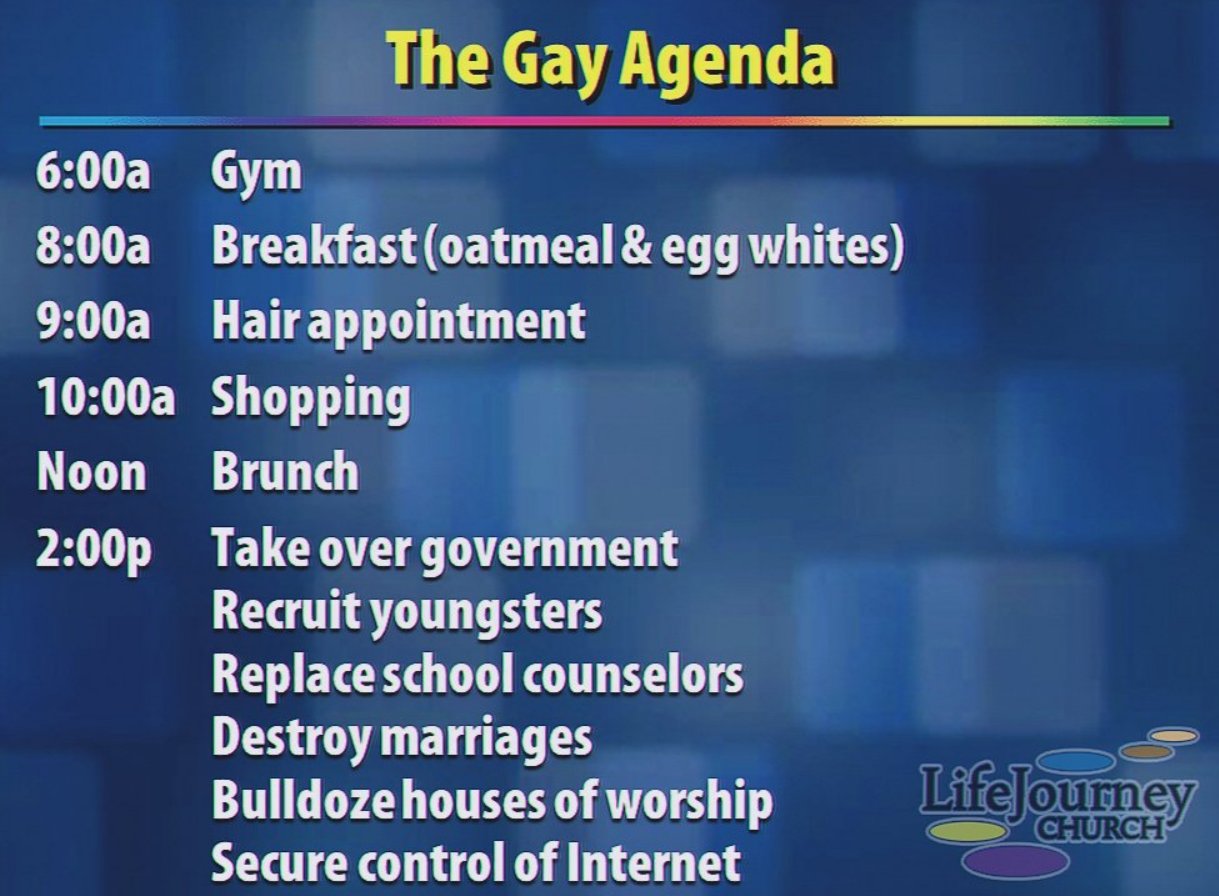
Everyone’s heard the phrase “gay agenda.”  Most of us make a joke about it anymore, mocking the religious and political leaders who obviously have no idea of what it means to be gay or how a person “becomes” LGBTQ.  That being said, maybe we need to do, as a community, what we have always done since the beginning.  Maybe we need to grab a hold of these catch phrases and insults and turn them to our advantage.  I would like to suggest that we actually create a “Gay Agenda” and as item number one on that agenda we list in bold, all caps, complete with hashtag:  #STAYALIVE.

Here are some frightening facts that I found.  Keep in mind two things. 

1.     When dealing with studies and statistics we always have to admit that there is an under-reporting that takes place with regard to self-report.  People who want to keep things on the down-low are never going to be honest when asked questions about certain topics.  An individual who attempts suicide may simply say he’s dealt with depression “all his life” but he will choose not to disclose that he has also struggled with his identity for just as long.  Because the individual fails to self-report the identity piece, the idea that he struggles with sexuality, his attempt won’t be documented within the body of research reflecting suicide and suicide attempts in the LGBTQ community.  Statistics, though accurate as far as the study and research are concerned, really don’t capture the reality of the situation because people fear being honest about things that will bring judgment and may even out them.  And, by the way, this isn’t just the reality for LGBTQ research.  This happens in any kind of study that relies on any kind of self-reporting.
2.     Similarly, the statistics I’m about to share are older statistics.  Recently I’ve been citing a survey in which 48% of respondents between the ages of 13 and 20 identified themselves as exclusively heterosexual.  This means that 52% of young people in this study identified themselves somewhere in the LGBTQ spectrum.  This is a revolutionary piece of information and I suspect that findings like this survey are going to be seen more and more among the younger population and we will eventually see statistics like the ones I’m going to talk about altered significantly in light of this new information and the willingness to share it.   

I want to make one thing clear.  LGBTQ people are not depressed because they are LGBTQ.  They do not consider suicide because they are LGBTQ and they do not commit suicide because they are LGBTQ.  There are no mental deficiencies caused by “being gay” any more than “being gay” is caused be a mental deficiency.  If you still subscribe to this nonsense you are literally stuck in the 1960’s because legitimate science abandoned your nonsense in the early 1970’s.

So if we’re going to talk about mental health challenges faced by LGBTQ people, particularly youth, let’s look at real causes rather than politically motivated causes or religiously imagined causes.

In 2013 the National School Climate Survey reported that “schools nationwide are hostile environments for a distressing number of LGBT students.”  The survey, which was completed by nearly 8,000 students between the ages of 13 and 21 and of whom nearly 60% identified as gay or lesbian, found:
·        55.5% of LGBT students felt unsafe at school because of their sexual orientation and 37.8% because of their gender identification. 
·        Roughly 1/3 of LGBT students had missed at least one day of school in the last month because they didn’t feel safe
·        More than 1/3 avoided gender-segregated spaces in their schools (i.e., bathrooms, locker rooms) because they felt unsafe
·        Most avoided school functions [Which, of course, adds to that sense of isolation.]
·        71.4% of LGBT students heard “gay” used in negative ways and 90.8% felt distressed because of that language
·        64.5% heard other homophobic remarks often
·        56.4% heard negative remarks about “not acting masculine enough” or “feminine enough” often.
·        1/3 heard negative remarks about transgendered people
·        51.4% of students reported hearing homophobic remarks from their teachers or school staff.  55.5% of students reported hearing negative remarks about gender expression from teachers or other school staff.  (Again, you wonder why I had to write about teachers being completely inept at facilitating conversations about equality and allowing students to talk about “fag marriage” and “shooting their mentally deficient and gay children?”)
·        74.1% of LGBT students were verbally harassed (called names, threatened) in the past year because of their orientation.  55.2% because of their gender expression
·        36.2% were physically harassed (pushed, shoved, etc.) because of their orientation.  22.7% because of their gender expression.
·        16.5% were physically assaulted because of their orientation.  11.4 because of their gender expression.
·        Almost half of LGBT students experienced electronic harassment/cyber bullying (i.e., text messages, facebook messages)
·        Nearly 2/3 of LGBT students who were harassed or assaulted in school did not report the incident to school staff usually because they doubted the effectiveness of any intervention.  [Which you can understand why when teachers/staff are contributing to the hostility of the environment.]
·        Over 2/3 of the students who did report an incident indicated the school staff did nothing.
·        Nearly 1/3 of LGBT students reported being disciplined for the same public displays of affection non-LGBT students engaged in freely.
·        18.1% of LGBT students were prevented from attending school dances/functions with a same gender date/partner.
·        17.8% of students were not allowed to form or promote support groups.
·        17.5% of students were prohibited from discussing or writing about LGBT topics in school assignments.
·        15.5% were prevented from wearing clothing or items supporting LGBT issues.
·        9.2% of students reported being disciplined for simply identifying as LGBT.
·        Policies which were reported that directly affected transgender youth:
o   42.2% of transgender students were prevented from even using their preferred name. [Which makes you wonder considering how many non-trans students are allowed to use stupid nicknames born from athletic participation, right?]
o   59.2% of transgender students had been required to use a bathroom or locker room based on their so-called “legal sex.”
o   31.6% of transgender students had been prevented from wearing clothes considered inappropriate for their “legal sex.”

Now this is where we get into the actual effects of all of this hostility, inequality, intolerance, and blatant ignorance and hate.

Students who experienced higher levels of victimization because of their sexual orientation were three times as likely to have missed school in the past month, had lower grade point averages compared to students who were “less often harassed” (2.8 vs. 3.3), were twice as likely to report a lack of plan/desire to pursue college or trade school, and had higher levels of depression and lower levels of self-esteem.

Students who experienced higher levels of victimization because of their gender expression were three times as likely to miss school in the past month, had lower GPAs, were twice as likely to report they didn’t plan to pursue higher education, and had higher levels of depression and lower levels of self-esteem.

These same statistics translate from victimization to discrimination. 

A .pdf of the entire study can be found here. 

How does all of this play out?  How does all of this well-documented violence and hostility toward a specific and vulnerable sector of America’s youth translate into tragedy and the loss of life? 

A 2012 Stonewall Survey gives us some insight.  Young gay men are 30 times more likely to attempt suicide than their heterosexual counterparts.  Lesbian young people are six times more likely to attempt suicide.  Some have made up to nine unsuccessful attempts to kill themselves.  The highest rates of suicide are among those who are isolated from support.

This same article reports “US News reported that teenage gay people who have been rejecred by their parents are far more likely to self-harm, take hard drugs and commit suicide than teenagers who are…loved and supported by their parents.”

25% to 60% of gay people seek counseling at some stage in their life as reported by the Counseling Directory. 

But where does all of this come back to?  Where do people receive tacit and/or overt approval for their intolerance and ignorance?  This is a hard question for me to actually answer not because the answer is elusive but because admitting it ultimately leads to an admission of a certain amount of complacency.  The answer?  The Church.  Or more specifically:  Religious and faith communities and institutions.

It doesn’t take a lot of research to convince people that traditional religious understanding bolsters contemporary intolerance of LGBTQ people.  It’s common knowledge.  It’s as well and basically understood as knowing the KKK is not a supporter for the African-American community.  More and more research is published in which people, victimized by narrow and superstitious understandings of religious texts, share their stories and bring awareness to the damage the Church, for example, has done for generations. 

And it’s not just the Christian Church struggling with these issues and attempting to push back against hundreds of years of intolerance and ignorance.  A 2012 study of Suicide and Suicidal Behavior in Tel Aviv discovered “a staggering 20% of the homosexuals and lesbians surveyed reported suicide attempts—112 times the rate among the general population.”  The study goes on to note that “this sector…does not get enough notice, and it is a hotbed for suicides that you later hear about after the fact.  The suicide rate among the religious homosexuals is the highest because they experience more distress when confronting their families.”

I cannot tell you how angry reading studies and reports like this makes me.  I cannot tell you how my heart aches when I hear people share their stories of rejection by faith communities who claim to embody the love of God and the ministry of Jesus Christ.  I grew up in the Church.  I still consider myself a part of the Church.  But the Church makes me so angry when their hypocrisy reaches this breaking point, when they claim to be the Body of Christ, to embody the Spirit of Jesus of Nazareth who led people beyond their self-imposed boundaries to people who were different, though differently, behaved differently, loved differently—not to preach at them or tell them how they need to change but to simply love them—and then these same Churches preach a doctrine of intolerance that creates fear and self-loathing in LGBTQ people who fear not only losing the love and connection of their family but, through hateful and ignorant words, feel themselves cast far away from the love of God.


We have SO MUCH work to do—in our religious communities, in our schools, and in our society at large.  No subset of our population should have to share stories of their suicide attempts any more than they should have to share stories of police violence and institutional racism.  We have to do better.  We have to educate ourselves better. 

We have to #STAYALIVE because it is getting better.  We need you to help make that happen.