Follow Me on Twitter!

Find me on twitter @TroyComets
Showing posts with label fear. Show all posts

Thursday, April 7, 2016

A Legitimate Bathroom Concern

I love doing research.  Knowledge is my drug of choice and I just can’t get enough of it.  So when I see something on social media or catch something in the news, odds are I’m going to be hitting the internet or pulling out one of the many textbooks or resource books I have lining the walls of my office. 

So when all of these so called “bathroom laws” starting popping up and I became more and more aware of Republican lawmakers trying to take advantage of people’s fear and ignorance to create the latest crisis-for-votes, I began pulling together facts.

Now that marriage equality is the law of the land, Republican law makers have been looking for the next non-issue to make huge to draw out their base.  This is what they’ve always done.  Every election year we are overwhelmed by abortion talk, gay talk, gun talk, and God talk.  “Liberals want to kill your unborn babies!”  “Gay marriage is going to undue civilization as we know it!”  “Obama’s coming for your guns!”  “We have to get back to biblical principles and be one nation under God again!”

This year, because of the Supreme Court’s ruling, one of their hot button issues has been taken away from them.  Apparently, in place of their opposition to marriage equality, Republican politicians are using the lives of transgender people as their cannon fodder. 

By now you’ll have heard about North Carolina, Mississippi, and Tennessee.  Other states are trying to do the same including Kansas where…

… transgender students are apparently such a threat to their peers that these lawmakers believe anyone who has to be in a restroom for them should have grounds for a suit. If a student encounters someone “of the opposite sex,” they have a private cause of action against the school. The aggrieved student is entitled to $2,500 for every time they saw someone transgender in the restroom, plus “monetary damages for all psychological, emotional and physical harm suffered as a result of a violation of this section.”

So being the responsible and intelligent person I am, I began looking into this.  I mean, after all, if there’s a real issue, a real concern here, I want to make sure I’m supporting the right side.  It’s too easy to let things like institutionalized superstition and emotional religiosity get in the way of facts and, thus, doing the right thing.

Do you know what I found?  There have been absolutely zero incidents of transgender people assaulting non-transgender people in public bathrooms.  In fact, lawmakers sponsoring these bills have been asked repeatedly by journalists, including Mic, for statistics to support their case against bathroom accommodations for transgender people but can’t seem to provide any.

On the other side of the issue there are states that have passed laws providing suitable accommodations to transgender individuals.  Do you know what they report?  Absolutely no problems.  Across the board.  No assaults.  No rapes.  No questionable activity


Zero incidents of transgender people preying on children.  No incidents of “cross dressing men” raping women in the ladies’ restroom.  No accumulation of data to support these legislative movements apart from the lawmakers’ personal conviction that transgender people are “confused” and “are intent on confusing the rest of society.” 

But, as I said, I like facts.  I like numbers.  And there were some facts and numbers rolling around in my head.  So…I did some more research and discovered:

Zero incidents of trans people assaulting restroom patrons.

Three incidents of Republican lawmakers being arrested for attempting to assault restroom patrons.

Jon Hinson:  In 1981, this Mississippi congressman was arrested for engaging in oral sex in the House of Representatives bathroom with a Library of Congress clerk.

Larry Craig:  The Idaho Republican was famously arrested in 2007 for lewd conduct in a men’s room at the Minneapolis-St. Paul International Airport.

Bob Allen:  That same year, Florida state Representative Bob Allen was arrested after allegedly agreeing to pay $20 to perform oral sex on an undercover police officer in the men’s room of a public park.


So the score, again, is:
            Questionable Conduct by Transgender People in Public Bathrooms:  ZERO
            Questionable Conduct by Republican Politicians in Public Bathrooms:  THREE

I don’t know about you, but I’m a little creeped out by this.  I think some sensible legislator who has the best interest of the public in mind needs to introduce legislation to ban Republicans from public restrooms.  I just don’t think it’s safe for our children to be subjected to these sex crazed fiends intent on victimizing innocent people while they’re trying to pee.  The numbers are there to support the action.  This isn’t anecdotal evidence shared at the corner bar but hardcore, empirical evidence. 


I think we would all be able to pee a little safer if something could be done about Republican lawmakers being able to use public restrooms.  

Share it forward!
Follow me on Twitter @TroyComets

Monday, March 28, 2016

Boy George, Troye Sivan, and Me

I spend a lot of time puttering around on the internet.  Every morning I get up and start googling random crap and cruising through YouTube subscriptions and trendings.  It inevitably happens.  At some point a search for one specific thing will lead me to something completely different and it will be that something completely different that will unexpectedly educate and inspire me.


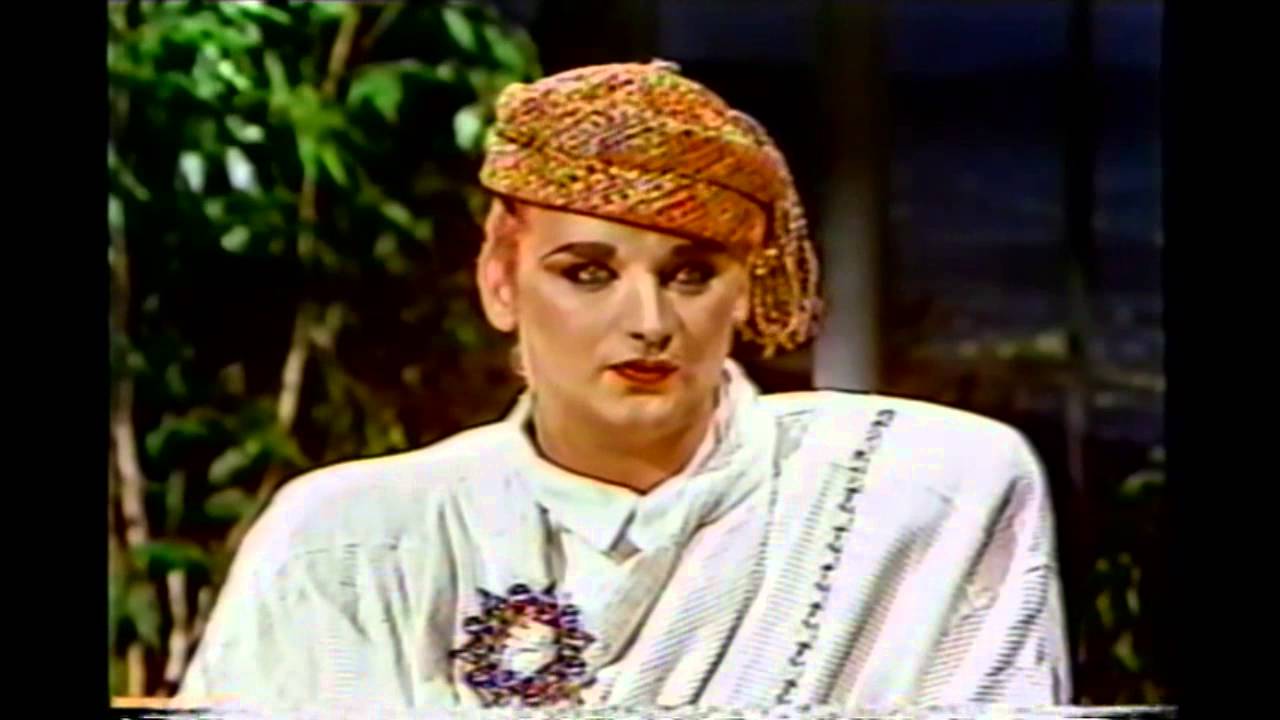
Today I ended up on this video on YouTube.  It’s an interview from 1984 between Johnny Carson and Boy George. 

History lesson time.  Before James Corden rode around in a car singing with superstars and Stephen Colbert lampooned newsmakers with mock earnestness, there was an old white guy who sat behind a desk and did some interviews and cracked some jokes.  In the interest of full disclosure I wasn’t a fan.  But a lot of folks tuned in because, really, he was the only game in town until folks like Joan Rivers and Arsenio Hall brought life and variety to the late night talk show arena.  But Carson was kind of the godfather of it all. 

So, picture it.  1984.  The AIDS crisis is evolving.  Ronald Reagan is president and neither he nor his First Lady, Nancy, will acknowledge the crisis because they don’t even want to be associated with the dirty word “homosexual.”  That doesn’t stop religious leaders and conservative politicians from making hay on the suffering of others by demonizing the victims of the disease while declaring “God’s judgment” on “sinful and deviant lifestyles.”

In the midst of this ignorant morass of silence and blame and fear comes…Boy George.


That picture is a screen capture of Boy George from the Johnny Carson interview.  It was the second time he had appeared on Carson’s show but the first time with Carson.  The first time he had appeared the iconic Joan Rivers was hosting.  This is a fact that Boy George jokes about in the interview with Carson by commenting, “The last time I was here you were in drag.”  Carson quickly distanced himself from the joke, clarifying that it had been Joan Rivers and not Carson with whom he had appeared.  If I’m right, this is a picture of Boy George and Joan Rivers from that first appearance. 


So, back to the video of Carson, the old White guy with his sense of humor that seems to ignore other people’s senses of humor, and Boy George sitting on the opposite side of the desk in all of his Boy George glory.  In 1984.  Amidst fear and ignorance.  And remembering that the culture of the UK is usually about 20 years ahead of culture in the US.  So, for Boy George, the smallest things he said or did at home were met with raised brows and anxiety here in the United States. 

Carson introduced Boy George, who comes in and makes the joke about Carson being in drag that Carson finds so repugnant, and then the interview begins.  It’s clear where Carson wants to go with the interview. 

Not long before this appearance Boy George attended the Grammies and made a joke about wondering when they music industry would see a real queen dressed as a drag queen.  Carson brings up the controversy his comment caused and Boy George brushes it aside, pointing out that in the UK you can say things like that and people laugh but in the US it’s basically a big scandal.  This brings up a conversation about “all of the stupid questions” Boy George had been answering since his arrival in LA from LA radio personalities. 

“What are some of the dumb questions they ask so I know which ones to avoid.  I mean, the first one has got to be,” and Johnny Carson makes sweeping gestures with his hands.  “Why do you dress like that?”

You can hear Boy George’s eyes rolling in his answer.  “I’ve answered that one so many times I’m going to avoid that one.”

“Okay, so what are the other questions?”

“Well, basic things like ‘How long does it take to do my makeup?’ you know and just boring things about my childhood.  Which was just the same as anybody else’s really.  Pretty dull.  Pretty boring.  So, Father Christmas, you know, and grazed knees, that kind of stuff.” 

“Yeah, but you can’t blame them, can you, Boy George, for asking those kinds of questions.  Because you are rather controversial.  It is something new that—“

“But after like three years of seeing me you would think people would be a bit used to me by now, you know.  I mean, in a country that has Liberace, I am hardly revolutionary, am I?

And the audience cheers.  But see the difference between Boy George and Liberace is that Liberace’s glam was still masculine.  He still wore tuxes and suits while performing.  So what if they were covered it glitter and sequence?

Johnny Carson continues.  “I’m trying not to be square you see.  I come from the middle of the United States.  State called Nebraska, which is right out in the middle of the country.  Rather conservative.  Now if I was your dad and you came home one day and I didn’t know it and I walked in and saw you as a young man—I guess you were about fifteen or sixteen when you started actually….wearing the make up and the costumes—I wouldn’t know how to react myself.  I think I would be adult enough myself to try to handle it but—“

“What do you got to handle?”

“Well, the effect that you walk in and you see your son dressing with makeup on.  The average person….”

“Okay, well, you’re going to have Halloween in a couple of weeks, you know.  What’s the difference between somebody dressing up for Halloween?  It’s only because people think it’s serious that they get frightened.  They look at me and they say, ‘Well, it’s not a Halloween party.’  So you have to have a reason to dress up.  There is nothing wrong with being different.  Why do you have to have an excuse to enjoy yourself?  You know there are people out there taking drugs, killing each other, fighting.  And like I just don’t see that you have to wait once a year, Christmas or Halloween, to enjoy yourself.  I think it’s a load of rubbish.  I think there is nothing wrong with dressing up and enjoying yourself if you want.”

“I think you’re right.  I think what you said before though…people are probably uncomfortable though with some things they don’t quite understand or something that’s different from them and they get uptight about it.”

I’ll leave the transcript there because it speaks to the points I want to make. [Go and watch the video, though.  It’s fascinating. ]

In 1984, when Boy George was being interviewed by Johnny Carson, I was in the sixth grade.  I remember my class’s Halloween party.  We still dressed up “back in the day” and spent the afternoon munching candy and watching movies.  One of my classmates dressed up as Boy George.  I knew it was a Boy George costume because she had obviously done the makeup and hair thing but she had written “Boy George” on her t-shirt.  My teacher, who was about the age of Johnny Carson, had a conniption.  He ranted about the costume being inappropriate and offensive.  And it was a female classmate dressed up as Boy George.

Of course this was the same teacher who demanded a male student remove his earring.

This was the mentality of the time.  It’s gotten better, to be sure, but we still have such a long way to go.  Someone I follow on social media just tweeted today that if people fought as hard for the poor as they fight against equal rights and protections, poverty would be history. 

But Johnny Carson, in this interview, actually makes a point.  He pointed out that people are uncomfortable with things they don’t understand or things that are different from them.  And make no mistake about it—Johnny Carson and Boy George and a significant segment of the audience knew that this conversation had nothing to do with make-up and clothes.  This was about identifying as something other than straight (on Boy George’s side) and the fear of validating something that not even the president would even speak about (on Johnny Carson’s side). 

I don’t know what the conversation was like in the UK or other parts of the world, but in the United States, at this time, coming out wasn’t an option for many artists and actors.  For example, George Michael at this same time was making it big with Wham!.  And speculation was just as bad.  If I had a dime for every time I heard a story about the members of New Kids on the Block having their stomach pumped to find gallons of bodily fluids, I could have retired at age 20.  I even remember watching some awards show with my folks one time and hearing my mother comment about how masculine Grace Slick from Jefferson Starship was trying to be while performing “We Built This City.” 

More and more I find myself stopping in my tracks to take stock of how far we’ve come, not just in the LGBTQ community but as a society.  Sharing our stories, when we can and how much we can and in whatever overt or veiled language we can, changes things.  It started somewhere.  It didn’t begin with Boy George on Johnny Carson and it’s certainly not going to end with marriage equality or the overturning of North Carolina’s disgusting law.  We all play our parts, when we can, how we can.  We show our faces with courage.  We move in small circles for our own safety.  We speak from behind the curtain of the internet to protect the people who love us. 

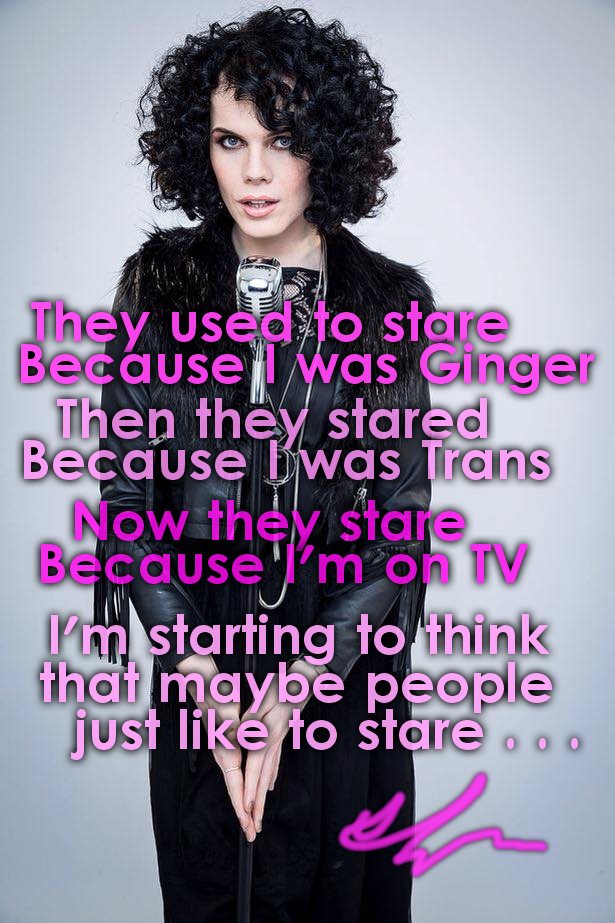
I’ve written before about Troye Sivan.  Last week Troye Sivan tweeted, “I am forever indebted and so so so grateful for the LGBTQ+ people who have come before me.”   This hit me for a variety of reasons but the truth of it is so poignant.  Troye Sivan, global recording superstar, gay, out at 20, changing the world.  But not just him.  Jordan Gray (@TallDarkFriend), trans contestant on The Voice UK, sharing her powerful story.  Noah Galvin on TV—a gay man playing a gay teen on The Real O’Neals.  YouTuber stars from all over the world, out and proud and sharing their stories, continuing the fight for equality so that the next generation of LGBTQ people won’t have to struggle so hard.

Just as Troye Sivan, still fighting with his beautiful spirit and his powerful words (“Without losing a piece of me, how do I get to heaven?”), doesn’t have to fight as hard as Boy George did. 


But here’s the flip side of Troye Sivan’s grateful statement.  My response:  “The ones who came before are grateful to the ones who come after; you’re still changing the world & us.”

You see, this is the reality in which I live.  The world has yet to open for me.  The light of peace and acceptance (of the world toward me and me toward the world, for that matter) hasn’t reached the dark recesses of my “closet.”  But I celebrate these rewards that have been hard won and the ability of those who can live in that light.  I am thrilled when I see Troye Sivan changing the world with his music.  I am thrilled when I read about Cole Ledford’s “Fifty States of Gay” project.  I am thrilled when I see someone like Jordan Gray on a national/international platform like The Voice, not only sharing her gift and her story, but doing it with Boy George himself watching and tearing up for each of her performances.

And all of these and more give me hope that maybe the world will change enough for me and this light will break open my prison door.  You see, in a place where teachers flipped out over girls dressing like Boy George and students assaulting other students just because they might be gay all with the blessing and support of a Church that loves Jesus but not enough to actually listen to the things Jesus says—for people who lived in these places, people like me, then and now, people like Boy George and Troye Sivan mean nothing.  They could be from a completely different world, somewhere over the rainbow (if you’ll pardon the expression). 

But from within my closet, I hear their words coming to me from that magical place of hope.  They inspire me, the one who came before who, from the shadows, fought and still fights,   It’s a cycle, I suppose.  An enormous wheel.  Where does what one generation give to the next begin and end? 

I hear their words and they tell me of a time I will be able to be me without causing the people I love and who love me a pain they don’t deserve for something not in their control anymore than the pain I’ve suffered for things outside of my control.  I’ve lived as a victim of the world’s ignorance for this long.  With these glimpses of hope, I can wait.  I will not victimize others to escape my lot. 

So I keep watch.  I listen.  I write and I speak what I can, when I can, how I can.  And I hope I make a difference.  Probably not as big of a difference as Boy George, Troye Sivan, or Jordan Gray.  But hopefully a difference, if only to one person.  Because that one person still has the potential to change the world.

Addendum:  About 30 minutes after posting this entry I found the interview of Boy George with Joan Rivers.  An astounding difference.  Night and day.  Whereas Carson backs away from Boy George, Joan Rivers sings his praises, calling him "cute and sexy."  


Share it forward!

Follow me on Twitter @TroyComets

Friday, March 25, 2016

Stranger in My Own Skin

American Idol jumped the shark a number of seasons ago.  It’s not surprising; what goes up must come down.  This is their final season.  For fifteen years this show has entertained us, made us angry, made us wonder why in the world certain people were invited to be judges (Kara Dioguardi?  Nicki MInaj?)

I wasn’t planning on watching this season.  I haven’t been able to enjoy the show since they stopped invited big industry names to be mentors and forcing contestants to perform a variety of different genres and styles.  I like my music to sound unique; I like to connect with an artist.  What I’ve heard from the past few seasons was a contest to identify the next manufacturer of the same mass produced sound that dominates the music industry in the United States.  It didn’t help that the weekly rotation of successful artists was replaced by an industry producer skilled at looking for “that marketable sound.”

But I have been watching the final season.  My family has fond memories of watching the show when it was in its prime and I was hoping to recapture some of those warm fuzzies we experienced years ago.  I’m glad that I have been watching because there have been a couple of legitimate artists this season who are able to and insist on doing their own thing despite what the judges and producers advise them to do. 

I think the real reason I’ve been glad to be a part of the audience the past couple of weeks is because of the realism a couple of the artists have demonstrated in telling their stories.  Of particular interest to me has been the introduction of the subject of mental health through Dalton Rapattoni, the blue eyed, platinum haired, eye-liner wearing artist who won his “golden ticket” to Hollywood by contemporizing “The Phantom of the Opera” in his audition.


It started last week, with episode 19.  In the package leading up to Dalton’s performance, we heard the beginning of a conversation Dalton has with us about having difficulties “being comfortable in my own skin.”  In the package we’re introduced to Dalton’s mother, Kiva, who talks about Dalton as a child, how he experienced severe highs and lows.  Dalton continues to talk about how, when he would feel emotions, they would be 1000 times as powerful as how he saw other people experiencing them.  He began talking about a really bad breakdown he was having in the driveway when his mother’s voice comes back in and says, “He was screaming and crying and saying ‘I just want to die.’” 

Dalton shares with us that at age nine he was diagnosed with Bipolar Disorder.  He explains that even though he began receiving treatment he still struggled with the severe emotions he felt and the fact that he had no way to express them.  Finally, through the gift of guitar lessons from his grandmother, Dalton discovered music, which he says “changed my life. “

Dalton then went on to perform a song I’ve never liked:  “The Sound of Silence.”  Yeah.  He changed my mind about that song. 

Fast forward seven days.

Last night Dalton made it into the top four, which I think ended up being a gift to America.  if he hadn’t made it, we never would have heard more of his story, see him relate to Sia, who was the big star working with the contestants and who also struggles with Bipolar Disorder, or heard the killer performance he gave.  Dalton covered Sia’s “Bird Set Free.”  He barely made it through; the power of the lyrics were overwhelming and, knowing Dalton’s story, I found myself hearing the song in a completely different way.

And then, of course, came the judge’s feedback.  Jennifer Lopez started by saying, “You know….everybody is cheering for your bravery.  It’s what we all want to do.  We all want to let go.  We all want to feel good in our own skin.  We all want a moment where we can release and we can just be ourselves and find ourselves.”

I don’t think Jennifer Lopez was done talking before I had taken to Twitter to offer my gratitude to Dalton for that bravery, for his courage to be honest about his story and talk about these painful memories and ongoing struggles in front of a population that refuses to engage in a legitimate conversation about mental health care.  And I’m not just talking about things like awareness of things like Bipolar Disorder or Depression or Anxiety (which I’ve written about before as this is the primary issue I struggle with).  I’m talking about how Dalton began this conversation two weeks ago with his statement about struggling to be “comfortable in my own skin” and having the conversation continue with Jennifer Lopez speaking for many of by saying, “We all want to feel good in our own skin.”

I’ve never felt comfortable in my own skin and I imagine for a significant number of you who are reading this it’s the same.  For us, who are LGBTQ (and I’m not including Dalton into that population because I have no idea how he identifies and that’s really not the point here)—but for those of us who are LGBTQ and struggle to make peace within ourselves and with the people around us because of an identity we can’t change, we really don’t feel comfortable in our own skin.  Either by a series of choices we make or by a limiting of choices that are provided to us, we end up wearing a skin that is not our own.  It’s a skin that the people around us—in our homes, in our schools, in our churches, in our places of employment—it’s a skin that everyone else accepts.  It’s also a skin that slowly suffocates those of us who wear it. 

Again, I’m not talking about Dalton here.  I’m using his story and his struggle as a starting point for a similar story and struggle too many LGBTQ people struggle with because, as a society, we are still a long ways away from accepting people for who they are and how they are made.  We have absolutely no idea, as a whole, how to support people in their challenges as the discovery who they are and how to overcome the things inside of themselves that threaten to consume them:  Loneliness, depression, isolation, confusion, anger, fear….

And why wouldn’t LGBTQ people be suffocating in a skin that isn’t theirs when we have politicians passing laws that strip LGBTQ people of their humanity?  How many teens and young adults in North Carolina are resolving today to not be themselves after the North Carolina legislature not only passes a law excluding LGBTQ people from discriminatory practices but forbids local governments from passing ordinances that would protect LGBTQ people?  Think about it:  Now not only do LGBTQ youth in North Carolina have to worry about whether their family and friends will accept or reject them but there is nothing in place to protect them from systematic rejection of society based on who they are. 

Look, I know the LGBTQ issue wasn’t even on Dalton’s radar when he started sharing his story last week.  But this is what happens when we start sharing stories.  We discover we’re more alike than different.  Many of us fight the same demons.  The demons might come from different places, come in different shapes, and have different levels of power over each of us as individuals, but when it gets down to it, Jennifer Lopez hits the nail on the head:  “We all want to feel good in our own skin.”

And this is why I’m so grateful to Dalton Rapattoni for having the courage to share his story in such an honest and powerful way.  Each time someone can share their struggle in a way that it touches something inside so many others and draws attention to a common thread that runs through the lives of so many people, the conversation about that thread gets easier.  It’s what history tells us.  Look at suffrage.  Look at civil rights.  Look at marriage equality.  The more we hear stories and grow to understand the pain behind those stories, the more we identify with the people telling the stories because we can see ourselves in their story. 

I definitely see myself in Dalton’s story.  The details are different.  It’s not Bipolar that I struggle with.  Music is not how I express myself (for which the American public should be eternally grateful).  But I know exactly what he means about not being comfortable in my own skin.  And thanks to Dalton’s willingness to share part of his story about this feeling of being an alien in your own body, I feel a bit more comfortable sharing part of my story about the same feeling. 

We need to come to a place where we’re comfortable sharing our stories, especially the painful ones, dear reader.  It’s the only way things are ever going to change.  

Post Script

I'm adding this comment about an hour after publishing the original post.  I was conflicted:  Should I add this comment and link to this post or should I do another one?  In the end I decided to add it.

If you want to see someone who's learned to be comfortable in her skin, I suggest you check out Jordan Gray (@TallDarkFriend), who is a contestant on The Voice UK this season.  This is another inspirational story with a POWERFUL performance

.

Wednesday, March 23, 2016

A Real Look at "The Real O'Neals"

Lent is coming to a close so that means I should get all my repenting done. 

I need to repent something on my blog.  On March 2 I posted my thoughts on the premiere episodes of ABC (American Broadcasting Company)’s The Real O’Neals.  In my reflection I moved through stages of concern over how the show would be received and what good the show will ultimately do to a “Okay, well, it’s here so let’s give it a try” mentality. 

I got it all wrong.  Mea culpa.  Mea maxima culpa.

The show is brilliant and let me explain why and what was wrong with my original views.

The biggest issue I had with the show was that I didn’t believe the target audience was going to be there.  That is, I didn’t believe that the LGBT youth who would be able to identify with the main character would actually be sitting on the sofa next to their parents and watching the show.  I still don’t know if they are or aren’t but what I’ve discovered is that it simply doesn’t matter.  Why?  Because social media has made the living room sofa HUGE. 

For the past few weeks I’ve gotten to know clueless yet well intentioned Jimmy, sneaky, underhanded, duplicitous Shannon, terrifying and judgmental Eileen, Pat who may or may not have figured out how the drier turns off by now, Aunt Jodi who’s always got her emergency child pageant kit in her car, and, of course, dear, sweet, gay Kenny.  And as I’ve gotten to know this caricature of an American family I’ve sat on the virtual couch via Twitter and watched other people get to know them, too.  What’s more I’ve watched as Martha Plimpton, Jay Ferguson, Matt Shively, Mary Hollis Inboden and the rest of the cast join in the conversation.  This is the gift of social media:  Stars were unapproachable in previous generations but are literally right there watching with you now…from a different time zone, sometimes, but laughing and joking and enjoying the show right along with you in real time.

Social media has changed how we approach television. 

But THIS is what I’ve witnessed that has made me completely change my mind about this show.  I now believe it is one of the most important programs on TV for the LGBT community. 

Last night I watched episode 105.  In a nutshell, Shannon tells her brothers that their mother is internet dating but the truth of the matter is that she’s actually looking for a job.  This leads to his siblings encouraging Kenny to do some internet dating of his own.  I won’t spoil it for you but I will say that porn and limencello lead to A LOT of great lines.  And amidst the killer one liners and the word plays come the truly touching lines that mean the world to the LGBT audience.  In a brief exchange between characters the LGBT audience can identify themselves in the conversation for similar conversations they’ve actually had in their own lives or they see the kind of healthy and functional family that they can’t seem to find in their own lives.

In last night’s episode, as Kenny sat next to his father in the car, and lamented that he was going to die alone because the relationship thing was too complicated and that there’s a lot of homework to being gay, his father, Pat, responds with nothing but support and encouragement, saying, “It’s not complicated.  Just think about your ideal person.  What’s he like?”  Kenny says, “Right now I just want someone cute to smile at me.”

How many of us can identify with Kenny’s situation?  How many of us long for the support of Kenny’s father?  I had to stop myself midtweet from commenting that I wish Jay Ferguson would adopt me because too many of us ache for that kind of support. 

And that’s when I saw it.  People were getting that kind of support.  Not only was the show validating their own feelings, seeing themselves in Kenny’s situation, but as they tweeted about Kenny’s father’s response, so many of the cast of The Real O’Neals were right there giving people that support.  Matt Shively became Jimmy, the older brother who wants to help but just doesn’t have a clue and tweeted support.  Mary Hollis Inboden became Aunt Jodi, with her whimsy and solid support and encouragement and tweeted hugs and a willingness to be everyone’s Aunt Jodi.  And during his live tweeting Noah Galvin became a mirror for so many people at that moment you could just feel the looming clouds of many LGBT people’s lives breaking up to allow a glimpse of that rainbow—of hope and promise. 

I was right in my first reflection on one thing, though.  This show isn’t about simple entertainment.  We’ve become so accustomed to the current sitcom formula in which we’re entertained by jokes and slapstick that we forget there was a time in which sitcoms carried a bit of a “punch” to them—a glimpse into real life and suggestions on how to make it through.  Because The Real O’Neals’ premise lies in the midst of a culture that has struggled for recognition and equality for so many decades, I knew that it had to be on target and address the realities of the LGBT community within the framework of comedy.  I wrote at the time that I was worried that the show would simply be known as “that show with the gay kid.”  I don’t think there’s any danger of that anymore.  I think The Real O’Neals is the show about the gay kid we either were, are, or wish we could be and the family who, along with him, is trying to figure out what it all means.  The gift is that not only does the show take the audience along this journey of discovery but the cast have gone out of their way to join the audience on the audience’s journey of discovery.

So, I have definitely transitioned from tentative support to fierce fan and advocate.  The LGBT community and the world need this show.  It’s doing something—something I didn’t expect and something I can’t quite get my head around.  All I know is how it’s affected me and how I’ve seen, through social media, the show affecting others.

So, ABC decision makers, if you’re reading this, you really need to make sure season two happens.  You won’t regret it.

#TheRealONeals
#RenewTheRealONeals
#LetsGetReal

#YouGayBro

Tuesday, March 22, 2016

Suicide and the Gay Agenda

While visiting with more and more LGBTQ people, particularly over social media where I can get a variety of insights from a wider range of geographic and cultural contexts, I’ve noticed a new trend.  This new trend creates a sense of relief in me while at the same time chilling me to the bone. 

When people talk and connect and engage in a deeper, story-sharing dialogue, it doesn’t take long for common themes between people to emerge.  For LGBTQ people, who often grow up isolated and desperate for this kind of connection, obvious themes quickly emerge.  Themes surrounding “When did you know you were gay/bi/trans?” and “What was coming out like?” and “How did/do you handle crushes on straight friends?” are top on the sharing list.  But the theme I’ve been tracking more and more?  “I thought about/came close to/attempted suicide when…”

On the one hand I am so incredibly relieved we’ve arrived at a place, if only internally within the LGBTQ community, in which we can more openly talk about mental health issues like self-concept and self-harm.  It’s ironically no secret that in the culture of the United States actually talking about mental health is still a difficult thing.  Traditional stigma are still attached to people who struggle with depression, anxiety, identity, and so on.  People are reluctant to share their mental health challenges for fear of judgment and, face it, when you already live with the judgment of huge sectors of society or fear of judgment because of being who you are, you’re not going to rush out and add fuel to the fire by saying, “Oh, by the way, I’m not just gay but I’m also depressed and I’ve seriously thought about suicide.” 

But among “our own” we can have these conversations. 

And that’s what I find so frightening about this theme.  It seems like suicidal ideation and suicide attempts are becoming a part of the “coming of age narrative” for LGBTQ people.  It’s almost a given that this theme will surface in conversations within the LGBTQ community.  “Yeah, I knew I was gay when I was twelve but I was terrified to say anything because my parents were super religious.  It was so bad, I felt so alone, that I tried to kill myself when I was fifteen.”

I’ve written before about the isolation LGBTQ people experience (Oubliette, Discussions of Equality in High School) and the human need for community and the results of not feeling connected with community (complete with research and statistics) (Community).  Today I’m going to bring these topics together and talk about the real threat the LGBTQ community faces.


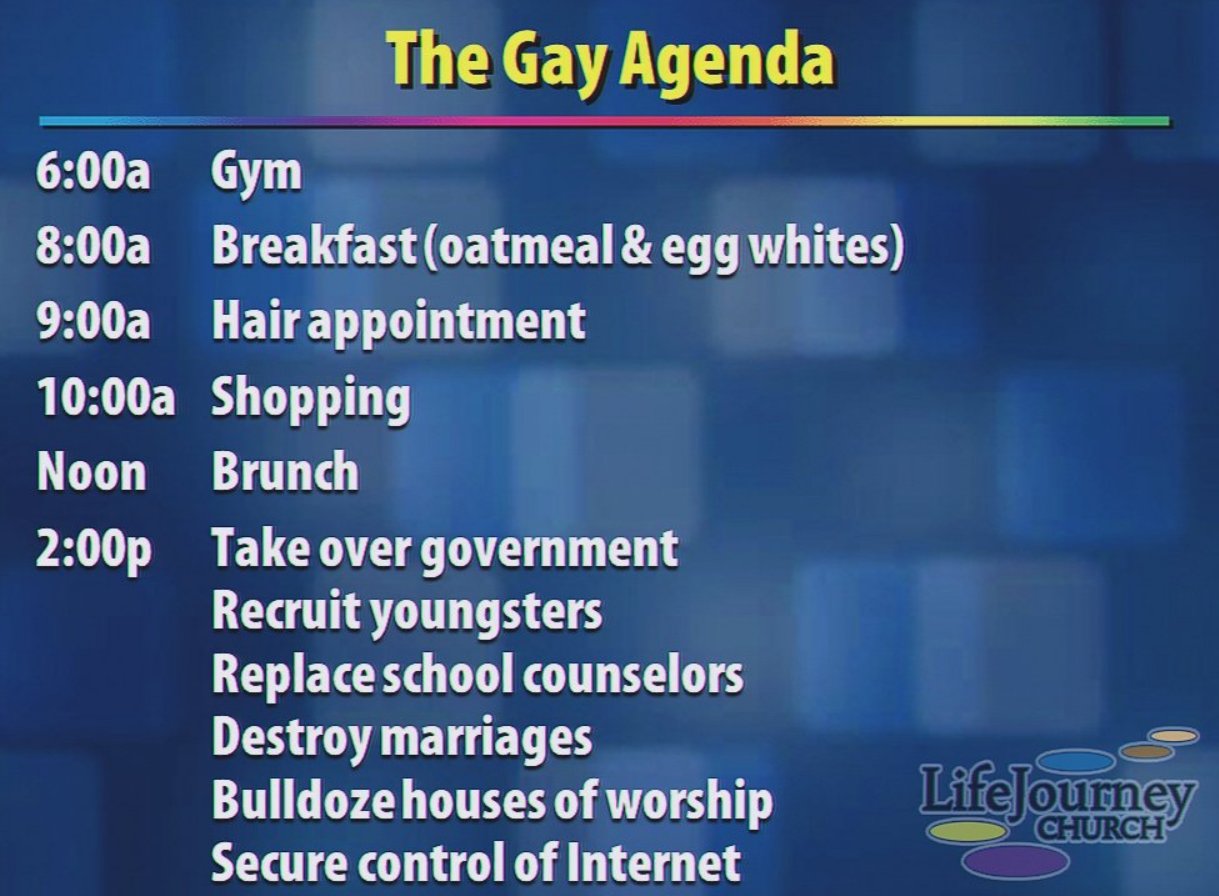
Everyone’s heard the phrase “gay agenda.”  Most of us make a joke about it anymore, mocking the religious and political leaders who obviously have no idea of what it means to be gay or how a person “becomes” LGBTQ.  That being said, maybe we need to do, as a community, what we have always done since the beginning.  Maybe we need to grab a hold of these catch phrases and insults and turn them to our advantage.  I would like to suggest that we actually create a “Gay Agenda” and as item number one on that agenda we list in bold, all caps, complete with hashtag:  #STAYALIVE.

Here are some frightening facts that I found.  Keep in mind two things. 

1.     When dealing with studies and statistics we always have to admit that there is an under-reporting that takes place with regard to self-report.  People who want to keep things on the down-low are never going to be honest when asked questions about certain topics.  An individual who attempts suicide may simply say he’s dealt with depression “all his life” but he will choose not to disclose that he has also struggled with his identity for just as long.  Because the individual fails to self-report the identity piece, the idea that he struggles with sexuality, his attempt won’t be documented within the body of research reflecting suicide and suicide attempts in the LGBTQ community.  Statistics, though accurate as far as the study and research are concerned, really don’t capture the reality of the situation because people fear being honest about things that will bring judgment and may even out them.  And, by the way, this isn’t just the reality for LGBTQ research.  This happens in any kind of study that relies on any kind of self-reporting.
2.     Similarly, the statistics I’m about to share are older statistics.  Recently I’ve been citing a survey in which 48% of respondents between the ages of 13 and 20 identified themselves as exclusively heterosexual.  This means that 52% of young people in this study identified themselves somewhere in the LGBTQ spectrum.  This is a revolutionary piece of information and I suspect that findings like this survey are going to be seen more and more among the younger population and we will eventually see statistics like the ones I’m going to talk about altered significantly in light of this new information and the willingness to share it.   

I want to make one thing clear.  LGBTQ people are not depressed because they are LGBTQ.  They do not consider suicide because they are LGBTQ and they do not commit suicide because they are LGBTQ.  There are no mental deficiencies caused by “being gay” any more than “being gay” is caused be a mental deficiency.  If you still subscribe to this nonsense you are literally stuck in the 1960’s because legitimate science abandoned your nonsense in the early 1970’s.

So if we’re going to talk about mental health challenges faced by LGBTQ people, particularly youth, let’s look at real causes rather than politically motivated causes or religiously imagined causes.

In 2013 the National School Climate Survey reported that “schools nationwide are hostile environments for a distressing number of LGBT students.”  The survey, which was completed by nearly 8,000 students between the ages of 13 and 21 and of whom nearly 60% identified as gay or lesbian, found:
·        55.5% of LGBT students felt unsafe at school because of their sexual orientation and 37.8% because of their gender identification. 
·        Roughly 1/3 of LGBT students had missed at least one day of school in the last month because they didn’t feel safe
·        More than 1/3 avoided gender-segregated spaces in their schools (i.e., bathrooms, locker rooms) because they felt unsafe
·        Most avoided school functions [Which, of course, adds to that sense of isolation.]
·        71.4% of LGBT students heard “gay” used in negative ways and 90.8% felt distressed because of that language
·        64.5% heard other homophobic remarks often
·        56.4% heard negative remarks about “not acting masculine enough” or “feminine enough” often.
·        1/3 heard negative remarks about transgendered people
·        51.4% of students reported hearing homophobic remarks from their teachers or school staff.  55.5% of students reported hearing negative remarks about gender expression from teachers or other school staff.  (Again, you wonder why I had to write about teachers being completely inept at facilitating conversations about equality and allowing students to talk about “fag marriage” and “shooting their mentally deficient and gay children?”)
·        74.1% of LGBT students were verbally harassed (called names, threatened) in the past year because of their orientation.  55.2% because of their gender expression
·        36.2% were physically harassed (pushed, shoved, etc.) because of their orientation.  22.7% because of their gender expression.
·        16.5% were physically assaulted because of their orientation.  11.4 because of their gender expression.
·        Almost half of LGBT students experienced electronic harassment/cyber bullying (i.e., text messages, facebook messages)
·        Nearly 2/3 of LGBT students who were harassed or assaulted in school did not report the incident to school staff usually because they doubted the effectiveness of any intervention.  [Which you can understand why when teachers/staff are contributing to the hostility of the environment.]
·        Over 2/3 of the students who did report an incident indicated the school staff did nothing.
·        Nearly 1/3 of LGBT students reported being disciplined for the same public displays of affection non-LGBT students engaged in freely.
·        18.1% of LGBT students were prevented from attending school dances/functions with a same gender date/partner.
·        17.8% of students were not allowed to form or promote support groups.
·        17.5% of students were prohibited from discussing or writing about LGBT topics in school assignments.
·        15.5% were prevented from wearing clothing or items supporting LGBT issues.
·        9.2% of students reported being disciplined for simply identifying as LGBT.
·        Policies which were reported that directly affected transgender youth:
o   42.2% of transgender students were prevented from even using their preferred name. [Which makes you wonder considering how many non-trans students are allowed to use stupid nicknames born from athletic participation, right?]
o   59.2% of transgender students had been required to use a bathroom or locker room based on their so-called “legal sex.”
o   31.6% of transgender students had been prevented from wearing clothes considered inappropriate for their “legal sex.”

Now this is where we get into the actual effects of all of this hostility, inequality, intolerance, and blatant ignorance and hate.

Students who experienced higher levels of victimization because of their sexual orientation were three times as likely to have missed school in the past month, had lower grade point averages compared to students who were “less often harassed” (2.8 vs. 3.3), were twice as likely to report a lack of plan/desire to pursue college or trade school, and had higher levels of depression and lower levels of self-esteem.

Students who experienced higher levels of victimization because of their gender expression were three times as likely to miss school in the past month, had lower GPAs, were twice as likely to report they didn’t plan to pursue higher education, and had higher levels of depression and lower levels of self-esteem.

These same statistics translate from victimization to discrimination. 

A .pdf of the entire study can be found here. 

How does all of this play out?  How does all of this well-documented violence and hostility toward a specific and vulnerable sector of America’s youth translate into tragedy and the loss of life? 

A 2012 Stonewall Survey gives us some insight.  Young gay men are 30 times more likely to attempt suicide than their heterosexual counterparts.  Lesbian young people are six times more likely to attempt suicide.  Some have made up to nine unsuccessful attempts to kill themselves.  The highest rates of suicide are among those who are isolated from support.

This same article reports “US News reported that teenage gay people who have been rejecred by their parents are far more likely to self-harm, take hard drugs and commit suicide than teenagers who are…loved and supported by their parents.”

25% to 60% of gay people seek counseling at some stage in their life as reported by the Counseling Directory. 

But where does all of this come back to?  Where do people receive tacit and/or overt approval for their intolerance and ignorance?  This is a hard question for me to actually answer not because the answer is elusive but because admitting it ultimately leads to an admission of a certain amount of complacency.  The answer?  The Church.  Or more specifically:  Religious and faith communities and institutions.

It doesn’t take a lot of research to convince people that traditional religious understanding bolsters contemporary intolerance of LGBTQ people.  It’s common knowledge.  It’s as well and basically understood as knowing the KKK is not a supporter for the African-American community.  More and more research is published in which people, victimized by narrow and superstitious understandings of religious texts, share their stories and bring awareness to the damage the Church, for example, has done for generations. 

And it’s not just the Christian Church struggling with these issues and attempting to push back against hundreds of years of intolerance and ignorance.  A 2012 study of Suicide and Suicidal Behavior in Tel Aviv discovered “a staggering 20% of the homosexuals and lesbians surveyed reported suicide attempts—112 times the rate among the general population.”  The study goes on to note that “this sector…does not get enough notice, and it is a hotbed for suicides that you later hear about after the fact.  The suicide rate among the religious homosexuals is the highest because they experience more distress when confronting their families.”

I cannot tell you how angry reading studies and reports like this makes me.  I cannot tell you how my heart aches when I hear people share their stories of rejection by faith communities who claim to embody the love of God and the ministry of Jesus Christ.  I grew up in the Church.  I still consider myself a part of the Church.  But the Church makes me so angry when their hypocrisy reaches this breaking point, when they claim to be the Body of Christ, to embody the Spirit of Jesus of Nazareth who led people beyond their self-imposed boundaries to people who were different, though differently, behaved differently, loved differently—not to preach at them or tell them how they need to change but to simply love them—and then these same Churches preach a doctrine of intolerance that creates fear and self-loathing in LGBTQ people who fear not only losing the love and connection of their family but, through hateful and ignorant words, feel themselves cast far away from the love of God.


We have SO MUCH work to do—in our religious communities, in our schools, and in our society at large.  No subset of our population should have to share stories of their suicide attempts any more than they should have to share stories of police violence and institutional racism.  We have to do better.  We have to educate ourselves better. 

We have to #STAYALIVE because it is getting better.  We need you to help make that happen.  


Sunday, March 20, 2016

The View from Here

I was a strange child.

Well, okay.  Maybe “strange” is a bit over the topic.  Let me try a few other words. 

Unique?  Peculiar?  Unusual? 

Getting closer.  But I think all of those words still miss the reality.  Not to mention they carry with them a bit of a stigma that needs to be unpacked.

How about…creative?  Pensive?  Imaginative? 

Hrm.  Those are good adjectives that described me as a child but they still aren’t quite capturing the reality I’m trying to describe. 

Maybe because there is no easy, clean-cut way to describe people.  Or, in this case, the result of what people become because of the coping mechanisms they end up using.

Let me explain.

Today I’m having one of those “stuck on the outside, looking in” sort of days.  It’s a phrase that basically means there’s something separating you from all of the activity you want to be a part of.  Think of it like walking down a city street and passing a huge window through which you see a party going on.  Fun looking people eating great food while laughing and dancing and celebrating life in one another’s presence. 

The reality, though, is that when I say this, like many other people, I mean, “I’m trapped on the inside, looking out.”  In other words, I’m stuck inside myself and the reality I experience, longing to be a part of the world I see around me.  This isn’t a new phenomenon for me.  A lot of LGBTQ people feel this way, especially when they are literally trapped inside of themselves for fear of revealing who they truly are. 

Some of you might recognize this experience.  Growing up, particularly in my teenage years, school was not a pleasant experience.  It wasn’t that the academic work was difficult; I would have had straight A’s if I would have decided that was what I wanted.  What made it difficult was watching the people around me and, in many cases, wanting to be involved in what they were doing but never daring to step up and be involved.  I was awkward and inept, like all teenagers, I suppose.  But the big thing that kept me from coming out of my shell was fear of simply coming out.  How would I dare try to hang out with one of the guys that simply radiated cool when it wasn’t his charisma that attracted me to him but how incredibly attractive he was?  Sandy brown hair, bright green eyes flecked with gold, not a zit in sight, and (don’t you dare laugh) a permed mullet that was so damn sexy back in the day.  Not to mention his sense of humor, his quick wit, his athletic body….

….you get the idea.

Like I said, some of you will recognize the experience.  And you’ll also recognize the fear that grips you in these situations because you’re so worried about being “too interested” in something he or she does or says.  What if I laugh too hard?  What if I ask the wrong question?  What if I just say the wrong thing and he figures out who I actually am and what I actually see when I look at him?

When those are your fears, when you live with the anxiety of being discovered and outed, it just becomes easier to withdraw and live inside yourself.  If you don’t interact you don’t risk interacting too much.   Sure, that means watching the world move on around you—people laughing, having fun, falling in love, having relationships—but it’s worth the occasional twinge of pain at being left behind if you can protect yourself.

Isn’t it?

I mean, look at it this way.  If the story I’m about to share would have happened today, it would have ended quite differently.  When I was in ninth grade I was the victim of what today would have been considered an assault.  Or worse.

It was in an art class.  “Back in the day” we were required to take a certain number of art classes, music classes, writing classes…the artsy classes that are only occasionally offered now as electives because there’s not enough time in the day to indoctrinate students on taking standardized tests.  These classes were mandatory in my school.  It was a large room that seemed to ramble on in every direction.  The main part of the classroom was near the door.  Large, wooden worktables with worn tabletops which had been nicked and painted and stained by generations of pubescent Picassos were our desks.  I don’t remember what the teacher was lecturing on that day or what we were actually working on but I do remember the sense of panic I experienced when one of my classmates took a wire used for slicing chunks of clay off of the larger blocks and, from behind me, wrapped it around my neck and pulled it tight.  I’m not sure how long he held the wire around my neck but I remember the laughter of his friends and the pain when he finally released the wire.  I don’t know where the teacher was when this happened; he never did find out about it.  Plenty of students on my side of the room saw what happened but no one ever said anything.  Probably because I never said anything.  I forced myself to laugh, as if I was in on the planning of the morning’s entertainment.  I knew that if I made an issue about it my complaint would just draw more attention and more attention was not what I wanted.

If this was the kind of thing my peers did when they only suspected I was gay, what would they do if they actually knew I was gay?  If I said the wrong thing, did the wrong thing, walked the wrong way, talked the wrong way, gave someone too much attention….It was just easier (and safer) to withdraw as much as possible within myself.

I think this is how my imagination and creativity blossomed. 

I began to write in junior high school, which for me began in seventh grade.  Puberty had arrived, bringing with it a number of realizations that couldn’t be unrealized.  This is when I started pulling back within myself.  But once there, apart from the world outside, I would create worlds and scenarios.  Sometimes I would even bring the people around me from the “real world” into my imagination; if I couldn’t hang out with them in the “real world,” I could hang out with them in my fictional world where I could be the cool one that they wanted to hang around and emulate. 

So I wrote stories starring mythical versions of myself and the people who were either too cool for me to talk to or the guys I was too attracted to that I avoided lest they look into my eyes and see my soul.  Looking back at the thought of writing those stories I have to admit I’m embarrassed—but not for reasons you would think.  I’m not embarrassed because of what I turned my fear and anxiety into and how I attempted to capture the personalities and characteristics of my classmates.  It was the writing that was cringe worthy. 

I think some of the best writing, some of the best fiction, has to come from something relatable and something real.  Learning to take my struggle and turn it into a narrative in which I learned to expose my thoughts and feelings to even fictional versions of the people around me was an important lesson for me to learn.  I still do it.  In These are the Days, I’ve inserted pieces of myself and people I know into the characters.  In the new story I’m working on I’ve taken it a step further and am actually using people I knew as the rough outline of the characters in the story—and it’s working really well.

Where am I going with all this?  Well, I have two points I need to make.

The first point goes back to where I began:  I’m having a “trapped on the outside, looking in” sort of day.  It’s been….an undisclosed number of years since my high school days but old habits die hard.  There are a many people whose own paths mine has connected with in some way, whose light I find refreshing and inspiring.  Being a connection oriented person I find myself aching to learn more about these people.  This is why I hate doing “meet and greets” at concerts; the twenty minutes or so I have with the artist or artists isn’t nearly enough for me to develop that connection—especially when I have to share the artist with other people with meet and greet tickets.  So, for example, when I try to interact with people through social media and my attempts fall flat, I feel like I’m looking in through that large window at fun people having a fun time and I have no idea how to get involved. 

Still happens. 

I think it will always happen. 

So I think it’s important to remember that I’m in control of how I respond to this feeling.  If I let myself be consumed by the sights that are holding my attention through that window, I’ll become rooted to the spot.  I’ll never find a way in and I’ll just make myself feel worse and worse.  But if I choose to change my perspective, to leave that spot and turn away from those tantalizing sights, I might someday find my way “into the party.”  Or…better yet….I might find something even better to be a part of.

Remember, though, that the grass is never greener on the other side. 

The second point is this:  You aren’t alone.  I know there are people reading this who can identify with my story.  I know there are people out there who are victims not only of the ignorance and prejudice of the people around them but who are also victims of their own coping strategies, the things they do to make it through life.  Things like disengaging from the world around you because you’re too afraid that the world around you won’t accept you.  It gets better.  It really does.  And the experiences you had or are having, experiences like mine, will give you something.  They’ll give you lessons to help you be a better person.  They’ll give you motivation to become a better person.  And they may stimulate your imagination and creativity to help you help others to stimulate their imaginations while telling them that there is absolutely nothing wrong with who they are. 


Wednesday, March 16, 2016

Discussions of Equality in High School

It’s easy to forget but sometimes the words we use and how we use them can be incredibly painful and even deadly. 

Imagine for a moment that you have a secret.  Absolutely nobody knows about your secret.  You have tried very hard to keep this secret hidden from everyone, including your family.  It’s not that this secret makes you ashamed or that you don’t want to share this secret.  The reverse is actually true:  You are aching to share this secret, to be honest with the people around you, especially the people you love.  You keep this secret because you have learned by watching the world around you that honesty isn’t always met with reason.  People who have shared this same secret have been met with judgment and ignorance and intolerance.  Some have had their lives taken from them.  Some have taken their own lives because of how they were treated after confessing their secret, after revealing their truth. 

This secret doesn’t make you feel alone.  It makes you alone.  You are isolated.  No one to confide in.  No one to support you.  No one to comfort you when hateful words are thrown around without a care as to who could hear them and how they will be heard.

This is what it’s like for many LGBTQ people. 

Today a friend of mine casually dropped a comment on social media about a conversation that took place in his history class.  The assignment had been given:  Prepare a one page discussion on your opinion as to the state of equality in American society and provide an example of how society could be made more equal.  During the course of the review discussion of the assignment, the teacher asked if there was anything else the class wanted to discuss.  One student blurted out, “Yeah.  Fag marriage.”

And apparently it all went downhill from there.

My immediate question was:  What did the teacher do in response to the offensive language?  The answer:  Apparently nothing.  Students referred to LGBTQ people as “diseased.”  One student said that if he had a child “who had a mental disorder or was gay or trans” he would lock “it” up.  It.  He called his theoretically child an “it” because he needed to distance himself from the humanity of a theoretical child that failed to suit his inherited, preconceived notions of what was acceptable.

And the teacher said nothing.

Another student took this a step further and said that he “would probably shoot it.”   

And the teacher said nothing.

And my friend, the student, was trapped, listening to this ignorance that science abandoned over forty years ago and even contemporary religion has begun walking away from.  Yet, here was my friend, stricken by the lack of compassion, lack of human recognition, his fellow students were parroting.  I stress parroting because kids don’t develop this kind of hate on their own; it’s nurtured into them by parents who were spoon-fed the same nonsense when they were children.

And the teacher said nothing.

I want to stress again that my friend was trapped.  He wasn’t able to leave the class lest it bring more attention to him and his situation.  He couldn’t speak to the point without tipping his hand.  He was forced to sit in his high school history class and listen to people liken sexuality to mental disorders that are deserving of death while the teacher, who was either woefully unprepared to address the topic or woefully uneducated to address the topic sensibly, finally managed to say, “"I don't have a huge problem with it....but do two people really have to get married to proclaim their love?”  Never mind the fact that apparently this teacher did get married to his wife to proclaim his love. 

In case people have missed it, we are in the year 2016.  Applied to this situation, this means a few things:
1.      If you are a teacher who invites discussion about controversial topics over an assignment about equality you had better have the education and the wherewithal to ensure that the participants in that discussion are respectful of the equal standing of all human beings regardless of age, gender, sexual identity, religion, ethnicity, and so on.  If you can’t maintain a modicum of decorum in your class when it comes to these conversations then you had better not invite these conversations.  Today this teacher failed his students.  He failed to model the spirit of a lesson on society’s call to provide equality by allowing students to cross a very serious line in their rhetoric and demeanor.
2.     Absolutely everyone in this country (and even the world) is free to develop and speak their own opinions.  You are not, however, free to treat that opinion as fact.  What makes you, a high school student, more intelligent and more informed than an entire scientific community who rejected your theories decades before you were even born?  What makes you, a high school student, more versed in law and legal issues than the nine men and women who sit on the highest court in the United States and declared that opinions like yours are not valid opinions in a court of law and are therefore out of step with the spirit of the constitution of the United States? 
3.     Parents, if this is the kind of thing that you are teaching your children at home or are subjecting your children to in the life of your religious or faith communities, you better think again about the damage you are potentially doing to your children.  It used to be said that three of every ten people were LGBTQ.  A recent survey reported that nearly half of today’s teenagers identify as something other than straight.  And, yes, that includes young people in the Bible belt and conservative pockets of the United States.  Pushing your uninformed, medieval notions of homosexuality is not only perpetuating ignorance; you are also probably causing stress and anxiety in, statistically, half of the children in your home. 

I’m not going to name names.  I’m not going to identify the school.  I don’t want this to come back and cause problems for my friend.  That being said I have absolutely no doubt that a copy of this essay is going to find its way into the hands of the school’s administration and I hope to God that this issue is addressed.  I’m not suggesting suspensions or detentions.  I’m suggesting that students and teachers would benefit from a little education with regard to the history of the LGBTQ movement and how stupid, ignorant, throw away comments can undo a person’s sense of self-worth.