Follow Me on Twitter!

Find me on twitter @TroyComets
Showing posts with label faith. Show all posts

Wednesday, April 6, 2016

The Grandma Agneses of the World

WARNING: 

Today I’m writing about The Real O’Neals.  I know.  I can almost hear some cries of indignation over the sound of eyes rolling.  I know it seems like I’ve become your one stop shop for commentary about this ABC sitcom.  I wasn’t going to blog about it anymore (at least for a while) but then I watched last night’s episode and I just can’t get some thoughts out of my head.

So if you’re tired of me blogging about The Real O’Neals, now’s your chance to click out of my blog.  Come back tomorrow and I’ll have something else for you.

Back to our irregularly scheduled blog post.

I don’t know if you’ve ever participated in a live Twitter conversation during a TV show but it’s quite an experience.  When you tweet during The Real O’Neals you not only get to connect with other fans of the show but pretty much the entire cast is there, sitting on the virtual couch, with all of the fans.  They crack jokes with the fans.  They give behind the scenes commentary to the fans.  And, most importantly, they support the fans.  I don’t think there’s been a week that’s gone by that fans haven’t tweeted their gratitude to cast members for validating them or helping them come out.  It’s powerful stuff.

Last night was episode 107 entitled “The Real Grandma.”  In short, Eileen (the terrifying and judgmental, very religious mother, played by Martha Plimpton) is visited by her mother (an even more terrifying, judgmental, and religious mother) played by the incredibly talented Frances Conroy of American Horror Story fame.  Eileen, who has always struggled for her mother’s approval, hides the fact that she and her husband, Pat (Jay R. Ferguson), are divorcing and that Kenny (Noah Galvin) is gay.   This doesn’t go over well with Kenny who eventually defies his mother and comes out to his grandmother by presenting her with a rainbow cake.


Grandma Agnes doesn’t take the news very well and announces to the family that Kenny has ruined cake and rainbows for her forever.  She also declares her intention to stay until “she saves Kenny’s soul.”

Meanwhile Kenny is pressuring his mother to admit to her mother that she’s planning to divorce Pat.  So, in order for Eileen to come out to her mother about the divorce, she plans a good old fashioned corned beef and cabbage dinner.  During the course of the meal, Grandma Agnes says to Kenny, “I know you think I’m a silly old woman and you’ve been mocking me and my beliefs.  But even if you don’t care what I think, you should care about what God thinks….You don’t accept that God doesn’t accept you.  He thinks you’re broken and I do too.”

The screen is then filled with Kenny’s face and you can see the shock and the pain these words have caused.  We hear Kenny doing a voice over, saying “I didn’t think anything grandma said could upset me, but I was wrong.”

My initial reaction was, “Oh, I’ve got to blog this!  This is exactly why I wrote what I wrote yesterday about One Million Moms!”  But, like I said, the ol’ blog has been pretty The Real O’Neals heavy of late and I was reluctant to do it. 

I finished the episode.  It has a spectacular ending.  I won’t give the details beyond saying that Grandma Agnes tries to force the family to go to church that evening.  The family ends up going, without Grandma Agnes and at Kenny’s suggestion.  Hold that thought.

If you’ve read many of the posts on my blog you will have noticed by now a strong theme in what I’ve shared:  Religion, over the centuries, has done horrible things to good people simply because the devotees of the religion subscribe to a superstitious view of the world, are legalistic about thingstheir holy books say without even actually knowingwhat those books say, or simply can’t make room in their worldview for continuous revelation ( the fact that God is still speaking despite the silence of biblical authors, namely through the vehicle of science).  As a result, religion, specifically Christianity (of which I am a practitioner), has killed people, maimed people, caused untold psychological damage to people…all because of something zealous adherents couldn’t understand and innocents can’t change.

When Agnes spoke to Kenny at the dining room table and declared that God could not accept Kenny because he was gay, I could feel the silence in every room in which this show was being watched.  I felt winded.  It may have just been a talented actress delivering a line to an emotive actor on the screen, but it was like a punch to the gut.  Why?  Because I don’t think there’s an LGBT person alive who hasn’t had someone they love or someone who loved them speak to them like this.  At some point in every LGBT person’s life a well-meaning but woefully ignorant loved one expresses this same concern:  God does not love you because you are too broken.

Here’s a newsflash, Grandma Agneses of the world:  In our Christian faith, it is precisely for the broken that Jesus came (Mark 2.17).  And it wasn’t to judge them, but to love them and bring them back into community despite the judgments and preconceived ideas of the righteous, holier-than-thou members of the greater faith community.  In other words, Grandma Agneses, Jesus came to bring the Kennys of the world back into the fold despite your objections.

And this is what’s so incredibly sad about the Grandma Agneses of the world and the One Million Moms of the world and the Focuses on the Family of the world and all of the North Carolina, Mississippi, Tennessee politicians of the world who have absolutely no idea what their Christian faith is all about.  It breaks my heart to see what these people do to innocent people in the crosshairs of their judgment but it breaks my heart more to know how far from the center of the Christian faith these people are.

This is why I wrote what I wrote yesterday about the OneMillion Moms organization.  Anything that doesn’t fit into their narrow view of what is right, moral, and acceptable to God is an affront to God and by extension them.  The problem is that the theology of these groups is ill-formed at best, handed down and institutionalized for hundreds of years.  The world has obviously changed and our understanding of the human condition has developed.  They simply can’t deal with the reality of the world we live in.  It’s easier for them to kick and scream and flail against change in an effort to make the world to conform to their expectations.  And, of course, the world pushes back, saying, “No, it’s time for you to change your expectations of the world.”  And upon hearing that, these arch-conservative, para-religious activist groups cry out that they are being victims of religious oppression. 
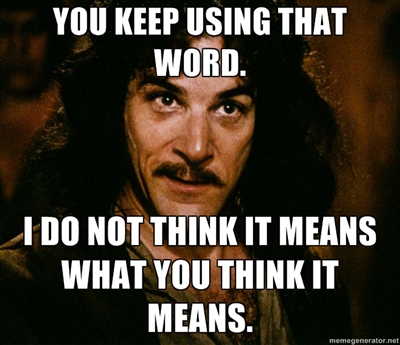

Disagreement is not oppression.  If you want to see real religious oppression, real religious persecution, I suggest visiting extremist countries where people are actually killed for their beliefs.  My stomach turned a long time ago when I heard about a little boy, about ten years old, who was a Christian.  When his master found out, he was driven out into the desert, his feet nailed to a board, and he was left there to die.  That is what I remember when I hear the likes of Kim Davis, Mike Huckabee, One Million Moms, Pat Robertson, Franklin Graham, Ted Cruz and all the others whine about their sense of religious persecution because they can’t seem to bully people with fear of divine judgment anymore.

So you remember that thought I told you to hang onto?  When I said that the O’Neal family ended up going to church anyway even without Grandma Agnes and her pressure?  It was Kenny’s suggestion.  “I’d still like to go to church.” he says.  I think this is what ultimately tipped the balance and brought me to the computer to write this entry, dear reader.  You see, throughout this ordeal of coming out and despite Grandma Agnes’ declaration of God’s judgment, Kenny still feels that connection to his faith. 

Too many LGBT people have been driven away from their faith because of the Grandma Agneses of the world.  In their view it’s the LGBT people who have left the church, probably because “they just can’t endure the reminder of how broken they are.”  In reality, it’s the church that has left the LGBT people.  Even if I subscribed to the view that being gay was somehow sinful (which I don’t and I can explain why in another post if anyone wants to know—just ask), where did the authors of the four biblical Gospels always show Jesus?  Not in the fancy synagogues hanging with the Grandma Agneses of his time.  He was always with the people that the Grandma Agnes crowd deemed to sinful to hang around.  So, Christians, if you’re going to say you follow Christ (which you do when you claim the title), maybe you should spend time with the people you think are sinners and love them as Jesus did instead of sitting astride your high horse looking down on the broken you think God can’t accept.

When a woman suffers verbal and emotional abuse from her husband and leaves, most of us say, “We support you!  No one should have to endure that!”  When LGBT people suffer verbal and emotional abuse from the Church and leave, most people don’t make the connection.

We need to make that connection.  If not in a religious sense and context (because, again, I recognize the plurality of belief and no belief that exist in the world), then just in a decent human being sense and context. 

Share it forward!
Follow me on Twitter @TroyComets

Saturday, March 26, 2016

Easter and Ignorance

Okay.

I’ve debated long enough on this topic and I’ve decided to write about it.  I went back and forth on it not because I didn’t feel competent and comfortable writing on the topic.  If anything I’m too comfortable and competent to write on it.  I was hesitant because I try very hard not to focus on religion in my blogging because religion has hurt too many LGBTQ people, including myself,  and I don’t want to keep rubbing salt in the wounds. 

I also didn’t want to “tip my hand” and maybe show too much non-Troy Comets knowledge through my Troy Comets activity.  What I mean is this:  Troy Comets has never disclosed what he does off of the internet or what the person behind Troy Comets has actually studied.  I’ve hinted that if you look at my writing you can probably figure out what I’ve studied and how much time I’ve spent in those studies.  After reading this post you may have a more complete idea.  I’m not 100% certain that’s a good thing…but I’m 100% certain it’s not all a bad thing either.

But, here’s the thing.

1.     Trying to avoid talking about religion because of the pain it has caused us isn’t going to make that pain go away.  Maybe I’m wrong to avoid the topic the way I do.  Maybe I should acknowledge religion’s role in the oppression of the LGBTQ community more.  Maybe I should acknowledge our pain—my pain—more in my writing.  Maybe it could be more a part of the healing process than I’ve previously imagined it could be.  All I know is that I don’t want this blog to become “Troy Comets’ Ongoing Commentary about How Messed Up the Church Is.”  Though I know there’s MORE THAN ENOUGH to talk about there, there’s more for us, LGBTQ and non-LGBTQ people alike, to worry about and talk about.
2.     Sometimes I can’t turn off the things I know.  It would be nice.  Believe me.  Sometimes I can’t think of anything that would bring me more peace than to forget half the things I know.  But, as I write this, it’s Holy Saturday.  Tomorrow is Easter.  We’re ending Holy Week….and, as a Christian person of faith, religion is all around me right now and I can’t escape it.  Add to that the fact that I’ve wasted an hour and a half of my life today by watching Tyler Perry’s “The Passion Live” and I’m more than a little angry about how ignorant the Church is about its own heritage and its own story.

I just tweeted a comment that to understand the Passion of Jesus, the whole story that’s told between what is usually referred to as “The Triumphal Entry” (Palm Sunday) through the Last Supper, the trial and execution, and ends with the Resurrection—to understand any of this, a person needs to understand politics in first century Palestine.  Let me explain why.

The Jewish leaders get a bad rap in traditional Christianity.  As they’re portrayed in biblical interpretations throughout history they are the antagonists to our hero, Jesus.  They try to shut him down.  They want to argue with them.  They appear clueless and obstinate.  Nothing could be further from the truth.  The fact of the matter is that these were faithful men of God.  They were not only adhering to the interpretation of Hebrew Scriptures that had been handed down to them but they were also trying to protect their people. 

Judea, where the bulk of Jesus’ ministry takes place in the four biblical Gospels, was an occupied territory.  Since its fall in “Old Testament Times” it had changed ownership a number of times.  It was prime real estate.  You couldn’t travel anywhere in the region without moving through Israel and Judea.  At the time of Jesus, it’s Rome that holds the deed to Judea and Rome wasn’t known for its kind and gentle ways when it came to occupation.

Within living memory of most of the elders of the Jewish people at the time of Jesus there was at least one revolt that was stamped out tragically by Rome.  What the leaders understood was that there was going to be no uprising as long as Rome was a factor.  There would be no independence until God’s anointed appeared, the “messiah” or “Christ,” who would lead God’s chosen people back to their chosen status in the world.

So when Jesus, who overtly and tacitly claims to be this messiah, begins to amass a following, who challenges the status quo, who attracts people like Judas the Zealot to his cause—when the leadership begins to see this, it makes them worried.  They see the makings of another revolt and, remembering the last revolt and how Rome dealt with it, they begin planning ways to get Jesus out of the picture before it’s too late.  Why do you think one of the charges the Jewish leaders argue in front of their Roman rulers is, “He’s no friend of Caesar’s?”  He’s a traitor and you need to deal with him.

So, of course, he’s dealt with.  There’s a trial in which Pontius Pilate famously gives the people a choice between two prisoners—Jesus or Barabbas.  Never mind the fact that no such tradition even existed.  Our English Bibles tell us that Barabbas was a criminal/murderer.  The actual word in Greek which describes him is “zealot.”  Like Judas, Barabbas was a freedom fighter.  He was a patriot.  He probably would have been considered a “terrorist” by today’s standards.  Which would you choose if you were under occupation?  Someone who just a few days ago came to town with under the auspices of being the messiah who would kick Rome out but the most he could do was throw a tantrum in the Temple?  Or the guy with the proven track record of undermining the occupational forces?  The gospel author is making a point here—not giving us a history lesson. 

If you watched “The Passion Live” on FOX you might remember Tyler Perry’s explanation of what crucifixion was like and then what was done with the body.  According to Tyler Perry’s script, Jesus was buried in a tomb which was sealed with a boulder and guarded by Roman soldiers—all under Pilate’s orders.  Of course nothing like it happened.  The earliest Gospel we have is Mark.  Mark tells us that it was the day of preparation.  We already know it’s late in the afternoon so the pressure’s on under Jewish religious law to get things done before Sabbath begins.  Joseph of Arimathea, who is identified as a Jewish leader, comes to Pilate and asks for the body.  Pilate gives it to him and Joseph of Arimathea quickly buries Jesus in Joseph’s own tomb.  It really was a “hurry up and get it done” affair.  Sabbath was hours and minutes away.  This is why later in the story the women return on the first day of the week (Sunday) to do the burial rituals after Sabbath. 

What Tyler Perry’s scriptwriter and the majority of Christians fail to understand here is the process of developing what Christian theologians call “a high Christology.”  What this means is that years and years after the fact, followers of “The Way” (which is what this sect of Judaism was initially called) struggled to make the story of Jesus flow out of the story of God as recorded in the Hebrew Scriptures.  We see the beginnings of the development of this Christology in Mark, with its use of the terms “Christ” and “Son of God.”  Mark, remember, was written about 35 years after Jesus’ death.  But this Christology advances again by the time Matthew and Luke are written, roughly 20 years after Mark.  Matthew and Luke begin to answer questions that the earliest Christian community started asking.  Questions like “Where did Jesus come from?”  In reply, Matthew and Luke give detailed birth narratives.  They also address the arguments of skeptics.  “Maybe Jesus wasn’t really dead.”  This is why in Matthew one of the Roman soldiers impales Jesus’ through the side with the spear.  “Maybe someone stole Jesus’ body and created the whole resurrection story.”  Again, this is why Matthew has Pilate setting guards on the tomb. 

But Christians have done  exactly what Tyler Perry’s scriptwriters have done throughout history.  We don’t pay attention to what is written or ask why it’s written the way it is.  Instead, we harmonize the stories and stupidly recite them during the most holy times in our religious calendar.  Like Christmas.  All of a sudden we have Mary and Joseph having a child in a barn (because there’s a feed trough being used) and we simultaneously have angels (which, by the way, are messengers from God and not divine beings with wings.  The whole angelic cult is developed later.) and wise men from the East showing up all at the same time.  Never mind the fact that the wisemen (of an undesignated number, by the way.  Scripture never tells us three beyond three gifts which are symbolic in their own right) show up YEARS after Jesus’ birth.

This is what makes me so freaking angry about my fellow adherents to the Christian faith:  Too many people are comfortable in their ignorance, blindly accepting the watered down, dumbed down, Christian message that generations of preachers and pastors and priests have massaged to diminish its power and “teeth.”  Again, for an example, I turn to “The Passion Live” in which the song performed to capture the spirit of this “triumphal entry” into Jerusalem is “Love can Move Mountains” by Celine Dion.  The triumphal entry of Jesus into Jerusalem was not “lovey dovey, love conquers all” nonsense.  It was a protest.  It was desperation.  The crowd was shouting “Hosanna!”  Hoshi’ana!  “SAVE US!”  People were flocking to the person who was supposed to be their liberator crying out in pain and anguish! 

How many congregations capture that spirit in their annual Palm Sunday parades of palm waving and Sunday School children singing?

But this is the issue:  All of these biblically conservative Christians who, like the people they vilify in the gospel stories, may mean well.  But unlike the people they treat as antagonists in the Jesus story, they are completely oblivious to what it is they’re reading, where it came from, and how it’s been transmitted.

And it drives me nuts.

This brings me back to “The Passion Live” once again.  This feel good, for club members only, overly produced, poorly researched and written spectacular dumbed the story down still further and didn’t pause to consider the full implication of the music they chose to accentuate the story.

For example.  Trisha Yearwood as Mary singing “In the end only kindness matters.”  Really?  See, the biblical message claims that in the end it’s the love of God that matters.  Or Jencarlos Canela  as Jeuss singing “I won’t give up if you don’t give up.”  Really?  The commitment of Jesus Christ is dependent on my commitment?  Then we’re all screwed because, newsflash, human beings are fickle creatures incapable of commitment.  That’s why the biblical message highlights God’s commitment to humanity trumping humanity’s commitment to God.

What’s worse than picking songs with bad theology?  Picking songs that capture good theology and thinking that the people singing the song will embody the meaning of the song.  I’m referring to the song used by “The Passion Live” at the climax of the performance:  Unconditionally  

Come just as you are to me
Don't need apologies
Know that you are all worthy
I'll take your bad days with your good
Walk through this storm I would
I'll do it because I love you, I love you

This!  This is the message that so many people, so many people in so many subsets of our society, not just the LGBTQ community--but SO MANY PEOPLE need to hear.  It's the message of the story of God told through the pages of the Christian Bible.  It's the power behind the Hebrew word chessed and the Greek word agape.  It's unconditional love--it's love poured out without qualification, without prerequisite, without the receiver moving himself or herself to a place in which they might "fit in better" or "conform more appropriately" the beliefs and behaviors of any particularly community that holds power and domination.  It's a love that says, "You.  Just as you are.  You are special.  You are loved.  Just the way you are."

The Church will join Jencarlos Canela. It will sing this song, add it to its repertoire of “contemporary hymns” and then it will turn around and, as a rule, insist gay people should be straight, people in poverty should pull themselves up by the bootstraps, that women should be obedient to their husbands…..you get the idea.

Which makes me wonder how Katy Perry feels about the Church coopting her song.

Look, I get it.  The Church, like every other human institution whether religious or secular, is flawed.  It’s broken.  It’s far from perfect.  That’s what happens when human beings enter the picture and try to take something as powerful as a movement like civil rights or Christianity and make it a system.  It’s going to lose momentum, power, and even sight of its mission and purpose.  That doesn’t mean we can use that as an excuse.  That doesn’t mean we can ignore the damage we’ve done and continue to do.  That doesn’t mean we forgive our own blatant ignorance and hypocrisy when we sing songs like “Unconditionally” but turn around and tell people to “give up your sinful ways and be something you can’t possibly be and then God will love you.”

The reason I’m rethinking my approach to religion and the Church, at least for this post, is that it’s Easter in the Western Church.  It’s the season of resurrection, renewal, and hope.  Traditionally and historically it’s understood as a moment of profound change where God alters the rules and breaks down barriers that seem unbreakable.  It’s a season of forgiveness.  It’s a celebration of how far God is willing to go to demonstrate God’s love. 

For people reading this who are solidly inside the Church, maybe the barrier that God is breaking down is the barrier that keeps you from exploring and even challenging the theology that has been handed to you.

For people reading this who are outside of the Church because it is where you have been placed by people within the Church or where you have placed yourself for your own protection and self-preservation, maybe the renewal that God is offering you is the renewal of God’s promise of unconditional love—whether the institutional Church is willing to offer it to you or not.  If it’s one thing that has been made abundantly clear:  God does not need the participation or approval of faith institutions to love God’s children. 


For people reading this for whom faith is not a part of your life, I hope I haven’t offended or bored you.  Thank you for giving me the space to share these thoughts.

As always, feel free to share these thoughts forward.

Follow me on Twitter @TroyComets 

Dress Codes, North Carolina, and Subjective Opinion

I’ve gone back and forth on whether I should tackle this topic.  The initial event took place in August 2015 and, though there is plenty that can and should be discussed with regard to what happened and the thinking around it, it’s a bit of “yesterday’s news.”  But then I realized that if Froma Harrop (@FromaHarrop) could pick up the topic roughly seven months after it happened I probably could, too.  After all, I’m just a pseudonymous blogger; she’s a nationally syndicated journalist.  Besides, like so many other things, the story I’m about to relate intersects so easily with other stories we need to talk about.

Here’s what happened.

On Monday, August 17, 2015, The New York Daily News ran a piece discussing the disciplinary action Woodford County High School in Versailles, KY, took when a student arrived on the second day of school wearing a shirt that exposed her collarbone.  The headline of the article read: “Kentucky high school students, parents fight strict dress code that requires girls to cover collarbone.”  The protest to the school’s dress code began where all protests begin these days:  On social media.  The Facebook following for the movement began identifying the policy as sexist.  Students from Woodford County High began speaking to the issue including Maggie Sunseri, who produced a documentary entitled Shame: A Documentary on School Dress Code and posted it on YouTube. 


I can’t speak to the sexist aspect of the enforcement of Woodford County High School’s dress code.  I did review the dress code, having found it online, and discovered that the same expectations are laid on male and female students alike.  I don’t doubt the feasibility that one gender is held to a higher standard than others; that seems to be the rule of thumb in our society.  Look at our presidential election.  Bernie Sanders and all the other “old boys” can go from event to event wearing the same suit and tie without comment.  If Hillary Clinton didn’t change outfits between events A and B, there would inevitably be commentary about her appearance.  I’m not saying that this is what happened in this case; I have no idea.  I’m simply saying that this is the prevailing attitude and approach in our society.  I can imagine that this is how things happened in Versailles, KY. 

And this is what bothered me about Froma Harrop’s column on the topic.  Where I feel hesitant to address the sexist approach taken by the school in response to the student’s adherence to the universal dress code identified in the Woodford County High School’s student handbook, Ms Harrop had no hesitation.  Ms Harrop announced that “dress codes are the opposite of sexist.”

Ms Harrop may have a point in certain circumstances.  Perhaps in schools and institutions where there is an actual uniform dress code (school uniforms, military uniforms, etc.) and both genders are expected to wear the exact same clothing.  However, dress codes have always been skewed toward sexism.  I remember a story my mother shared in which she had to kneel in high school to have the length of her skirt measured in order to determine whether or not she was abiding by the dress code.  Talk about demeaning.  What application of dress code enforcement sees boys having to assume such a degrading posture? 

“Yeah, but, Troy Comets,” I hear some of you saying.  “That was sixty years ago or so.” 

That’s true.  But in doing research for this post I discovered that this sort of thing still happens.  An Edmonson County High School student (again in Kentucky) was forced to kneel in front of the male principal and have her dress measured just this past January.  

Dress codes and the enforcement of dress codes are fraught with sexism.  The whole idea of a dress code is to establish morality and appropriateness in those the dress code is designed for.  The Woodford County High School Student Handbook makes this claim right off the bat when it says:  “All students are expected to adhere to common practices of modesty, cleanliness, and neatness, and to dress in such a manner as to contribute to the academic atmosphere.”  [Emphasis mine.] 

Who defines modesty?  I have yet to discover a definition of modesty and an application of modesty that isn’t subjective in nature.  What is modest for this age bracket in community A could be deemed risqué and immodest in Community B. 

To understand what Woodford High School may mean by using the word “modesty,” it’s helpful to consider the demographics of Woodford County, Kentucky.  This is what I discovered:

·        Politically, Woodford, KY, is solidly Republican in its leanings.  In the last presidential election, 60% of the population voted for Romey versus 40% voting for Obama.
·        Religiously, nearly 40% of the population is Evangelical Protestant (the largest religious subset in the county).  According to data from 2010 the Evangelical Protestant community grew by nearly three thousand people since the year 2000.  Mainline Protestantism dropped and the Roman Catholic community grew ever so slightly.  This data informs us that the majority of religious adherents in Woodford County (nearly 10,000 individuals in a community of 23,208 people are of a so-called conservative Christian variety. 
·        From the same census data we learn the racial makeup of the county was 92.08% White, 5.41% Black or African American, 0.13% Native American, 0.31% Asian, 0.01% Pacific Islander, 1.13% from other races, and 0.93% from two or more races. 2.99% of the population were Hispanic or Latino of any race.

What this helps me understand is that, at least on the surface, Woodford County High School’s dress code isn’t sexist.  It’s subjective, born out of a culture and community that is conservative politically and religiously.  Their definition of “modesty” is going to reflect these conservative values. 

And this is the problem.  This is precisely why we need movement on a larger scale to establish rules, guidelines, and most importantly protections from outdated and outmoded notions of modesty and propriety that are often times completely divorced from reality.  There are zero studies that support Woodford High School’s statement regarding their dress code that these “common practices of modesty, cleanliness, and neatness” or even “dressing in such a manner as to contribute to the academic atmosphere” exists.  There are no conclusive data on these claims. 

Do you know what verifiable data does indicate?  The Woodford County High School student body is 65% proficient in English (which is amazing considering the demographic makeup of the student body), 49% efficient in Algebra, and only 38% are considered college ready.  Either the school board is right in their assumption regarding dress code, in which case the school is barely hanging on with these percentages all thanks to “modesty, cleanliness, and neatness” or the school district as a whole needs to evaluate its priorities and focus less on female collar bones and more on teaching Math and English.

This is precisely what North Carolina has failed to do.  Imagine Woodford County, Kentucky, on a larger, statewide scale, in which a section of the population, with its strict adherence to conservative political, social and religious principles, are able to force its definition of morality onto the entire population.  Not only this, but this section of the population then determines how it will enforce these principles and who will receive protections from these principles.  Just like Woodford County High School’s dress code and dress codes everywhere, girls are going to be targeted and held to a different standard than boys.  In North Carolina, LGBTQ people are going to be targeted, held to a different standard than non-LGBTQ people, and there is going to be no protection from the consequences of the intolerance they will face. 

Again, I can hear some of you objecting, “Yeah, but, Troy Comets, shouldn’t the community be able to decide what is appropriate or not for their own community?  Shouldn’t they be able to apply their political and religious beliefs as they see fit?” 

Do you know who else makes this argument?  Extremist Muslims and the so-called Islamic State.  Guess where the population of Woodford County, Kentucky, comes down on Islam and the “war on terror.”  Here’s a hint:  Trump won the GOP caucus in Woodford County with Ted Cruz a very tight second.  The rhetoric of these two (“Ban all Muslims” and “Carpet bomb their families”) is all you need to know.

Here’s the deal, folks.  There is more to our judgments about modesty and appropriateness than just our declarations and determinations.  You can sit behind accolades and achievements and declare that the application of a dress code is the opposite of sexism.  You can use this event and events like this one to further the advocacy of your belief that dress codes preserve female dignity.  But don’t think for a moment that your position on the issue is born out of anything but your experiences, prejudices, and opinions.  

The Woodford County High School school board can cite whatever support it wants for its subjective view of modesty but in the end it’s just an opinion and in the end the application of that opinion is going to be biased and prejudicial. 

North Carolina politicians can attempt to justify its decision to legally exclude a segment of its population from rights and protections but in the end it’s their prejudiced opinion that brought this heinous law to fruition. 

Make your rules, set your guidelines, establish your boundaries—but don’t be surprised when someone comes around and calls you on your baseless opinion and presents verifiable facts that contradict your beliefs.  Try owning your opinion and acknowledging that your views on modesty, propriety, and decency are subjective and, at the end of the day, just your opinion.

And that, dear reader, is my opinion.

Follow me on Twitter @TroyComets


Wednesday, March 23, 2016

A Real Look at "The Real O'Neals"

Lent is coming to a close so that means I should get all my repenting done. 

I need to repent something on my blog.  On March 2 I posted my thoughts on the premiere episodes of ABC (American Broadcasting Company)’s The Real O’Neals.  In my reflection I moved through stages of concern over how the show would be received and what good the show will ultimately do to a “Okay, well, it’s here so let’s give it a try” mentality. 

I got it all wrong.  Mea culpa.  Mea maxima culpa.

The show is brilliant and let me explain why and what was wrong with my original views.

The biggest issue I had with the show was that I didn’t believe the target audience was going to be there.  That is, I didn’t believe that the LGBT youth who would be able to identify with the main character would actually be sitting on the sofa next to their parents and watching the show.  I still don’t know if they are or aren’t but what I’ve discovered is that it simply doesn’t matter.  Why?  Because social media has made the living room sofa HUGE. 

For the past few weeks I’ve gotten to know clueless yet well intentioned Jimmy, sneaky, underhanded, duplicitous Shannon, terrifying and judgmental Eileen, Pat who may or may not have figured out how the drier turns off by now, Aunt Jodi who’s always got her emergency child pageant kit in her car, and, of course, dear, sweet, gay Kenny.  And as I’ve gotten to know this caricature of an American family I’ve sat on the virtual couch via Twitter and watched other people get to know them, too.  What’s more I’ve watched as Martha Plimpton, Jay Ferguson, Matt Shively, Mary Hollis Inboden and the rest of the cast join in the conversation.  This is the gift of social media:  Stars were unapproachable in previous generations but are literally right there watching with you now…from a different time zone, sometimes, but laughing and joking and enjoying the show right along with you in real time.

Social media has changed how we approach television. 

But THIS is what I’ve witnessed that has made me completely change my mind about this show.  I now believe it is one of the most important programs on TV for the LGBT community. 

Last night I watched episode 105.  In a nutshell, Shannon tells her brothers that their mother is internet dating but the truth of the matter is that she’s actually looking for a job.  This leads to his siblings encouraging Kenny to do some internet dating of his own.  I won’t spoil it for you but I will say that porn and limencello lead to A LOT of great lines.  And amidst the killer one liners and the word plays come the truly touching lines that mean the world to the LGBT audience.  In a brief exchange between characters the LGBT audience can identify themselves in the conversation for similar conversations they’ve actually had in their own lives or they see the kind of healthy and functional family that they can’t seem to find in their own lives.

In last night’s episode, as Kenny sat next to his father in the car, and lamented that he was going to die alone because the relationship thing was too complicated and that there’s a lot of homework to being gay, his father, Pat, responds with nothing but support and encouragement, saying, “It’s not complicated.  Just think about your ideal person.  What’s he like?”  Kenny says, “Right now I just want someone cute to smile at me.”

How many of us can identify with Kenny’s situation?  How many of us long for the support of Kenny’s father?  I had to stop myself midtweet from commenting that I wish Jay Ferguson would adopt me because too many of us ache for that kind of support. 

And that’s when I saw it.  People were getting that kind of support.  Not only was the show validating their own feelings, seeing themselves in Kenny’s situation, but as they tweeted about Kenny’s father’s response, so many of the cast of The Real O’Neals were right there giving people that support.  Matt Shively became Jimmy, the older brother who wants to help but just doesn’t have a clue and tweeted support.  Mary Hollis Inboden became Aunt Jodi, with her whimsy and solid support and encouragement and tweeted hugs and a willingness to be everyone’s Aunt Jodi.  And during his live tweeting Noah Galvin became a mirror for so many people at that moment you could just feel the looming clouds of many LGBT people’s lives breaking up to allow a glimpse of that rainbow—of hope and promise. 

I was right in my first reflection on one thing, though.  This show isn’t about simple entertainment.  We’ve become so accustomed to the current sitcom formula in which we’re entertained by jokes and slapstick that we forget there was a time in which sitcoms carried a bit of a “punch” to them—a glimpse into real life and suggestions on how to make it through.  Because The Real O’Neals’ premise lies in the midst of a culture that has struggled for recognition and equality for so many decades, I knew that it had to be on target and address the realities of the LGBT community within the framework of comedy.  I wrote at the time that I was worried that the show would simply be known as “that show with the gay kid.”  I don’t think there’s any danger of that anymore.  I think The Real O’Neals is the show about the gay kid we either were, are, or wish we could be and the family who, along with him, is trying to figure out what it all means.  The gift is that not only does the show take the audience along this journey of discovery but the cast have gone out of their way to join the audience on the audience’s journey of discovery.

So, I have definitely transitioned from tentative support to fierce fan and advocate.  The LGBT community and the world need this show.  It’s doing something—something I didn’t expect and something I can’t quite get my head around.  All I know is how it’s affected me and how I’ve seen, through social media, the show affecting others.

So, ABC decision makers, if you’re reading this, you really need to make sure season two happens.  You won’t regret it.

#TheRealONeals
#RenewTheRealONeals
#LetsGetReal

#YouGayBro

Tuesday, March 22, 2016

Suicide and the Gay Agenda

While visiting with more and more LGBTQ people, particularly over social media where I can get a variety of insights from a wider range of geographic and cultural contexts, I’ve noticed a new trend.  This new trend creates a sense of relief in me while at the same time chilling me to the bone. 

When people talk and connect and engage in a deeper, story-sharing dialogue, it doesn’t take long for common themes between people to emerge.  For LGBTQ people, who often grow up isolated and desperate for this kind of connection, obvious themes quickly emerge.  Themes surrounding “When did you know you were gay/bi/trans?” and “What was coming out like?” and “How did/do you handle crushes on straight friends?” are top on the sharing list.  But the theme I’ve been tracking more and more?  “I thought about/came close to/attempted suicide when…”

On the one hand I am so incredibly relieved we’ve arrived at a place, if only internally within the LGBTQ community, in which we can more openly talk about mental health issues like self-concept and self-harm.  It’s ironically no secret that in the culture of the United States actually talking about mental health is still a difficult thing.  Traditional stigma are still attached to people who struggle with depression, anxiety, identity, and so on.  People are reluctant to share their mental health challenges for fear of judgment and, face it, when you already live with the judgment of huge sectors of society or fear of judgment because of being who you are, you’re not going to rush out and add fuel to the fire by saying, “Oh, by the way, I’m not just gay but I’m also depressed and I’ve seriously thought about suicide.” 

But among “our own” we can have these conversations. 

And that’s what I find so frightening about this theme.  It seems like suicidal ideation and suicide attempts are becoming a part of the “coming of age narrative” for LGBTQ people.  It’s almost a given that this theme will surface in conversations within the LGBTQ community.  “Yeah, I knew I was gay when I was twelve but I was terrified to say anything because my parents were super religious.  It was so bad, I felt so alone, that I tried to kill myself when I was fifteen.”

I’ve written before about the isolation LGBTQ people experience (Oubliette, Discussions of Equality in High School) and the human need for community and the results of not feeling connected with community (complete with research and statistics) (Community).  Today I’m going to bring these topics together and talk about the real threat the LGBTQ community faces.


Everyone’s heard the phrase “gay agenda.”  Most of us make a joke about it anymore, mocking the religious and political leaders who obviously have no idea of what it means to be gay or how a person “becomes” LGBTQ.  That being said, maybe we need to do, as a community, what we have always done since the beginning.  Maybe we need to grab a hold of these catch phrases and insults and turn them to our advantage.  I would like to suggest that we actually create a “Gay Agenda” and as item number one on that agenda we list in bold, all caps, complete with hashtag:  #STAYALIVE.

Here are some frightening facts that I found.  Keep in mind two things. 

1.     When dealing with studies and statistics we always have to admit that there is an under-reporting that takes place with regard to self-report.  People who want to keep things on the down-low are never going to be honest when asked questions about certain topics.  An individual who attempts suicide may simply say he’s dealt with depression “all his life” but he will choose not to disclose that he has also struggled with his identity for just as long.  Because the individual fails to self-report the identity piece, the idea that he struggles with sexuality, his attempt won’t be documented within the body of research reflecting suicide and suicide attempts in the LGBTQ community.  Statistics, though accurate as far as the study and research are concerned, really don’t capture the reality of the situation because people fear being honest about things that will bring judgment and may even out them.  And, by the way, this isn’t just the reality for LGBTQ research.  This happens in any kind of study that relies on any kind of self-reporting.
2.     Similarly, the statistics I’m about to share are older statistics.  Recently I’ve been citing a survey in which 48% of respondents between the ages of 13 and 20 identified themselves as exclusively heterosexual.  This means that 52% of young people in this study identified themselves somewhere in the LGBTQ spectrum.  This is a revolutionary piece of information and I suspect that findings like this survey are going to be seen more and more among the younger population and we will eventually see statistics like the ones I’m going to talk about altered significantly in light of this new information and the willingness to share it.   

I want to make one thing clear.  LGBTQ people are not depressed because they are LGBTQ.  They do not consider suicide because they are LGBTQ and they do not commit suicide because they are LGBTQ.  There are no mental deficiencies caused by “being gay” any more than “being gay” is caused be a mental deficiency.  If you still subscribe to this nonsense you are literally stuck in the 1960’s because legitimate science abandoned your nonsense in the early 1970’s.

So if we’re going to talk about mental health challenges faced by LGBTQ people, particularly youth, let’s look at real causes rather than politically motivated causes or religiously imagined causes.

In 2013 the National School Climate Survey reported that “schools nationwide are hostile environments for a distressing number of LGBT students.”  The survey, which was completed by nearly 8,000 students between the ages of 13 and 21 and of whom nearly 60% identified as gay or lesbian, found:
·        55.5% of LGBT students felt unsafe at school because of their sexual orientation and 37.8% because of their gender identification. 
·        Roughly 1/3 of LGBT students had missed at least one day of school in the last month because they didn’t feel safe
·        More than 1/3 avoided gender-segregated spaces in their schools (i.e., bathrooms, locker rooms) because they felt unsafe
·        Most avoided school functions [Which, of course, adds to that sense of isolation.]
·        71.4% of LGBT students heard “gay” used in negative ways and 90.8% felt distressed because of that language
·        64.5% heard other homophobic remarks often
·        56.4% heard negative remarks about “not acting masculine enough” or “feminine enough” often.
·        1/3 heard negative remarks about transgendered people
·        51.4% of students reported hearing homophobic remarks from their teachers or school staff.  55.5% of students reported hearing negative remarks about gender expression from teachers or other school staff.  (Again, you wonder why I had to write about teachers being completely inept at facilitating conversations about equality and allowing students to talk about “fag marriage” and “shooting their mentally deficient and gay children?”)
·        74.1% of LGBT students were verbally harassed (called names, threatened) in the past year because of their orientation.  55.2% because of their gender expression
·        36.2% were physically harassed (pushed, shoved, etc.) because of their orientation.  22.7% because of their gender expression.
·        16.5% were physically assaulted because of their orientation.  11.4 because of their gender expression.
·        Almost half of LGBT students experienced electronic harassment/cyber bullying (i.e., text messages, facebook messages)
·        Nearly 2/3 of LGBT students who were harassed or assaulted in school did not report the incident to school staff usually because they doubted the effectiveness of any intervention.  [Which you can understand why when teachers/staff are contributing to the hostility of the environment.]
·        Over 2/3 of the students who did report an incident indicated the school staff did nothing.
·        Nearly 1/3 of LGBT students reported being disciplined for the same public displays of affection non-LGBT students engaged in freely.
·        18.1% of LGBT students were prevented from attending school dances/functions with a same gender date/partner.
·        17.8% of students were not allowed to form or promote support groups.
·        17.5% of students were prohibited from discussing or writing about LGBT topics in school assignments.
·        15.5% were prevented from wearing clothing or items supporting LGBT issues.
·        9.2% of students reported being disciplined for simply identifying as LGBT.
·        Policies which were reported that directly affected transgender youth:
o   42.2% of transgender students were prevented from even using their preferred name. [Which makes you wonder considering how many non-trans students are allowed to use stupid nicknames born from athletic participation, right?]
o   59.2% of transgender students had been required to use a bathroom or locker room based on their so-called “legal sex.”
o   31.6% of transgender students had been prevented from wearing clothes considered inappropriate for their “legal sex.”

Now this is where we get into the actual effects of all of this hostility, inequality, intolerance, and blatant ignorance and hate.

Students who experienced higher levels of victimization because of their sexual orientation were three times as likely to have missed school in the past month, had lower grade point averages compared to students who were “less often harassed” (2.8 vs. 3.3), were twice as likely to report a lack of plan/desire to pursue college or trade school, and had higher levels of depression and lower levels of self-esteem.

Students who experienced higher levels of victimization because of their gender expression were three times as likely to miss school in the past month, had lower GPAs, were twice as likely to report they didn’t plan to pursue higher education, and had higher levels of depression and lower levels of self-esteem.

These same statistics translate from victimization to discrimination. 

A .pdf of the entire study can be found here. 

How does all of this play out?  How does all of this well-documented violence and hostility toward a specific and vulnerable sector of America’s youth translate into tragedy and the loss of life? 

A 2012 Stonewall Survey gives us some insight.  Young gay men are 30 times more likely to attempt suicide than their heterosexual counterparts.  Lesbian young people are six times more likely to attempt suicide.  Some have made up to nine unsuccessful attempts to kill themselves.  The highest rates of suicide are among those who are isolated from support.

This same article reports “US News reported that teenage gay people who have been rejecred by their parents are far more likely to self-harm, take hard drugs and commit suicide than teenagers who are…loved and supported by their parents.”

25% to 60% of gay people seek counseling at some stage in their life as reported by the Counseling Directory. 

But where does all of this come back to?  Where do people receive tacit and/or overt approval for their intolerance and ignorance?  This is a hard question for me to actually answer not because the answer is elusive but because admitting it ultimately leads to an admission of a certain amount of complacency.  The answer?  The Church.  Or more specifically:  Religious and faith communities and institutions.

It doesn’t take a lot of research to convince people that traditional religious understanding bolsters contemporary intolerance of LGBTQ people.  It’s common knowledge.  It’s as well and basically understood as knowing the KKK is not a supporter for the African-American community.  More and more research is published in which people, victimized by narrow and superstitious understandings of religious texts, share their stories and bring awareness to the damage the Church, for example, has done for generations. 

And it’s not just the Christian Church struggling with these issues and attempting to push back against hundreds of years of intolerance and ignorance.  A 2012 study of Suicide and Suicidal Behavior in Tel Aviv discovered “a staggering 20% of the homosexuals and lesbians surveyed reported suicide attempts—112 times the rate among the general population.”  The study goes on to note that “this sector…does not get enough notice, and it is a hotbed for suicides that you later hear about after the fact.  The suicide rate among the religious homosexuals is the highest because they experience more distress when confronting their families.”

I cannot tell you how angry reading studies and reports like this makes me.  I cannot tell you how my heart aches when I hear people share their stories of rejection by faith communities who claim to embody the love of God and the ministry of Jesus Christ.  I grew up in the Church.  I still consider myself a part of the Church.  But the Church makes me so angry when their hypocrisy reaches this breaking point, when they claim to be the Body of Christ, to embody the Spirit of Jesus of Nazareth who led people beyond their self-imposed boundaries to people who were different, though differently, behaved differently, loved differently—not to preach at them or tell them how they need to change but to simply love them—and then these same Churches preach a doctrine of intolerance that creates fear and self-loathing in LGBTQ people who fear not only losing the love and connection of their family but, through hateful and ignorant words, feel themselves cast far away from the love of God.


We have SO MUCH work to do—in our religious communities, in our schools, and in our society at large.  No subset of our population should have to share stories of their suicide attempts any more than they should have to share stories of police violence and institutional racism.  We have to do better.  We have to educate ourselves better. 

We have to #STAYALIVE because it is getting better.  We need you to help make that happen.  


Wednesday, March 16, 2016

Discussions of Equality in High School

It’s easy to forget but sometimes the words we use and how we use them can be incredibly painful and even deadly. 

Imagine for a moment that you have a secret.  Absolutely nobody knows about your secret.  You have tried very hard to keep this secret hidden from everyone, including your family.  It’s not that this secret makes you ashamed or that you don’t want to share this secret.  The reverse is actually true:  You are aching to share this secret, to be honest with the people around you, especially the people you love.  You keep this secret because you have learned by watching the world around you that honesty isn’t always met with reason.  People who have shared this same secret have been met with judgment and ignorance and intolerance.  Some have had their lives taken from them.  Some have taken their own lives because of how they were treated after confessing their secret, after revealing their truth. 

This secret doesn’t make you feel alone.  It makes you alone.  You are isolated.  No one to confide in.  No one to support you.  No one to comfort you when hateful words are thrown around without a care as to who could hear them and how they will be heard.

This is what it’s like for many LGBTQ people. 

Today a friend of mine casually dropped a comment on social media about a conversation that took place in his history class.  The assignment had been given:  Prepare a one page discussion on your opinion as to the state of equality in American society and provide an example of how society could be made more equal.  During the course of the review discussion of the assignment, the teacher asked if there was anything else the class wanted to discuss.  One student blurted out, “Yeah.  Fag marriage.”

And apparently it all went downhill from there.

My immediate question was:  What did the teacher do in response to the offensive language?  The answer:  Apparently nothing.  Students referred to LGBTQ people as “diseased.”  One student said that if he had a child “who had a mental disorder or was gay or trans” he would lock “it” up.  It.  He called his theoretically child an “it” because he needed to distance himself from the humanity of a theoretical child that failed to suit his inherited, preconceived notions of what was acceptable.

And the teacher said nothing.

Another student took this a step further and said that he “would probably shoot it.”   

And the teacher said nothing.

And my friend, the student, was trapped, listening to this ignorance that science abandoned over forty years ago and even contemporary religion has begun walking away from.  Yet, here was my friend, stricken by the lack of compassion, lack of human recognition, his fellow students were parroting.  I stress parroting because kids don’t develop this kind of hate on their own; it’s nurtured into them by parents who were spoon-fed the same nonsense when they were children.

And the teacher said nothing.

I want to stress again that my friend was trapped.  He wasn’t able to leave the class lest it bring more attention to him and his situation.  He couldn’t speak to the point without tipping his hand.  He was forced to sit in his high school history class and listen to people liken sexuality to mental disorders that are deserving of death while the teacher, who was either woefully unprepared to address the topic or woefully uneducated to address the topic sensibly, finally managed to say, “"I don't have a huge problem with it....but do two people really have to get married to proclaim their love?”  Never mind the fact that apparently this teacher did get married to his wife to proclaim his love. 

In case people have missed it, we are in the year 2016.  Applied to this situation, this means a few things:
1.      If you are a teacher who invites discussion about controversial topics over an assignment about equality you had better have the education and the wherewithal to ensure that the participants in that discussion are respectful of the equal standing of all human beings regardless of age, gender, sexual identity, religion, ethnicity, and so on.  If you can’t maintain a modicum of decorum in your class when it comes to these conversations then you had better not invite these conversations.  Today this teacher failed his students.  He failed to model the spirit of a lesson on society’s call to provide equality by allowing students to cross a very serious line in their rhetoric and demeanor.
2.     Absolutely everyone in this country (and even the world) is free to develop and speak their own opinions.  You are not, however, free to treat that opinion as fact.  What makes you, a high school student, more intelligent and more informed than an entire scientific community who rejected your theories decades before you were even born?  What makes you, a high school student, more versed in law and legal issues than the nine men and women who sit on the highest court in the United States and declared that opinions like yours are not valid opinions in a court of law and are therefore out of step with the spirit of the constitution of the United States? 
3.     Parents, if this is the kind of thing that you are teaching your children at home or are subjecting your children to in the life of your religious or faith communities, you better think again about the damage you are potentially doing to your children.  It used to be said that three of every ten people were LGBTQ.  A recent survey reported that nearly half of today’s teenagers identify as something other than straight.  And, yes, that includes young people in the Bible belt and conservative pockets of the United States.  Pushing your uninformed, medieval notions of homosexuality is not only perpetuating ignorance; you are also probably causing stress and anxiety in, statistically, half of the children in your home. 

I’m not going to name names.  I’m not going to identify the school.  I don’t want this to come back and cause problems for my friend.  That being said I have absolutely no doubt that a copy of this essay is going to find its way into the hands of the school’s administration and I hope to God that this issue is addressed.  I’m not suggesting suspensions or detentions.  I’m suggesting that students and teachers would benefit from a little education with regard to the history of the LGBTQ movement and how stupid, ignorant, throw away comments can undo a person’s sense of self-worth.